Showing posts with label Scotland. Show all posts

Saturday, January 4, 2025

The Nuckelavee.


The Nuckelavee

 🌨️🌊🐴☠️


This terror of the sea is a Scottish winter monster originating fom the Orkney Islands,.

 This creature is a heartless  demon of destruction.

Fortunately the Nuckelavee is trapped in the sea for most of the year by the Mither o' the Sea, a powerful female sea spirit. But during the winter it manages to break free from it's undersea prison a d heads twords land.

From a distance it's appearance resembles a mounted rider and his hours. 

But when it's closer you see it's a horse like being with the upper body of a man coming out of the middle of its back. The head of the man-like part is three times larger then a normal human head and rolls back and forth and its arms are soo long they drag on the ground. It's legs have fin-like appendages. The horse head has a gaping mouth and a single blood-red eye. The creature has no skin; all that can be seen on its surface is the powerful muscles and pale sinew, with black blood pulsating through yellow veins. The horse mouth breathes a smelly toxic vapor that causes crops to wilt and livestock and people to fall ill, and a drought follows in its wake.


Not something you would ever want to run into...


This monster is so dangerous that, traditionally, its name was hardly ever spoken out loud, instead mentioned in  whispered   tones that were soon  followed up by a prayer.


 If you're ever unfortunate enough too see it in person, it will chase you on sight the only way to escape it is to cross a running body of freshwater. 


As a creature of the sea and of sickness, the Nuckelavee cannot stand freshwater and will not follow you , same applies to the fay, they will not follow you across running water.

Orcadian folklore had a strong Scandinavian influence, and the nuckelavee may be a combination of a water horse from Celtic mythology and a creature imported by the Norsemen. As with similar malevolent entities such as the kelpie, it possibly offered an explanation for incidents that islanders in ancient times could not otherwise understand

Like many superstitions the Nuckelavee was likely created as a way for people to  explain the  plague a bad  harvest and other unfortunate events .


Saturday, April 13, 2024

Scottish Myth: The Blue Men of Minch.


The turbulent waters between Scotland and the Isle of Lewis  is called The Minch and like many large bodies of water, there are legends of otherworldly creatures lurking below it's depths.

The strait between the Island of Lewis and the Shiant Isles was known in the 19th century as ‘the stream of the Blue Men

They are a personification of the unpredictable and dangerous waters they inhabit.

The Blue Men of Minch are blue skinned men  similar to mermaids with tails and webbed hands. Also known as storm kelpies, they can use their powers to create storms to capsize ships and drown sailors. 


                                                                         The Shiant Isles  


The Blue Men are the source of many sea shanties.

Poetry was the primary form of defense against them. The chief "Blue Man" would recite two lines of poetry, and the captain of the ship would have to complete it to stop the attack.


They live in underwater caves in a clan system, while generations of folklore say they can only be beaten by making sure you get the last word in a rhyming duel.

Old legends claim that many Ship Captains escaped a watery fate thanks  the sharpness of his tongue, while those less fortunate are left to perish in the cold and raging waters common to the region.

However, innocent fishermen who have done nothing to anger the Sea Kelpies will be allowed pass through the area safely.

While they  sleep  the weather would remain calm but they could create storms whenever they wished too do so especially when angered.


The Blue Men can also help the locals, with a Samhain or Halloween tradition involving the lighting of a candle by the sea.

Ale is then poured into the water in order to encourage the Blue Men to leave seaweed on the beach as fertilizer

Physically they  are the same size as an average  human , but their strength if far greater then a normal man.

They wear a blue cap's on their head  and have grey faces which often  appear above the waves when they are surveying the seas.


 In summer weather they skim the waved just below the surface but when the wind is high they revel in the storm and swim with heads erect, splashing the waters with delight. Sometimes they are seen floating from the waist out to sea, and sometimes turning round like porpoises when they dive.”


Sunday, April 7, 2024

Scotland's Deadly Giant Serpent: The Beithir


The beithir is a large deadly serpent, possible even a wingless dragon with a poisonous sting.

🐍🐍🐍🐍🐍🐍🐍🐍🐍🐍🐍🐍🐍🐍🐍🐍

It lives in  caves and valleys.


 If a person is stung by the beithir then he must head for the closest  river or loch. If he can reach it before the beithir does then he is cured, but if the monster reaches it first then the victim is doomed. Another cure for the sting is water in which the head of another snake has been placed. 


The beithir is considered one of the fuath, a general term for various monsters and spirits associated with water.


Fuath (plural fuathan, meaning “hate” in Scottish Gaelic) refers to a type of evil water spirits in Highland Gaelic mythology. These spirits are believed to inhabit the sea, rivers, lakes, and sea lochs of Scotland and Ireland.

In Gaelic folklore, any being that frequently changes its shape is of evil origin. The case of the Fuath confirms such thinking. A Fuath can sometimes be seen, if it chooses to take on a physical appearance. Most fuathan have the power of transforming themselves in many things even angels of light. They use this power to trick their victims but they are generally found out in the long run. Most often, they present themselves as humanoid creatures, with green skin and the mane and tail of a yellow horse.


Its the  largest and most deadly kind of serpent", or possibly  a type of land dragon (but without certain typical draconic features like wings or fiery breath). similar to a lindworm (worm meaning snake), also spelled lindwyrm or lindwurm, is a mythical creature in Northern and Central European folklore that traditionally has the shape of a giant serpent monster living deep in the forest lindworm (worm meaning snake), also spelled lindwyrm or lindwurm,  a mythical creature in Northern and Central European folklore in the shape of a giant serpent living in the forest


It makes its home in large mountainous caves and (valleys)  and has an extremely  venomous sting. 


If a person is stung by the beithir then they need head for the nearest body of water like as a river or loch. If they can reach it before the beithir does then they are cured, but if the creature gets there first then the victim is will die.

 Another cure for the sting is water in which the head of another snake has been placed.


A common belief is that if a normal snake is killed then the head must be separated a proper distance from its body and destroyed. Otherwise, both parts will come together and the snake will return to life as a beithir. 


John Gregorson Campbell in 1900 provided an account of the beithir:

The big beast of Scanlastle in Islay was one of this kind. It devoured seven horses on its way to Loch-in-daal. A ship was lying at anchor in the loch at the time, and a line of barrels filled with deadly spikes, and with pieces of flesh laid upon them, was placed from the shore to the ship. Tempted by the flesh, the "loathly worm" made its way out on the barrels and was killed by the spikes and cannon


                                                                   Loch-in-daal


John Francis Campbell in 1890 recounted a traditional story about a wicked stepmother who was the wife of an Irish king, and she gave the king's son a magic shirt that was a beithir in disguise. As long as the "great snake" remained coiled about his neck, the prince was under his stepmother's enchantment, but he was eventually freed from the beithir with the help of a wise woman.

This Serpent is most often sighted on summer nights when lightning strikes occurred


Tha e ann an grath na nathrach dhuit.'

'Tha nimh na nathrach aig dhuit.'
'Cho carach ris an nathair nimhe.'
'Cleas na nathrach cur a chraicinn.'
'Cochull nathrach is ole a dh’fheumadh tu.'

He is in the spirit of the serpent towards thee.
The venom of the serpent he has towards thee.
As twistful as the serpent venomous.
The trick of the serpent changing the skin.
The sheath of the serpent badly wouldst thou need    


Tha sinne 'cur mar choran 's mar gheasan ort,
Gu 'n innis thu, co thu fhein na co do mhuinntir ?
'S mise nighean righ na Sorchann,
Sgiath an ainn ;
'S gur h-e 's ainm dha 'm Baoidhre borb ;
'S gu 'n d' thoir e mise leis,
Cia mor bhur treis as an Fheinn.
Cia b' fhada 'n oidhche gu latha,
Cha bu ghna leinn 'bbith gun cheol.

We lay it as a circuit and as spells on thee.
That thou tell us who thou art, or thy people.
I am the daughter of the king of Sorchann,
Shield of armies,
And that his name is Baoidhre borb,*
And that he will take me with him.
Though great our time from the Fane,
Though long be the night to day,
It was not our wont to be without music.     .


Monday, March 18, 2024

Each Uisge: The Scottish Water Horse.


The each-uisge, is a supernatural water horse that can  be  found in the Scottish Highlands, it's an extremely aggressive  and possible the fiercest and most dangerous of the water-horses fay.

Often mistaken for the kelpie (which inhabits streams and rivers), the each-uisge lives in the sea, sea lochs, and fresh water lochs.


 This creature  is a shape-shifter just like the kelpie, it will often  disguise itself as a beautiful horse, pony, a handsome man or an enormous bird such as a boobrie.


If you try to ride it while in horse form,  you will  only be safe as long as its ridden on land. However, the moment it see's even small amount of water it's  skin becomes as sticky as a strong adhesive and it will immediately go to the deepest part of the loch with its victim. After you have been dragged to the bottom and  drowned, the each-uisge will  tear you apart and eat your entire body except for the liver, which later  floats to the surface.


In its human form it often  appears as a handsome man, but can still  be recognized as a water  creature by the water weeds or sand and mud in its hair.

 Because of this, people in the Highlands were usually couscous around a lone animals and strangers by the water's edge, near where the each-uisge was sighted. 


The each-uisge has a desire for human women.

 Any woman that it sets its sights on is almost certain  to become its victim.

One old story tells of a  young woman who  encountered a water horse in the form of a handsome young man while she was herding cattle,  he laid his head in her lap and fell asleep. 

When he stretched himself she discovered that he had horse's hooves and quietly made her escape (in an alternate variations of the tale she finds the presence of water weeds or sand in his hair). 

In another account a water horse in human form come's to a woman's house where she was alone and attempted to court her, (other versions claim he tried to rape her) but all he got for his unwanted advances was boiling water thrown in his crotch. He ran from the house roaring in pain. In a third tale a father and his three sons conspired to kill a water horse that came to the house to see the daughter. When they grabbed the young man he reverted to his horse form and would have carried them into the loch, but in the struggle they managed to slay him with their dirks.(daggers)  Despite its amorous tendencies, however, the each-uisge is just as likely to simply devour women in the same manner as its male victims.


Cnoc-na-Bèist ("Hillock of the Monster") is the name of a knoll on the Isle of Lewis where an each-uisge was slain by the brother of a woman it tried to seduce, by the freshwater Loch a’ Mhuileinn ("Loch of the Mill").

Along with its human victims, cattle and sheep were also often prey to the each-uisge, and it could be lured out of the water by the smell of roasted meat.

There are also tales of the   each-uisge in the  River Spey in the Cairngorms. The An t-Each Ban was a white water-horse, which despite not being the usual black color was otherwise "traditional", seeking out travelers on stormy nights in its horse form, and leaping with its victims into deep water. 

The yellow horse of the Spey was an even more unusual color and its preferred victims were married couples. Legends also claim  that if a woman could get a hold of the rich bridles and replace it with a cow shackle then she would have power over the each uisge for the rest of her life and that the bridle would bring her good fortune.


The aughisky or Irish water horse is similar in many respects to the Scottish version. It sometimes comes out of the water to gallop on land and, despite the danger, if the aughisky can be caught and tamed then it will make the finest of steeds provided it is not allowed to glimpse the ocean.

The cabyll-ushtey (or cabbyl-ushtey), the Manx water horse, sometimes confused or conflated with the glashtyn, is just as ravenous as the each-uisge though there are not as many tales told about it. One of them recounts how a cabbyl-ushtey emerged from the Awin Dhoo (Black River) and devoured a farmer's cow, then later it took his teenage daughter.

 A blacksmith from Raasay lost his daughter to the each-uisge. In revenge the blacksmith and his son made a set of large hooks, in a forge they set up by the loch side. They then roasted a sheep and heated the hooks until they were red hot. At last a great mist appeared from the water and the each-uisge rose from the depths and seized the sheep. The blacksmith and his son rammed the red-hot hooks into its flesh and after a short struggle dispatched it. In the morning there was nothing left of the creature apart from a jelly-like substance


Each Uisge Skeleton 


If you happen to be traveling through the Highlands be weary of any overly friendly horse especially near water.  You Never know when your luck may run out..


Sunday, October 1, 2023

A church grim


 I have pre scheduled updates for every week this month Have an awesome Spooky Season 🎃 ...


        The Church Grim: Guardian of the dead


 A church grim is a guardian spirit from  English and Nordic/Scandinavian  folklore.


 Nordic Church Grim....

A Nordic church grim gose by different names depending on where its located .. the Kyrkogrim (Swedish), Kirkonväki (Finnish), and Kirkegrim (Danish) and likewise defined as the protective spirit of an animal buried alive in the church foundation. 

In Sweden this tradition  was  mainly found in the formerly Danish areas in the south (Scania, Halland, and Blekinge). It'is also connected with a creature called the "natteramm" in Scanian or, in English, "night raven".


 It usually lives in the church tower but will live any place on church grounds thsat it can stay hidden within., it also wanders the grounds at night, it's job is to with protect the sacred grounds and building. 

A church grim maintains  order in the church and punishes those  sinners that enters the hallowed grounds.

It 's said that the first founders of Christian churches would bury a lamb ("church-lamb") under the altar. When a person enters the church when services are not being held, he may see the lamb, and if it appears in the graveyard (especially to the gravedigger) then it portends the death of a child.

 In some older versions a lamb is said to have only three legs.

The lamb is meant to represent Christ (the Lamb of God) as the sacred cornerstone of the church, imparting security and longevity to the physical edifice and congregation.


Dogs are loyal faithful protectors which is why they where more commonly used as Church Grim's, but several other animals have been used  as well, the  most often used alternatives where a lamb, boar, pig and horse.

A grave-sow (or "graysow"), the ghost of a sow that was buried alive, was often seen in the streets of Kroskjoberg where it was regarded as an omen of death. 


There are tales of the Danish Kirkegrim and its battles with the Strand-varsler that tried to enter the churchyard. Strand-varsler are the spirits of those who die at sea, are washed up on the shore, and remain unburied.

In Swedish tradition, a person attempting the Årsgång, or year walk, a divination ritual that involved circling a churchyard on New Year's Eve, would have to contend with the church grim, which was the natural enemy of the year walker.

 ...........


                                                                The English Version.


England's  church grim is usually  a large black dog with red eyes that guards churchyards from  thieves, vandals, witches, warlocks, and even the Devil himself. 


In the 19th century, folklorists believed that it had once been the custom to bury a dog alive under the cornerstone of a church as a foundation sacrifice so that its ghost might serve as a guardian.

Like many spectral black dogs, the grim, according to Yorkshire tradition, is also an ominous portent and is known to toll the church bell at midnight before a death takes place. 


During funerals the presiding clergyman may see the grim looking out from the churchtower and determine from its aspect whether the soul of the deceased is destined for Heaven or Hell. 


The grim inhabits the churchyard day and night and is associated with dark stormy weather.

When a new churchyard was opened it was believed that the first person buried there had to guard it against the Devil. In order to prevent a human soul from having to perform such a duty a black dog was buried in the north part of the churchyard as a substitute.


 According to a related belief in Scotland the spirit of the person most recently buried in a churchyard had to protect it until the next funeral provided a new guardian to replace them.

This churchyard vigil was known as the faire chlaidh or "graveyard watch.


A folktale of the Devil's Bridge type is also an example of the motif of a dog (in this case a dog also named Grim) being sacrificed in place of a human being. In the North Riding of Yorkshire attempts were made to build a bridge that could withstand the fury of the floods but none were successful. 


The Devil promised to build one on condition that the first living creature that crossed it should serve as a sacrifice. When the bridge was complete the people gave long consideration as to who should be the victim. A shepherd who owned a dog named Grim swam across the river then whistled for Grim to follow, who went over the bridge and became the Devil's sacrifice.


The bridge then became known as Kilgrim Bridge  and was later renamed Kilgram Bridge, which today crosses the River Ure in North Yorkshire


Tuesday, March 31, 2020

Fairy Lore: The Fairy shoe of the Beara Peninsula.


                     Image result for leprechaun shoe ireland


Every now and then a strange  artifacts comes to light thats makes you ask maybe there is some truth to all those old fairy sightings maybe the little people really do exist

one such item is this incredible little shoe....
=====================================
..,

There are many strange and fascinating stories of little people from every corner of the  world but some of the most well know come from the United Kingdom Ireland, Scotland and England… 

However many other cultures seem to have very similar story's that would suggest  the existence of a possible  hidden race of tiny people… and although they were presumably wingless, judging by the relics found so far, they would be so small, they could indeed look just like modern representations of fairies!... 

One such artifact a  very tine worn-in, shoe made of mouse leather … found by a sheep farmer on an ancient trail within the Beara Peninsula in Ireland in 1824. 

Could this really be a leprechauns shoe or maybe a fairy ?

==================================

Crofton Croker wrote (84, 1824): A paragraph recently appeared in a Kilkenny paper stating, that a labourer, returning home in the dusk of the evening, discovered a Leprehaune at work, from whom he bore away the shoe which he was mending; as a proof of the veracity of his story it was further stated, that the shoe lay for the inspection of the curious at the newspaper office. The most prominent feature in the vulgar creed.

Are you aware that, on this side of the channel  we have so little doubt of the existence of fairies, that it is no uncommon occurrence to see shoes of fairy manufacture publicly advertised in the newspapers? If I tell you, that while crossing a field, in the purple light of the morning, the attention of a peasant was arrested by the sound of a shoemaker’s hammer; and that, upon leaving the path to discover the cause, he disturbed an elfin cobbler, who it seems was at his trade betimes, and mending his brogues by the side of the ditch; that the spirit of the air, anxious to escape from the prying eyes of mortal wight, leapt from the bank, and, in his haste, dropped both shoe and hammer: if I go on to tell you, that this story is most gravely related, and that the editor informs the public, that both shoe and hammer were carried to such a house, in such a street, in a certain town, in the county of Roscommon, and may there be viewed by any curious or incredulous persons; you will, I think, acknowledge that my tale has at least a better foundation than many which are related to our disadvantage, and but too readily swallowed by the credulity of our English friends (Blake 1825 118-119).
======================================

=============================
 

 The amount of work it would take to create this tiny shoe,  especially with the size of our hands would have been very difficult especially in the early 1800's, the farmer was amazed to find that the shoe clearly shows signs of wear, particularly at the heel, in fact, although tiny, this shoe had indeed been well worn-in by someone no bigger than an average pencil... 

The farmer eventually gave the shoe to the local doctor, and from there it was passed to the Somerville family, the current whereabouts of the shoe is unknown, although it is rumored to be in Munster, in Ireland. 

At one point it was even  examined by scientists at Harvard University, they found it was indeed hand stitched, using tiny stitches, and well-crafted tiny eyelets, it was also  shown to be made from mouse skin. 

The belief in fairies, or tiny humans, is known as the “fairy faith” it is still found throughout Europe and the UK to this day.
--------------------------


 In some parts of the world,  Iceland for instance fairy faith is still very strong, artifacts left or given by these tiny people have been documented on several occasions. 
 ......


The fairy woman’s cloth of Bursta-fijall, is but one example of a gift from these tiny beings, According to the legend attached to the tiny, unique relic, the wife of the district police superintendent and public prosecutor at the farm of Bursta-fijall in Vopnaf-jordur, in the east of Iceland, received this cloth as payment from a fairy woman whom she had midwifed. 

The cloth is now in the National Museum in Rekjavik. Thor Magnusson, who is the president’s Custodian of Antiquities says, ‘Certainly it’s a unique cloth, There are some other ‘gifts’ too up and down the Atlantic coast of Europe including the flag of MacLeod, kept today at Dunvegan Castle… Stolen from a group of tiny warriors… 

In the fifteenth and sixteenth centuries, the flag was believed to bring luck to the clan, MacLeod even brought a picture of the flag on bombing raids in the Second World War… 

Arguably the  most famous object is known as the “Luck of Eden Hall,” a cup that was won fairly from fairies, by a member of the Musgrove family. 

                                     2012-03 V&A Museum 023 | THE LUCK OF EDENHALL Goblet about 1… | Flickr
                                   
                                                          Luck of Eden Hall

Today the cup stands, in the Victoria and Albert Museum. The cup, which is astoundingly beautiful, is surprisingly, of “eastern origins.” Although many of the things mentioned could, and have been put down to elaborate, yet entertaining hoaxes… 

The fairy or Leprechaun shoe found in the remotes of Ireland, is one of those extremely rare artifacts, that does indeed seem authentic… 

keep your eyes peeled you never know what may turn up next .....


Saturday, February 1, 2020

Demons of Love: the Baobhan Sith or Scottish Vampire / fairy ..


==========================
February  is the month of love and valentines Day, so too celebrate the month of love i will be posting about the monster's  of Love and subduction ...Think of demons like  the Succubus and other's similar to her in nature...
================
             

                         ~~~~Baobhan Sith ~~~  
                            👻☘️💕😈💕☘️👻

==============
===================

The Baobhan Sith, pronounced baa’van see, also also known as the White Women of the Scottish Highlands or simply the Fairy Woman.

The Baobhan Sith is most often  depicted as  a beautiful young woman,

They are believed to be a type of fairy, though they share similarities to Succubus and Vampire's

They can be found lurking in the Highlands, waiting to seduce young travelers and drink their blood.
=====================


Thought to be fairies. though some believe them to be a sub spices of Succubus or a type of lesser vampire... are a particularly dangerous type of vampire-spirits from the folklore of the Scottish Highlands like  the Leanan Sídhes, the Boabhan Siths are considered female but are usually temptresses who use their beauty to lure men into dance before brutally killing them


There mane concern is feeding - they will luring young hunters in by inviting them to dance until the hunter's are too tired too fight back or  overpower the Baobahn Sith.

They would then feed on their helpless victims, draining them dry of blood.


===

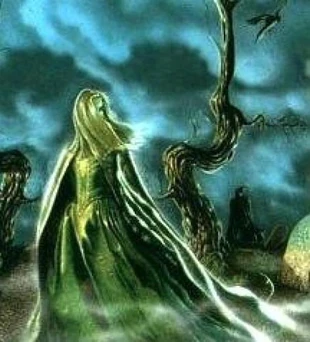
The baobhan sith most often appears as a beautiful young woman wearing a long green dress..

She has deer hooves insted of normal human feet..

The long dress is used to conceals her  hooveed legs ..

                                      
                                             Green Dress...

===============


Like vampires, she drinks the blood of human victims and will leave before dawn..

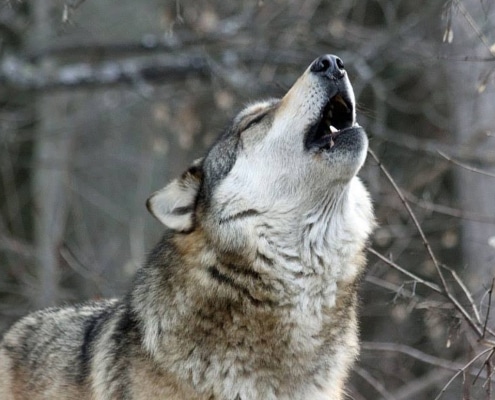
She  can also transform according to some legends she may take the form of a hooded crow or raven. in other versions she will transform into a wolf..
                                       Image result for wolf


There are numerous stories about the baobhan sith with a general theme of hunters being attacked in the wilderness at night.


                                       Image result for baobhan sith, green dress


================


One famous legend state's that there were four men who went hunting and took shelter for the night in an old cabin.

One of the men supplied vocal music while the others began dancing.

The men wished there were woman present  to dance with, and soon after that four women entered the hut.

Three of them danced while the fourth sat beside as the vocalist.

He then noticed drops of blood falling from his companions and fled from the hut, taking refuge among the horses. His blood thusty  guests chased him but were unable to catch him, and when daylight came the woman all disappeared.

Later the man went back inside and found all three of his friends dead and  completely drained of blood.

The  baobhan sith was unable to catch the fourth man because liker other fairy's she has a weakness to iron., (iron being a traditional fairy  vulnerability.)

==============

In a similar tale one of the men noticed that the women had deer hooves instead of feet and fled from them. He returned the next morning to find that the other hunters had their "throats cut and chests laid open".

==============

 
In a third story the hunters took refuge in a cave.

Each of the men said he wished his own sweetheart were there that night, but one of them, named Macphee, who was accompanied by his black dog, said he preferred his wife to remain at home.

 At that moment a group of young women entered the cave, and the men who had wished for their sweethearts were killed. Macphee was protected by his dog who drove the women from the cave.

 
One recurring motif in these stories is that the baobhan sith appear almost immediately after the hunters express their desire for female companionship.

This is connected with a traditional Scottish belief that if one were to make a wish at night without also invoking God's protection, then that wish would be granted in some terrible manner..
=========================================


Saturday, September 21, 2019

Fairy Myth: The Banshee


                                              ~~~~Scarah Screams by ashiori_chan ~~~~

                                                          Banshee from Monster High..


---------------------------------------------------------------------------------------------------------------
The Banshee / Bean Si or Wailing Woman is seen as a harbinger of death, and is often said too haunt specific Irish family's though this is not always the case.

The legends  of the banshee can be traced back at least  as far as the early eighth century.

These story's  were based on an old Irish tradition where a women would sing a lament to signify a persons death.


In Scottish Mythology there is also a similar creature it's known as a the Bean nighe or ban nigheachain (little washerwoman) or nigheag na h-àth (little washer at the ford).

In Welsh mythology, She is  called the Hag of the mist.


===========================================


There are even stories of banshee's or banshee like creature in  America dating back to as early as the late 18th century.

 The most common area for the American Banshee is the Tar River in Edgecombe County, North Carolina .

Though unlike her Celtic counterpart,  this version of  the banshee is more like  a ghoul, as opposed to a spirit or messenger of death.

In one version of this legend a man named Dave Warnen was killed by the British and on his final breath cured them, as the  legend goes a banshee soon appeared and lead his killers tohe river were they drowned. She is said to still haunt the area.
......................................................................................


Another version of the American  Banshee can be found in the badlands area of South Dakota, where  people claim to hear a banshee's wail from a hill near Watch Dog Butte.
                                                            Banshee of the Badlands
 =========================================================


Many people in our modern time see the myth of the banshees as little more then entertaining Folk lore, something akin to campfire tales  while others believe wholeheartedly  in their existence.

Do Banshee's cause  death or simply foretell it, there have been reports of heart attacks or drowning and other sudden deaths of otherwise healthy individuals within  weeks following what was thought to be the sound of a banshee’s cry.

One of the most famous example of this is King James I of Scotland who was murdered soon after he reported having been approached by a strange Irish seer. 
 =====================================

---King James 1 Banshee encounter------
======================================
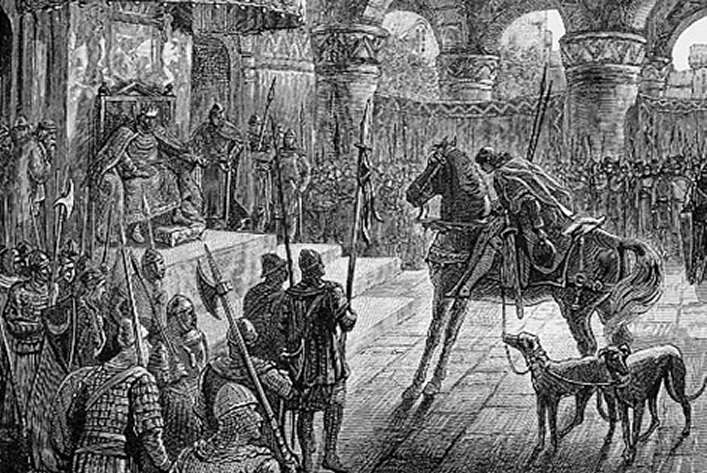
 In 1437,King James 1 of Scotland was approached by an Irish seer or fortune teller who was later identified as a banshee She foretold his murder at the instigation of the Earl of Atholl.
.....................................................................................


There are records of several prophets believed to be physical  incarnations of  banshees attending the great houses of Ireland and the courts of local Irish kings.


=========================================
-----Family said to be haunted by a Banshee----------------
=========================================

A banshee’s cry is often believed to predicts the death of a member of one of Ireland’s five major families: the O’Grady’s, the O’Neills, the O’Briens, the O’Connors or the Kavanaghs. Over time as families blended, it was said that most Irish families had their own banshee.

It is also said that the banshees followed their families as they emigrated from Ireland to other places across the globe, though some stayed behind to grieve at the original family estate.

...............

The Banshee that haunt's the O'Brians Family's was believed too be go by the name of Eevul, and was the apparently the leader of of at least  25 other banshees who would always be at her attendance. .

In later versions, the banshee might appear before the death and warn the family by wailing.

When several banshees appeared at once, it would  indicated the death of someone great or holy.


 .............................................................................................................................

In some versions a Banshee is a type of fairy,  in other story's she  was a ghost, often of a specific woman that had been murdered, or a mother who died during childbirth.

Banshees are usually described as dressed in white or grey, often having long, pale hair which they brush with a silver comb, a detail scholar Patricia Lysaght attributes to confusion with local mermaid myths. This comb detail is also related to the centuries-old traditional romantic Irish story that, if you ever see a comb lying on the ground in Ireland, you must never pick it up, or the banshees, having placed it there to lure unsuspecting humans, will spirit  you away.

Other stories describe the banshees as being dressed in green, red, or black and often with a grey or dark cloak.
-----------------------


In traditional Scottish Gaelic mythology, the banshee is known as the bean sìth or bean nighe and can be  seen washing the bloodstained clothes or armor of those who are about to die. Similar beings are also found in Norse, and Welsh mythology.
===================================

..Other Media ...

The America paranormal drama Teen Wolf

                                               Teen Wolf --  Lydia Martin the Banshee
----------------------------------------------------------------------------------------


Monster High resident banshee named Scarha Screams..

............................................................................................................


 and another well know charter the villain know as Silver Banshee from DC Comics


===================================================

Chip and Dale Rescue Rangers had a banshee in the Episode called "The Last Leprechaun"


  .....................................................


and

Tiny Toon Adventures had an ep featuring a banshee as well . "Pluck of the Irish"


Hope you all enjoy these post's, starting next week i will be doing mostly Cryptid/ monster post  until Halloween or a little after. Happy early Halloween lol

Wednesday, September 18, 2019

Blessed Mabon..


Well the fall leaves are starting to show in some place more the others Autumn is upon us..


Blessed Mabon..

Maybon begins Seoptember 21st and ends September 29th this year.


For those of you unfamiliar Mabon is a wiccan holiday in celebration of the Autumn Equinox.


Mabon celebrates  the autumnal equinox,  think of it as a sort of  wiccan thanksgiving

Mabon also called Meán Fómhair or Alban Elfed  is a Neo Druid tradition, it hones the harvest and the bounty it bestows on us with the  fruits of the earth and a recognition of the need to share them to secure the blessings of the Goddess and the God during the coming winter months.


 The name Mabon was first coined by Aidan Kelly around 1970 as a reference to Mabon ap Modron, from Welsh mythology.

 Mabon ap Modron is a prominent figure from mythology and ties into the Legend of King Arthur  Mabon was said to by  the son of Modron  and a member of Arthur's  war band.


                                        Arthur's court at Celliwig, 1881

 
Both he and his mother were likely deities in origin.

 His name is also related to the Romano-British god Mapanos, whose name means "Great Son"


To modern Wiccan / Withes  who follow the cycle of the seasons it is a way of combining , both ancient and modern triditions.

Contemporary Pagan festivals that rely on the Wheel are based to varying degrees on Folk traditions  from many different pagan and Celtic custumes regardless of actual historical pagan practices.

Among modern witches, each festival is also referred to as a sabbat.

Among the sabbats Mabon, is the second of the three Pagan harvest festivals, preceded by Lammas or Lughnasadh and followed by Samhian or Halloween,..

The third and final harvest festival "Samhain" is a Gaelic festival marking the end of the harvest season and the beginning of winter or the "darker half" of the year. Traditionally, it is celebrated from 31 October to November 1st. it is also a time when the vail between the living world and the spirit world is thinnest, it is the time of the year to honer the spirits and your ancestors.

Monday, September 16, 2019

Fairy Myth: Brownies


                                                            ~~~~~~Brownie's~~~~~~~


A brownie is a type of house elf.


In Scottish folklore brownies  are small human like, benevolent fairies (pronounced broony).

They appear to humans as small dwarve like beings  with dark black eyes.

There clothes are usually colored with different  earth tone colors.

They have pointed ears, big eyes, and long fingers.

They often explore a village finding homes of good, honest, and humble people.

 Once they find a good person's house, they set about, cleaning it, organizing it, and even adding new things. They don't like cats, and won't clean houses that have them.

If one were to leave food (preferably milk, honey, ale, porridge, and cake), that person would have a greater chance of receiving a nighttime visit from the Brownies.

Brownies despise liars, murderers, crooks, or any other immoral person, and will actively prank them, steal things from, or just mess up the person's house. Sometimes, a brownie will like a particular house, and will decide to stay there. They will probably stay in the attic, cellar, or woodshed.

They will only work during the nighttime hours, because they don't like to be seen.

Brownies do not like to be referred to as fairies, and may cause physical harm if someone where call them fairies.

All Brownies sometimes have meetings to catch up and discuss things (kind of like family reunions), usually on a rocky cliff or someplace really desolate  out of human sight.

 Brownies have been seen in modern day movies and games as well.

The card game Magic: The Gathering has a couple cards that are brownies, the Flyndhorn Brownie, and the Shelkin Brownie

 In the book Dragon Rider, there were brownies throughout the story, the main one was named Sorrel

 and

Probably the most well know house elf, Dobby from Harry Potter was based off of Brownies..


There is another type of brownie called the ùruisg or urisk.

 It is usualy seen near streams and waterfalls, not houses. And while it's still kind and sociable, it won't help out with the chores.

During spring and summer, it's somewhat  reclusive, but around the end of the harvest season, it opens up and will actually talk to humans.

It likes dairy products, and was said too  pesters milkmaids into giving him more milk.

 It's always seen carrying a walking stick with it, they have  long yellow hair, and sometimes wears a blue bonnet.


Thursday, September 12, 2019

Fairy Myth: The Kelpie


                       ===============The Kelpie=================


The Kelpie, is a Dark Fay or Evil water spirit of Scottish folklore.

The Kelpie is most often described as a strong horse.

Its hide was black in most versions of the legend, though in a few stories it was white, and appeared as a lost horse, but even in this form it could be identified by its dripping mane.


 Its skin was said to be similar too that of a seal, smooth but as cold to the touched.

Other accounts of this legend state that Kelpies also had the ability to transform it's appearance into a human form most of the time it would resemble a handsome man, But it could also take the form of a beautiful women as well. In some versions of the story the Kelpie still has hooves in human form other versions it dose not... They also created illusions to keep themselves hidden in he water, Only their eyes would remain above the water to scout the surface for potential victims.

Kelpie legends vary by region there are legend's of them throughout Scotland associated with almost every loch.

In some versions of the myth the Kelpie is described as green as grass with a black mane and tail that curves over its back like a wheel or that, even in human form, they are always dripping wet and/or have water weeds in their hair.

It's most common form is a horse. the Kelpie, uses this form to lure humans, especially children,
into the water to drown and later eat them.

The water horse would encourage children to ride on its back,
once its victims fell into its trap, it's skin would become adhesive and
the horse would carry the children into the water, dragging them to the bottom of the water and devouring them.

 Sometimes it just attacks people riding by and kills them with it powerful arms.
================================================================


One of the most common Scottish tale is the story of nine children lured onto a Kelpie's back,
while a tenth kept his distance.

The Kelpie chased the tenth child, but he escaped.

In a darker variation of this tale the tenth child simply hit the Kelpie's nose but, when his hand stuck to it, he took a knife from his pocket and cut off his own hand, cauterizing it with wood from a camp fire.

The child saves himself but is unable to help his friends, as they are pulled underwater with the Kelpie.


Thursday, September 5, 2019

Fairy Myths: The Cat Sidhe


                                                           The Cat Sidh.


 The Cat Sidhe, Cath Sith, Cait Sidhe, Fairy Cat. is a creature believed to be a type of fay/fairy that lives in or near the Scottish Highlands.


The cat sidhe, like it's name would suggest is a cat like creature, in some versions of this tail it is as  large as a dog.

Most often described as black and white this cat is said to roam the Scottish Highlands, and was believed to steal the souls of any nearby newly deceased bodies before burial.during  the Feill Fadalach  OR  “Lake Wake, unburied bodies were watched over night and day to make sure the Cat Sìth would not gain access to the corpse and to keep it away from the room in which the body was kept they would also avoid lighting any fires near the burial as the Cat sihde was said to be attracted to the warmth .. 

Apparently anything that will distract a cat will work on the cat sith, thing like catnip and music were sometimes used.

Most believed the Cat Sìth is a type of feline fairy, but in some Celtic legends the Cat Sìths were thought to be shape-shifting witches who could turn themselves into a cat at least eight times.

Those attempting the transformation a ninth time would be permanently trapped in there cat  form, This is also the thought to be the origins of  the myth that cats have nine lives. 

The Cat Sìth is all black with the exception of a white spot on its chest.


=======================================================================

On a side note Black Cats are NOT bad luck, at least no more so then any other animal, but because of this misconception they are often mistreated during certain times of the year (Friday the  13th and Halloween for example).... during these times they are often  hurt and sometimes even killed by foolish and cruel people. Pleases keep them indoors and safe during the holidays..

Wednesday, September 4, 2019

Fairy Lore: The Cu Sith Or Fairy Dog


                                        The cù-sìth or Coin Sith is a type of Fairy Animal/ Soul Harvester...


The Cu Sith is a Fairy Dog from Scottish Mythology...


There is also a similar creature in Irish mythology, the Cu Sidhe is also similar to the Welsh Cwn Annwn, or the Hounds of Annwn in English. 

 It has a  long tail that is either coiled up or plaited (braided). With large paw's  the width of a man's hand, and glowing eyes.

It's usually described as a large dog like creature, who according to legends can be  about the size of a small bull with the psychical appearance of a dog.  (Not to be confused for the Hell Hounds or Black Dogs)

The cù-sìth is said to live  in the clefts or rocks and moors of the Highlands.

 It was seen as a harbinger of death that would arrive to carry away the soul of a person to the afterlife, similar to  the Grim Reaper.

 The Scottish legends the Cù-Sìth is  similar to the Bean sidhe or Banshee,  of  Irish folklore.

According to legend, the creature was capable of hunting silently, but would occasionally let out three terrifying barks, and only three, that could be heard for miles by those listening for it, even far out at sea.

 If You ever  hear the barking of the Cù-Sìth you have to reach safety by the third bark or you will be overcome with absolute  terror to the point of death....(Literally scared to death...)


According to some tails  the barking was a warning to lock up nursing women to prevent them from being abducted by the  fairy's and taken to the fairy  mound to supply milk for the young daoine sith ..

So beware the barks and howls  at night, you never know whats lurking just within the shadow's.

Monday, September 2, 2019

Fairy Lore:The Daoine Sidhe or Aos Si


September is going to be mostly Fairy myths and legends, After that

 i will be doing Crypid posts until Halloween or shortly after,.....


Fairy, Fay, Wee folk or whatever you call them the little people are all around us.

Here is a little info on some of them.

 The Daoine Sidhe..or Aos Si ...People of the mounds

Daoine Sidhe: Legend recounts that when the Milesians defeated the Tuatha dé Danann, they followed one of their leaders, Dagda, down under these earth mounds and became the Daoine Sidhe. They are the Trooping fairies and have their own regional kings and queens and owe allegiance to Finvarra and Onagh.

The aos sí (Irish pronunciation: [iːs 'ʃiː], "ees shee", older form aes sídhe is the Irish Gaelic term for a supernatural race in Irish mythology and Scottish mythology, (usually spelled Sìth, however pronounced the same) comparable to the fairies or elves.

 They are said to live underground in fairy mounds, across the western sea, or in an invisible world that coexists with the world of humans. This world is described in the Book of Invasions (recorded in the Book of Leinster) as a parallel universe in which the aos sí walk amongst the living.

In the Irish language, aos sí means "people of the mounds" (the mounds are known in Irish as "the sídhe").


 In Irish literature the people of the mounds are also called daoine sídhe; in Scottish mythology they are daoine sìth. They are variously said to be the ancestors, the spirits of nature, or Goddesses and Gods.

Some secondary and tertiary sources including well-known and influential authors such as W.B. Yeats refer to aos sí simply as "the sídhe" (lit.: mounds).

Sidhe  are the hills that dot the Irish landscape.

In modern Irish the word is Si; in Scottish Gaelic sith in Old Irish side  and the singular is sid.

In some English text the word sidhe   is incorrectly used both for the mounds and the people of the mounds. However sidh in older texts refers specifically to "the palaces, courts, halls or residences" of the otherworldly beings that are said too inhabit them.

The fact that many of these sidhe  have been found to be ancient burial mounds has contributed to the theory that the aos si  were the pre-Celtic occupants of Ireland.


Aos si are said to be fierce protectors of the home's or territory  whether a fairy hill, a Fairy Ring a special tree ( most times a Hawthorn or a particular loch  or forest.


It is believed that entering these spaces will cause the aos si  to retaliate in an effort to remove the people or objects that invaded their homes.

Many of these story's  are often linked to changelings myth were the aos si are said  to kidnapping trespassers or replacing their children with changelings as a punishment for their disrespect.

The aos si  are often connected to certain times of year and hours; as the Gaelic Fairy world or spirit world  is believed to come closer to the human  world at the times of dusk and dawn, and  the aos si  aos s are   easier to encounter. Some festivals such as Samhain (Halloween ) and  Baltane,.. May 1st the beginning of summer ( May Day)  are also associated with the aos si.