Showing posts with label UK. Show all posts

Saturday, March 21, 2026

The Green Children of Woolpit


In old British Folklore there's a tale of two strange or even otherworldly children that suddenly appeared one day near the  village of Woolpit in Suffolk England.  

The kids wore odd cloths and  spoke an unknown language however the most noticable difference was there green skin.

As the story goes, One day   two children, a boy and a girl, were found near a pit, possibly a wolf pit/den, in the village of Woolpit in 12th century ..1135-1154 .


The sister seemed to be in better health then the brother.

At first they both refused to eat any food  offered to them besides broad beans , though they eventually,  learned to eat other foods, and soon after their skin became normal.

Not long after there discovery, the boy passed away. 

The girl later named Agnes adjusted to her new life, but she was considered to be "very wanton and impudent". After she learned to speak English, the girl explained that she and her brother had come from a land where the sun never shone, and the light was like twilight. According to one version of the story, she said that everything there was green; according to another, she said it was called Saint Martin's Land.


......


Full story, or at least the only two near contemporary accounts come from   William of Newburgh's Historia rerum Anglicarum and Ralph of Coggeshall's Chronicum Anglicanum, written in about 1189 and 1220, respectively.


-----------------------

At harvest time one day during the reign of King Stephen (r. 1135–1154), according to William of Newburgh, the villagers of Woolpit discovered two children, a brother and sister, beside one of the wolf pits that gave the village its name.

Their skin was green, they spoke an unknown language, and their clothing was unfamiliar. Ralph of Coggeshall reports that the children were taken to the home of Richard de Calne. Ralph and William agree that the pair refused all food for several days until they came across some raw broad beans, which they consumed eagerly. 

The children gradually adapted to normal food and in time lost their green colour.

 It was decided to Baptis the children, but the boy, who appeared to be the younger of the two, was sickly and died before or soon after baptism.


After learning to speak English, the children—Ralph says just the surviving girl—explained that they came from a land where the sun never shone and the light was like twilight. William says the girl called their home St Martin's Land; Ralph adds that everything there was green. According to William, the children were unable to account for their arrival in Woolpit; they had been herding their father's cattle when they heard a loud noise (according to William, it was like the sound of the bells of Bury St Edmunds abbey and suddenly found themselves by the wolf pit where they were found. Ralph says that they had become lost when they followed the cattle into a cave and, after being guided by the sound of bells, eventually emerged into our land.


According to Ralph, the girl was employed for many years as a servant in Richard de Calne's household, where she was considered to be "very wanton and impudent". William says that she eventually married a man from King's Lynn, about 40 miles (64 km) from Woolpit, where she was still living shortly before he wrote.

Based on his research into Richard de Calne's family history, the astronomer and writer Duncan Lunan has concluded that the girl was given the name 'Agnes' and that she married a royal official named Richard Barre.

To this day nobody really know where he kids actually came from, one theory is that they were Flemish immigrants and the green skin could be due to chlorosis, a condition caused by iron deficiency, which would clear with a healthier diet. As it later did 


Saturday, April 13, 2024

Scottish Myth: The Blue Men of Minch.


The turbulent waters between Scotland and the Isle of Lewis  is called The Minch and like many large bodies of water, there are legends of otherworldly creatures lurking below it's depths.

The strait between the Island of Lewis and the Shiant Isles was known in the 19th century as ‘the stream of the Blue Men

They are a personification of the unpredictable and dangerous waters they inhabit.

The Blue Men of Minch are blue skinned men  similar to mermaids with tails and webbed hands. Also known as storm kelpies, they can use their powers to create storms to capsize ships and drown sailors. 


                                                                         The Shiant Isles  


The Blue Men are the source of many sea shanties.

Poetry was the primary form of defense against them. The chief "Blue Man" would recite two lines of poetry, and the captain of the ship would have to complete it to stop the attack.


They live in underwater caves in a clan system, while generations of folklore say they can only be beaten by making sure you get the last word in a rhyming duel.

Old legends claim that many Ship Captains escaped a watery fate thanks  the sharpness of his tongue, while those less fortunate are left to perish in the cold and raging waters common to the region.

However, innocent fishermen who have done nothing to anger the Sea Kelpies will be allowed pass through the area safely.

While they  sleep  the weather would remain calm but they could create storms whenever they wished too do so especially when angered.


The Blue Men can also help the locals, with a Samhain or Halloween tradition involving the lighting of a candle by the sea.

Ale is then poured into the water in order to encourage the Blue Men to leave seaweed on the beach as fertilizer

Physically they  are the same size as an average  human , but their strength if far greater then a normal man.

They wear a blue cap's on their head  and have grey faces which often  appear above the waves when they are surveying the seas.


 In summer weather they skim the waved just below the surface but when the wind is high they revel in the storm and swim with heads erect, splashing the waters with delight. Sometimes they are seen floating from the waist out to sea, and sometimes turning round like porpoises when they dive.”


Monday, March 18, 2024

Each Uisge: The Scottish Water Horse.


The each-uisge, is a supernatural water horse that can  be  found in the Scottish Highlands, it's an extremely aggressive  and possible the fiercest and most dangerous of the water-horses fay.

Often mistaken for the kelpie (which inhabits streams and rivers), the each-uisge lives in the sea, sea lochs, and fresh water lochs.


 This creature  is a shape-shifter just like the kelpie, it will often  disguise itself as a beautiful horse, pony, a handsome man or an enormous bird such as a boobrie.


If you try to ride it while in horse form,  you will  only be safe as long as its ridden on land. However, the moment it see's even small amount of water it's  skin becomes as sticky as a strong adhesive and it will immediately go to the deepest part of the loch with its victim. After you have been dragged to the bottom and  drowned, the each-uisge will  tear you apart and eat your entire body except for the liver, which later  floats to the surface.


In its human form it often  appears as a handsome man, but can still  be recognized as a water  creature by the water weeds or sand and mud in its hair.

 Because of this, people in the Highlands were usually couscous around a lone animals and strangers by the water's edge, near where the each-uisge was sighted. 


The each-uisge has a desire for human women.

 Any woman that it sets its sights on is almost certain  to become its victim.

One old story tells of a  young woman who  encountered a water horse in the form of a handsome young man while she was herding cattle,  he laid his head in her lap and fell asleep. 

When he stretched himself she discovered that he had horse's hooves and quietly made her escape (in an alternate variations of the tale she finds the presence of water weeds or sand in his hair). 

In another account a water horse in human form come's to a woman's house where she was alone and attempted to court her, (other versions claim he tried to rape her) but all he got for his unwanted advances was boiling water thrown in his crotch. He ran from the house roaring in pain. In a third tale a father and his three sons conspired to kill a water horse that came to the house to see the daughter. When they grabbed the young man he reverted to his horse form and would have carried them into the loch, but in the struggle they managed to slay him with their dirks.(daggers)  Despite its amorous tendencies, however, the each-uisge is just as likely to simply devour women in the same manner as its male victims.


Cnoc-na-Bèist ("Hillock of the Monster") is the name of a knoll on the Isle of Lewis where an each-uisge was slain by the brother of a woman it tried to seduce, by the freshwater Loch a’ Mhuileinn ("Loch of the Mill").

Along with its human victims, cattle and sheep were also often prey to the each-uisge, and it could be lured out of the water by the smell of roasted meat.

There are also tales of the   each-uisge in the  River Spey in the Cairngorms. The An t-Each Ban was a white water-horse, which despite not being the usual black color was otherwise "traditional", seeking out travelers on stormy nights in its horse form, and leaping with its victims into deep water. 

The yellow horse of the Spey was an even more unusual color and its preferred victims were married couples. Legends also claim  that if a woman could get a hold of the rich bridles and replace it with a cow shackle then she would have power over the each uisge for the rest of her life and that the bridle would bring her good fortune.


The aughisky or Irish water horse is similar in many respects to the Scottish version. It sometimes comes out of the water to gallop on land and, despite the danger, if the aughisky can be caught and tamed then it will make the finest of steeds provided it is not allowed to glimpse the ocean.

The cabyll-ushtey (or cabbyl-ushtey), the Manx water horse, sometimes confused or conflated with the glashtyn, is just as ravenous as the each-uisge though there are not as many tales told about it. One of them recounts how a cabbyl-ushtey emerged from the Awin Dhoo (Black River) and devoured a farmer's cow, then later it took his teenage daughter.

 A blacksmith from Raasay lost his daughter to the each-uisge. In revenge the blacksmith and his son made a set of large hooks, in a forge they set up by the loch side. They then roasted a sheep and heated the hooks until they were red hot. At last a great mist appeared from the water and the each-uisge rose from the depths and seized the sheep. The blacksmith and his son rammed the red-hot hooks into its flesh and after a short struggle dispatched it. In the morning there was nothing left of the creature apart from a jelly-like substance


Each Uisge Skeleton 


If you happen to be traveling through the Highlands be weary of any overly friendly horse especially near water.  You Never know when your luck may run out..


Thursday, March 7, 2024

Irish Folklore: The Merrow 🧜‍♀️🌊


                                                   🧜‍♀️ The Merrow🍀

Mermaids are a global phenomena, every culture (Or at least the ones nearest the sea) have legends dating back century's from sailors encounters the beach side sighting.s.


Today we talk about the Irish Mermaid: The Merrow.


 Just like the alluring Sirens of Greek Mythology, The beautiful songs of the Merrow (The females ) was used to entice humans to come  closer.

As far as mermaid tales go these mermaids were mostly kind to humans, however they would sometimes ,  attack sailors or anyone else who startled or threatens them.

The Irish were weary of  them  because of their sometimes violent nature, they could be violent or friendly on a whim…and if angered they  could be Very  dangerous. Tales of violence (such as pulling the arms and legs off of their victims) were not uncommon…

Like most mermaid stories, human men  especially sailors  would see the beautiful female Merrow on the shores or in the sea, and they would fall in love with them, despite the risks…some would try to steal their cohuleen driuth (magic caps, similar to a Selkies pelt), so that they could not go back underwater.

 Many marriages (some less than ideal, given the method of “wooing”) were  arranged between Merrow and human men…

The Merrow who lived with men on the land (by choice or force), would often tire of their new lifestyle.

Over time, they would become tired of life on land and long to return to the sea they once called home,  the lucky ones, who still had their magic caps, would eventually find a way home…

Other female Merrow would sometimes lure men with their enchanting voices and good looks, and then take them under the waves to live amongst them. They would dwell together in a bewitched state, sometimes for years or even decades …


The male Merrow would often abducted sailors and keep  them enslaved beneath the sea!

The females had light green hair, or long, golden hair…they always wore enchanted caps which allowed them to swim far beneath the sea’s surface and to live safely underwater.

Next time your on the Irish shore keep a look out that beautiful bonny lass may be more then she appears 


Tuesday, March 31, 2020

Fairy Lore: The Fairy shoe of the Beara Peninsula.


                     Image result for leprechaun shoe ireland


Every now and then a strange  artifacts comes to light thats makes you ask maybe there is some truth to all those old fairy sightings maybe the little people really do exist

one such item is this incredible little shoe....
=====================================
..,

There are many strange and fascinating stories of little people from every corner of the  world but some of the most well know come from the United Kingdom Ireland, Scotland and England… 

However many other cultures seem to have very similar story's that would suggest  the existence of a possible  hidden race of tiny people… and although they were presumably wingless, judging by the relics found so far, they would be so small, they could indeed look just like modern representations of fairies!... 

One such artifact a  very tine worn-in, shoe made of mouse leather … found by a sheep farmer on an ancient trail within the Beara Peninsula in Ireland in 1824. 

Could this really be a leprechauns shoe or maybe a fairy ?

==================================

Crofton Croker wrote (84, 1824): A paragraph recently appeared in a Kilkenny paper stating, that a labourer, returning home in the dusk of the evening, discovered a Leprehaune at work, from whom he bore away the shoe which he was mending; as a proof of the veracity of his story it was further stated, that the shoe lay for the inspection of the curious at the newspaper office. The most prominent feature in the vulgar creed.

Are you aware that, on this side of the channel  we have so little doubt of the existence of fairies, that it is no uncommon occurrence to see shoes of fairy manufacture publicly advertised in the newspapers? If I tell you, that while crossing a field, in the purple light of the morning, the attention of a peasant was arrested by the sound of a shoemaker’s hammer; and that, upon leaving the path to discover the cause, he disturbed an elfin cobbler, who it seems was at his trade betimes, and mending his brogues by the side of the ditch; that the spirit of the air, anxious to escape from the prying eyes of mortal wight, leapt from the bank, and, in his haste, dropped both shoe and hammer: if I go on to tell you, that this story is most gravely related, and that the editor informs the public, that both shoe and hammer were carried to such a house, in such a street, in a certain town, in the county of Roscommon, and may there be viewed by any curious or incredulous persons; you will, I think, acknowledge that my tale has at least a better foundation than many which are related to our disadvantage, and but too readily swallowed by the credulity of our English friends (Blake 1825 118-119).
======================================

=============================
 

 The amount of work it would take to create this tiny shoe,  especially with the size of our hands would have been very difficult especially in the early 1800's, the farmer was amazed to find that the shoe clearly shows signs of wear, particularly at the heel, in fact, although tiny, this shoe had indeed been well worn-in by someone no bigger than an average pencil... 

The farmer eventually gave the shoe to the local doctor, and from there it was passed to the Somerville family, the current whereabouts of the shoe is unknown, although it is rumored to be in Munster, in Ireland. 

At one point it was even  examined by scientists at Harvard University, they found it was indeed hand stitched, using tiny stitches, and well-crafted tiny eyelets, it was also  shown to be made from mouse skin. 

The belief in fairies, or tiny humans, is known as the “fairy faith” it is still found throughout Europe and the UK to this day.
--------------------------


 In some parts of the world,  Iceland for instance fairy faith is still very strong, artifacts left or given by these tiny people have been documented on several occasions. 
 ......


The fairy woman’s cloth of Bursta-fijall, is but one example of a gift from these tiny beings, According to the legend attached to the tiny, unique relic, the wife of the district police superintendent and public prosecutor at the farm of Bursta-fijall in Vopnaf-jordur, in the east of Iceland, received this cloth as payment from a fairy woman whom she had midwifed. 

The cloth is now in the National Museum in Rekjavik. Thor Magnusson, who is the president’s Custodian of Antiquities says, ‘Certainly it’s a unique cloth, There are some other ‘gifts’ too up and down the Atlantic coast of Europe including the flag of MacLeod, kept today at Dunvegan Castle… Stolen from a group of tiny warriors… 

In the fifteenth and sixteenth centuries, the flag was believed to bring luck to the clan, MacLeod even brought a picture of the flag on bombing raids in the Second World War… 

Arguably the  most famous object is known as the “Luck of Eden Hall,” a cup that was won fairly from fairies, by a member of the Musgrove family. 

                                     2012-03 V&A Museum 023 | THE LUCK OF EDENHALL Goblet about 1… | Flickr
                                   
                                                          Luck of Eden Hall

Today the cup stands, in the Victoria and Albert Museum. The cup, which is astoundingly beautiful, is surprisingly, of “eastern origins.” Although many of the things mentioned could, and have been put down to elaborate, yet entertaining hoaxes… 

The fairy or Leprechaun shoe found in the remotes of Ireland, is one of those extremely rare artifacts, that does indeed seem authentic… 

keep your eyes peeled you never know what may turn up next .....


Monday, March 9, 2020

Fairy Lore: Knockers's OR Tommyknockers


                                 Image result for tommyknocker
 Fairy Lore: The Knockers...

They are often said to live within the mines and can be dangerous or benevolent depending on who you ask..

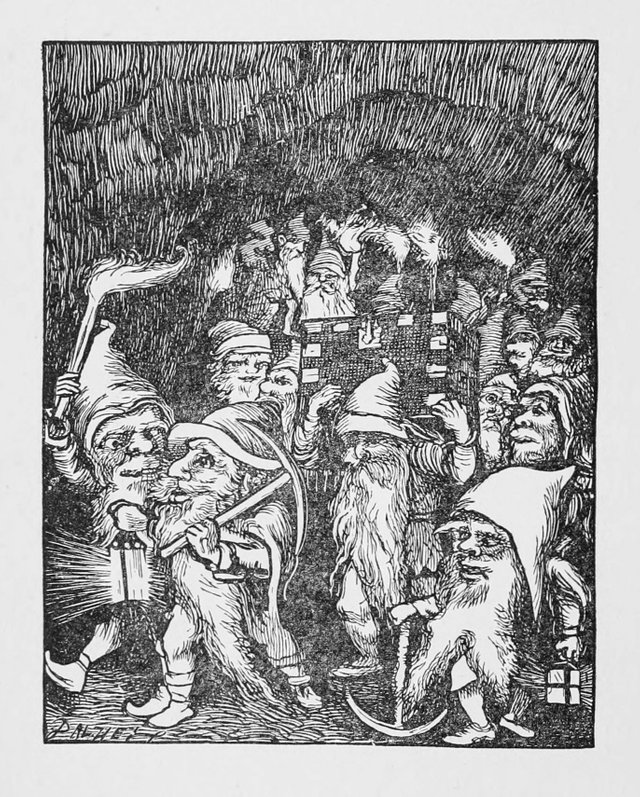
The Cornish described the creature as a little person two feet tall, with a disproportionately large head, long arms, wrinkled skin, and white whiskers. It wears a tiny version of standard miner's garb and commits random mischief, such as stealing miners' unattended tools and food.


 Other Names
The Knocker, Knacker, Bwca/bucca or Tommyknocker  is a mythical creature in Welsh, Devon and  Cornish mythology . It's closely related to the Kentish Kloker or the Irish Leprechaun .

In the 1820s, immigrant Welsh and Cornish miners brought tales of the tommyknockers and their theft of unwatched items and warning knocks to western Pennsylvania   when they relocated there to work in the mines.

The American gold rush brought people from all over the new world in search for gold , silver and untold wealth with there arrival is  California, Nevada and Colorado  tales of these subteranian dwelling little creatures soon began to rise.

 When asked if they had relatives who would come to work the mines, the Cornish miners always said something along the lines of "Well, me cousin Jack over in Cornwall wouldst come, could ye pay ’is boat ride", and so came to be called Cousin Jack.

The Cousin Jacks, as notorious for losing tools as they were for diving out of shafts just before they collapsed, attributed this to their diminutive friends and refused to enter new mines until assured by the management that the knockers were already on duty. Even non-Cornish miners, who worked deep in the earth where the noisy support timbers creaked and groaned, came to believe in the Tommyknockers. 

The American interpretation of knockers is somewhat  more ethereal or ghost like  than elvish.

                                            Image result for tommyknocker


Belief in the knockers in America remained well into the 20th century. When one large mine closed in 1956 and the owners sealed the entrance, fourth, fifth, and sixth generation Cousin Jacks circulated a petition calling on the mineowners to set the knockers free so that they could move on to other mines.


The owners complied. Belief among Nevadan miners persisted among its miners as late as the 1930s. 

 Tommyknocker Brewery in Idaho Springs  Colorado..owes its name to the mythical creature, and began serving in 1859 to meet the needs of the large number of prospectors, as part of the Colorado Sliver Boom. The brewery continues to operate and distributes nationally.
Knocker also appeared as a name for the same phenomena, in the folklore of Staffordshire miners.
 Image result for tommyknocker brewery

Image result for tommyknocker brewery


 Cornish Myth...
The Knockers  get there name  from the knocking sounds the make on the mine walls that happens just before cave-ins. (actually the creaking of earth and timbers before giving way.)

 To some miners, knockers were malevolent spirits and the knocking was the sound of them hammering at walls and supports to cause the cave-in. Other's  saw them as essentially well-meaning jocksters .

Some believed the knocking was their way of warning the miners that a life-threatening collapse was about to happen.

According to some Cornish folklore, the Knockers were the helpful spirits of people who had died in previous accidents in the tine mines,  and this was there way of warning the miners of impending danger. To give thanks for the warnings, and to avoid future danger  the miners would throw the last bite of their pastries into the mines for the Knockers.


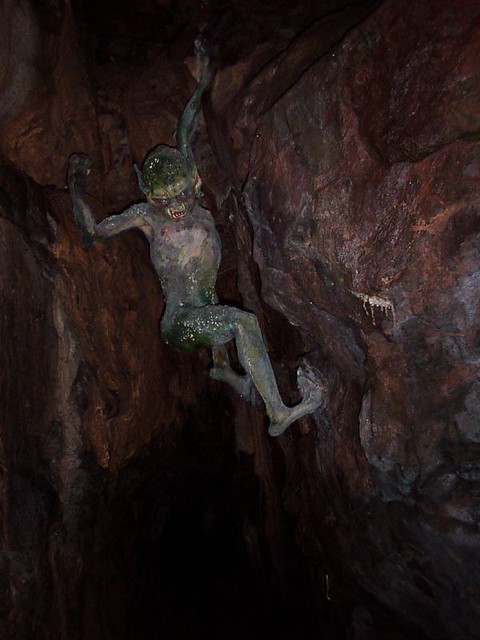
 Some described the knockers as human like in appearance other's say the are more goblin like...

                          Image result for tommyknocker

                                                   Chaddar cave demon

----------------------

One of the more well know iterations of this tale come from American Horror writer Stephen King and is story The Tommyknockers, later adapted into a movie.....Though they were depicted as aliens instead of supernatural beings


                                    Image result for tommyknockers tommyknockers

Image result for stephen king tommyknocker

Saturday, February 1, 2020

Demons of Love: the Baobhan Sith or Scottish Vampire / fairy ..


==========================
February  is the month of love and valentines Day, so too celebrate the month of love i will be posting about the monster's  of Love and subduction ...Think of demons like  the Succubus and other's similar to her in nature...
================
             

                         ~~~~Baobhan Sith ~~~  
                            👻☘️💕😈💕☘️👻

==============
===================

The Baobhan Sith, pronounced baa’van see, also also known as the White Women of the Scottish Highlands or simply the Fairy Woman.

The Baobhan Sith is most often  depicted as  a beautiful young woman,

They are believed to be a type of fairy, though they share similarities to Succubus and Vampire's

They can be found lurking in the Highlands, waiting to seduce young travelers and drink their blood.
=====================


Thought to be fairies. though some believe them to be a sub spices of Succubus or a type of lesser vampire... are a particularly dangerous type of vampire-spirits from the folklore of the Scottish Highlands like  the Leanan Sídhes, the Boabhan Siths are considered female but are usually temptresses who use their beauty to lure men into dance before brutally killing them


There mane concern is feeding - they will luring young hunters in by inviting them to dance until the hunter's are too tired too fight back or  overpower the Baobahn Sith.

They would then feed on their helpless victims, draining them dry of blood.


===

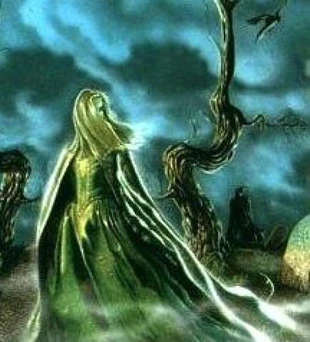
The baobhan sith most often appears as a beautiful young woman wearing a long green dress..

She has deer hooves insted of normal human feet..

The long dress is used to conceals her  hooveed legs ..

                                      
                                             Green Dress...

===============


Like vampires, she drinks the blood of human victims and will leave before dawn..

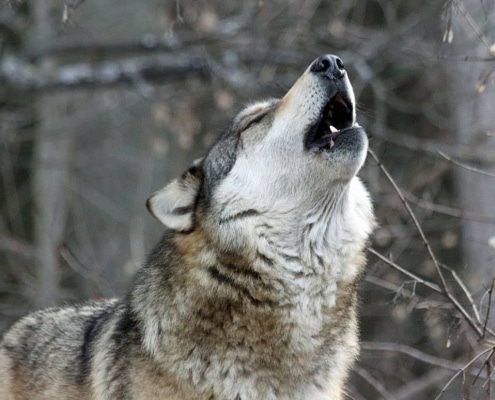
She  can also transform according to some legends she may take the form of a hooded crow or raven. in other versions she will transform into a wolf..
                                       Image result for wolf


There are numerous stories about the baobhan sith with a general theme of hunters being attacked in the wilderness at night.


                                       Image result for baobhan sith, green dress


================


One famous legend state's that there were four men who went hunting and took shelter for the night in an old cabin.

One of the men supplied vocal music while the others began dancing.

The men wished there were woman present  to dance with, and soon after that four women entered the hut.

Three of them danced while the fourth sat beside as the vocalist.

He then noticed drops of blood falling from his companions and fled from the hut, taking refuge among the horses. His blood thusty  guests chased him but were unable to catch him, and when daylight came the woman all disappeared.

Later the man went back inside and found all three of his friends dead and  completely drained of blood.

The  baobhan sith was unable to catch the fourth man because liker other fairy's she has a weakness to iron., (iron being a traditional fairy  vulnerability.)

==============

In a similar tale one of the men noticed that the women had deer hooves instead of feet and fled from them. He returned the next morning to find that the other hunters had their "throats cut and chests laid open".

==============

 
In a third story the hunters took refuge in a cave.

Each of the men said he wished his own sweetheart were there that night, but one of them, named Macphee, who was accompanied by his black dog, said he preferred his wife to remain at home.

 At that moment a group of young women entered the cave, and the men who had wished for their sweethearts were killed. Macphee was protected by his dog who drove the women from the cave.

 
One recurring motif in these stories is that the baobhan sith appear almost immediately after the hunters express their desire for female companionship.

This is connected with a traditional Scottish belief that if one were to make a wish at night without also invoking God's protection, then that wish would be granted in some terrible manner..
=========================================


Monday, September 23, 2019

Fairy Myths: The Dullahan


============================================================
This will by my last Fay/ Fairy post for now, my next post will be Paranormal..Cryptid's and Monsters at least until  Halloween. anyway Enjoy :)
===========================================================


                                            monster musume - lala by angellmoonlight on Deviantart


                                                  The Dullahan: Ireland's Headless Rider.


The Dullahan  is a type of fay from Irish Mythology it's  often seen as a harbinger of death.

This creature is depicted as a headless rider usually on a black horse or is some versions riding in a black horse drawn coach. The Dullahan is also refered to as Gan Ceann which means "Without a Head".


The headless rider is known too carries their own head under one arm. typically the Dullahan  is described as male, but there are some female versions.


The Dullahan has limited  speech capability's.

Its disembodied head is permitted to speak just once on each journey it undertakes, after that it only the ability to call the name of the person whose death it heralds.

A dullahan will stop its snorting horse at  the door of a house and shout the name of the person about to die, drawing forth the soul at the call.

 He may also stop at the very spot where a person will die.

On nights of Irish feast days, it is advisable to stay at home with the curtains drawn; particularly around the end of August or early September when the festival of Crom Dubh reputedly took place. If you have to be abroad at this time, be sure to keep some gold object close to hand.


The origins of the dullahan are unkown, but he is thought to be the embodiment of an ancient Celtic god, Crom Dubh, or Black Crom.

Black Crom was worshiped by the prehistoric king, Tighermas, who ruled in Ireland about fifteen hundred years ago and practiced human sacrifice.

Unlike the banshee, the dullahan does not follow specific families and its call is a summoning of the soul of the dying,  rather than a death warning.

 There is no real defense against the dullahan because he is death's herald. However, an charm or trinket made of gold may frighten him away.

 The  Dullahan's mouth is usually seen  in a sinister or hideous  grin that stretches from ear to ear. Its eyes are constantly moving about and can see across the countryside even during the darkest nights.

The flesh of the head is said to have the color and consistency of moldy cheese.

In some tales the Dullahan is believed to use the spine of a human corpse for a whip, and it's ghostly wagon is adorned with funeral objects: it has candles in skulls to light the way, the spokes of the wheels are made from thigh bones  and the wagon's covering is made from a worm-chewed pall or dried human skin.


The ancient Irish believed that where the Dullahan stops riding, a person is going  to die.


 The Dullahan calls out the person's name, drawing away the soul of his victim, at which point the person immediately drops dead.

Some legend's say that golden objects can force the Dullahan to disappear.These tales are coming from ancient times, where gold was very valuable and most commoner's / villagers did not have it.


It was thought that by .leaving  behind the gold as a sort of sacrifice  the soul could be spared.


 ====================================================================


Dullahans have also been main charterers in modern anime and manga's...


Durarara, Interviews with Monster Girls and Monster Musume to name a few.


Saturday, September 21, 2019

Fairy Myth: The Banshee


                                              ~~~~Scarah Screams by ashiori_chan ~~~~

                                                          Banshee from Monster High..


---------------------------------------------------------------------------------------------------------------
The Banshee / Bean Si or Wailing Woman is seen as a harbinger of death, and is often said too haunt specific Irish family's though this is not always the case.

The legends  of the banshee can be traced back at least  as far as the early eighth century.

These story's  were based on an old Irish tradition where a women would sing a lament to signify a persons death.


In Scottish Mythology there is also a similar creature it's known as a the Bean nighe or ban nigheachain (little washerwoman) or nigheag na h-àth (little washer at the ford).

In Welsh mythology, She is  called the Hag of the mist.


===========================================


There are even stories of banshee's or banshee like creature in  America dating back to as early as the late 18th century.

 The most common area for the American Banshee is the Tar River in Edgecombe County, North Carolina .

Though unlike her Celtic counterpart,  this version of  the banshee is more like  a ghoul, as opposed to a spirit or messenger of death.

In one version of this legend a man named Dave Warnen was killed by the British and on his final breath cured them, as the  legend goes a banshee soon appeared and lead his killers tohe river were they drowned. She is said to still haunt the area.
......................................................................................


Another version of the American  Banshee can be found in the badlands area of South Dakota, where  people claim to hear a banshee's wail from a hill near Watch Dog Butte.
                                                            Banshee of the Badlands
 =========================================================


Many people in our modern time see the myth of the banshees as little more then entertaining Folk lore, something akin to campfire tales  while others believe wholeheartedly  in their existence.

Do Banshee's cause  death or simply foretell it, there have been reports of heart attacks or drowning and other sudden deaths of otherwise healthy individuals within  weeks following what was thought to be the sound of a banshee’s cry.

One of the most famous example of this is King James I of Scotland who was murdered soon after he reported having been approached by a strange Irish seer. 
 =====================================

---King James 1 Banshee encounter------
======================================
 In 1437,King James 1 of Scotland was approached by an Irish seer or fortune teller who was later identified as a banshee She foretold his murder at the instigation of the Earl of Atholl.
.....................................................................................


There are records of several prophets believed to be physical  incarnations of  banshees attending the great houses of Ireland and the courts of local Irish kings.


=========================================
-----Family said to be haunted by a Banshee----------------
=========================================

A banshee’s cry is often believed to predicts the death of a member of one of Ireland’s five major families: the O’Grady’s, the O’Neills, the O’Briens, the O’Connors or the Kavanaghs. Over time as families blended, it was said that most Irish families had their own banshee.

It is also said that the banshees followed their families as they emigrated from Ireland to other places across the globe, though some stayed behind to grieve at the original family estate.

...............

The Banshee that haunt's the O'Brians Family's was believed too be go by the name of Eevul, and was the apparently the leader of of at least  25 other banshees who would always be at her attendance. .

In later versions, the banshee might appear before the death and warn the family by wailing.

When several banshees appeared at once, it would  indicated the death of someone great or holy.


 .............................................................................................................................

In some versions a Banshee is a type of fairy,  in other story's she  was a ghost, often of a specific woman that had been murdered, or a mother who died during childbirth.

Banshees are usually described as dressed in white or grey, often having long, pale hair which they brush with a silver comb, a detail scholar Patricia Lysaght attributes to confusion with local mermaid myths. This comb detail is also related to the centuries-old traditional romantic Irish story that, if you ever see a comb lying on the ground in Ireland, you must never pick it up, or the banshees, having placed it there to lure unsuspecting humans, will spirit  you away.

Other stories describe the banshees as being dressed in green, red, or black and often with a grey or dark cloak.
-----------------------


In traditional Scottish Gaelic mythology, the banshee is known as the bean sìth or bean nighe and can be  seen washing the bloodstained clothes or armor of those who are about to die. Similar beings are also found in Norse, and Welsh mythology.
===================================

..Other Media ...

The America paranormal drama Teen Wolf

                                               Teen Wolf --  Lydia Martin the Banshee
----------------------------------------------------------------------------------------


Monster High resident banshee named Scarha Screams..

............................................................................................................


 and another well know charter the villain know as Silver Banshee from DC Comics


===================================================

Chip and Dale Rescue Rangers had a banshee in the Episode called "The Last Leprechaun"


  .....................................................


and

Tiny Toon Adventures had an ep featuring a banshee as well . "Pluck of the Irish"


Hope you all enjoy these post's, starting next week i will be doing mostly Cryptid/ monster post  until Halloween or a little after. Happy early Halloween lol

Friday, September 20, 2019

Fairy Myth : Leanansidhe - the vampier fairy


                                          ~~Irish Myths and Legends...The Leanansidhe~~


The Leanansidhe

Leanansidhe (Lhiannanshee) Leanan Sidhe: The Lhiannan Shee of the Isle of Man is said to be a vampir like  fairy who attached herself to one man, to whom she appeared irresistibly beautiful, but invisible to everyone else. If he yielded to her, he was ruined body and soul.

She is both a muse and a demon of sorts,  In Celtic lore the Leanan Sidhe is one of Ireland’s mythological vampires.

The fairy was a beautiful woman who was said to give inspiration to poets and musicians – but at the price of their lives.


She can often be found around wells or natural springs.

According to some legends she would make an artist her lover, sharing with them her intelligence, creativity and magic, but when she left, the men would be so depressed, they'd die. Leanan Sidhe would then take her dead lovers back to her lair.


Rather than directly suck the blood of her victims, Leanan Sidhe got creative, and collected their blood in a giant red cauldron, which was the source of her beauty, youth and artistic inspiration.

In other versions of this myth she takes is energy, like a type of energy vampier, ether way he die's..

As with Dearg-due, to prevent the undead Leanan Sidhe from rising, one must put a cairn of stones over her resting place.


The Irish Leanan Sidhe is known as the inspiration of poets and minstrels. She would roam the night, searching for romantic men to inspire with eloquence of word and beautiful music while in her embrace, and would draw from their life force until he would die.

Both names mean "fairy Sweetheart". In Scotland, the Leannan Sith was a term used to denote a fairy lover of either sex. In fact, the translators of the Bible into Scots Gaelic used this term, and the Scots took this as Biblical proof of the existence of fairies.

The Lhiannan Shee of Ballfletcher was the tutrelary fairy of the Fletchers, and gave them the fairy cup, which was drank from every Christmas in her honor.


Monday, September 16, 2019

Fairy Myth: Brownies


                                                            ~~~~~~Brownie's~~~~~~~


A brownie is a type of house elf.


In Scottish folklore brownies  are small human like, benevolent fairies (pronounced broony).

They appear to humans as small dwarve like beings  with dark black eyes.

There clothes are usually colored with different  earth tone colors.

They have pointed ears, big eyes, and long fingers.

They often explore a village finding homes of good, honest, and humble people.

 Once they find a good person's house, they set about, cleaning it, organizing it, and even adding new things. They don't like cats, and won't clean houses that have them.

If one were to leave food (preferably milk, honey, ale, porridge, and cake), that person would have a greater chance of receiving a nighttime visit from the Brownies.

Brownies despise liars, murderers, crooks, or any other immoral person, and will actively prank them, steal things from, or just mess up the person's house. Sometimes, a brownie will like a particular house, and will decide to stay there. They will probably stay in the attic, cellar, or woodshed.

They will only work during the nighttime hours, because they don't like to be seen.

Brownies do not like to be referred to as fairies, and may cause physical harm if someone where call them fairies.

All Brownies sometimes have meetings to catch up and discuss things (kind of like family reunions), usually on a rocky cliff or someplace really desolate  out of human sight.

 Brownies have been seen in modern day movies and games as well.

The card game Magic: The Gathering has a couple cards that are brownies, the Flyndhorn Brownie, and the Shelkin Brownie

 In the book Dragon Rider, there were brownies throughout the story, the main one was named Sorrel

 and

Probably the most well know house elf, Dobby from Harry Potter was based off of Brownies..


There is another type of brownie called the ùruisg or urisk.

 It is usualy seen near streams and waterfalls, not houses. And while it's still kind and sociable, it won't help out with the chores.

During spring and summer, it's somewhat  reclusive, but around the end of the harvest season, it opens up and will actually talk to humans.

It likes dairy products, and was said too  pesters milkmaids into giving him more milk.

 It's always seen carrying a walking stick with it, they have  long yellow hair, and sometimes wears a blue bonnet.