Showing posts with label Celtic. Show all posts

Saturday, August 1, 2026

Paranormal Folklore and Mythology, Lughnasadh / Lammas.


According to Irish Mythology and the pagan wheel of the year Lughnasadh was a Celtic  holiday founded by the god Lugh as  a  funeral feast and athletic competition and Funeral games to commemorate the death of an earth goddess.

On the Celtic/ pagan calendar  Lughnasadh is a holiday that coincides with Lammas celebrating the first harvest.

Both ancient celebrations are traditionally  held on August 1st...


Lammas often overlaps with or is used interchangeably with Lughnasadh. It's one of the eight major Sabbats on the Pagan Wheel of the Year, honoring the importance of the grain harvest and Mother Earth's bounty. Early Irish Christians celebrated the first bountiful grain  harvest of the year by consecrating freshly baked loaves of bread during a church service.🥐🥖🍞


Other variations of the word are Lunasa, Luᵹ̇nasaḋLughnasadh and Lughnasa.

In Modern Irish, the spelling is Lúnasa  which is also the name for August, Mí Lúnasa (Month of August) and Lá Lúnasa (Day of Lúnasa).  In Modern Scottish Gaelic (Gàidhlig), the festival and the month are both called Lùnastal  In Manx (Gaelg), the festival and the month are both called Luanistyn

The competition usually consist of multiple events  including matchmaking, horse racing, hurling, trading and of course a large feast.

Originally religious rites included an offering of the First Fruit of the grain harvest, a feast of the new food,  sacrificing a bull, ( no longer practiced) followed by a ritual dance.

Original festivals where held on top of hills, this tradition of climbing hills and mountains at Lughnasadh is still practiced in some areas and is recast as a Christian pilgrimage. The best known is the Reek Sunday pilgrimage to the top of Croagh Patrick on the last Sunday in July. 

One custom Lughnasadh had in common with Imbolc and Beltane was visiting holy wells,  specifically clootie wells. Visitors  would pray for health while walking sunwise around the well; they would then leave offerings, usually coins or clooties. Although bonfires were lit at some of the open-air gatherings in Ireland, they were rare and not important to the celebrations itself.

Traditionally, the holiday was celebrated on  the first day of August.  Though after the christianization of Ireland  most of the  festivities where changed to the nearest Sundays – either the last Sunday in July or first Sunday in August.

Since the late 20th century, Celtic neopagans have observed Lughnasadh as a religious holiday. Other names for the festival are Mountain Sunday, Garland Sunday and Bilberry Sunday.

A common theme in the story of  is the tragic fate of a woman who is carried off or held against her will, and later dies out of shame, exhaustion grief , or an unspecified natural cause.

Another version regarding the  Lughnasadh site of Tailtin says the festival was founded by Lugh as funeral games in memory of his foster-mother tailtiu. 

Folklore  says she died of exhaustion after clearing the plains of Ireland for agriculture.  Tailtiu may have been an earth goddess who represented the dying vegetation that fed mankind.  Another tale, about the assembly site of Nass,, says that Lugh founded the festival in memory of his two wives, the sisters Nas and Bói.  One theory is that it was a mourning (or wake) for the end of summer. There are several different versions of it's origins. 

Another goddess associated with  Lughnasadh is Áine ..

She is an Irish Goddess of the Summer Solstice and of Lughnasadh who brings love, protection, fertility, wealth and sovereignty. 

As a Moon Goddess she is the guardian of  livestock, crops, and cattle and as a Sun Goddess, she takes the form of ‘Lair Derg’, The Red Mare so fast that no one can outrun. In  this form she travels the country bringing blessings to everyone.


🏵️🥖🍞🥐🍁🇮🇪☘️👨‍🌾🌾


Tuesday, March 10, 2026

Folklore and Mythology, The Four Leaf Clover 🍀


The four leaf clover is commonly considered a good luck charm in many places around the world.

The shamrock itself is wildly recognized as a symbol of Ireland largely do to St. Patrick's use of it's three leaves as a symbolic representation of the holy Trinity. 


However  the four leaf clover  is associated with Ireland just as much and also has use dating back to ancient Celtic times .

The four leaf clover was used as a way to see fairies,Irish Folklore claims carrying this charm would allow the holder to see through glamours ( fairy illusion magic) or to recognize witches in the crowd.


During the middle ages it was used as a protective charm to ward off not just bad luck but curse's as well, the same way the ancient Celtic druids did.

 St Patrick used a three leaf clover to symbolize the Holy Trinity (the father, the son and the holy spirit) but because of the popularity of the four leaf even after the christianization of Ireland the church also accepted the four leaf as a symbol of hope, faith love and luck.

....


Another old saying is that  four leaf clovers were "gathered at night-time during the full moon by sorceresses, who mixed it with vervain and other ingredients, while young girls in search of a token of perfect happiness made quest of the plant by day.".

In an 1877 letter to St. Nicholas Magazine an 11-year-old girl wrote, "Did the fairies ever whisper in your ear, that a four leaf clover brought good luck to the finder? 

The Clover has also been used as the logo for many companies and advertising around the world.

....


...

A survey done in multiple European countries figured The odds of finding a four leaf clover on average.

 The odds of finding a four leaf clover are around 5000 to 1 (one 4-leaf clover for every 5076 normal 3-leaf clovers), almost twice the commonly stated probability of 10,000 to 1. According to this survey, the frequency of a 5-leaf clover is 24,390 to 1, and that of a 6-leaf clover is 312,500 to 1.


Happy (early) St. Patrick's Day 🍀

Wednesday, October 1, 2025

History of Halloween 🎃


Every year millions of people celebrate Halloween , party's, parades, costumes, candy pumpkins and more . But have you ever wondered were this celebration came from?

Today, Americans spend over $11 billion per year on Halloween, making it the country’s second largest holiday after Christmas 


Our modern Halloween traditions are  a combination of many different elements crafted together over the years , but it's primary origins can be traced back to the Celtic Pagan harvest festival called Samhain..


Early Halloween celebrations ware very  limited in the colony's because of the strict Protestant belief systems of the time. Halloween was more commonly recognized in Maryland and the southern colonies.


The first celebrations included “play parties,” which were public events held to celebrate the harvest. Neighbors would share stories of the dead, tell each other’s fortunes, dance and sing


..........


Samhain.


Samhain (sow-in is an ancient Celtic festival marking the end of  the harvest season  and the beginning of winter, it's also the time of the year when the Vail between the living and the dead becomes weaker and spirits and monsters can roam free among the living.


This festival can be traced back at least two thousand years, thought the way its celebrated has changed a bit over time.


To ward off evil spirits, the Celts would built large bonfires, put on masks and costumes (often animal skins and wooden carved masks), to scare off or blend in with the spirit's. They would also offer food to appease the spirits. 


👹💀😈This was the the original trick or treating

 🍫🍬🍭


Early Colonial Halloween celebrations  often included telling ghost stories and family gatherings and even pranks.

Near the mid 1800s, the yearly fall festivities were becoming more common in America, but Halloween was not yet celebrated everywhere in the country just yet.


Original jack'o lantern..


In the second half of the 19th century Irish immigration helped to popularize the celebration of Halloween nation wide 

Irish immigrants brought traditional Celtic customs to America including the jack'o lantern , originally carved  turnips or gourd's, but thanks to the abundance of  pumpkin found  in America it later became the vegetables of choice and is now one of the most recognizable Halloween symbol's.

 🎃

................🎃 Original Jack'o Lantern 🎃...........

......

As part of the christianization of Europe in the 8th century, Pope Gregory III designated November 1 as All Saints' Day (also known as All Hallows' Day) to honor all Christian saints. The evening before, October 31, became known as All Hallows' Eve, or the eve of All Saints' Day. 

It also been called Devil's night, Hell night or mischief night but everyone knows it as Simply Halloween now..

By the 1920s and 1930s, Halloween had become a secular but community-centered holiday, with parades and town-wide Halloween parties as the featured entertainment. Despite the best efforts of many schools and communities, vandalism began to plague some celebrations in many communities during this time.


in 1879, about 200 boys in Kentucky stopped a train by laying a fake stuffed 'body' across the railroad tracks. In 1900, medical students at the University of Michigan stole a headless corpse from the anatomy lab and propped it up against the building’s front doors.


........


In 1933, so many people were outraged when hundreds of teenage boys flipped over cars, sawed-off telephone poles and engaged in other acts of vandalism across the country. People began to refer to that year’s holiday as “Black Halloween,” similarly to the way they referred to the stock market crash four years earlier as “Black Tuesday.”


Some cities considered banning Halloween altogether. Although others responded by  organizing Halloween activities for young people so that they wouldn't turn to vandalism. They started to organize trick-or-treating, parties, costume parades and haunted house attractions to keep them busy.


Hanging old fur and strips of raw meat or liver on walls, where one feels his way through the dark  were instructed in a 1937 party pamphlet on how to create a “trail of terror.” “Weird moans and howls come from dark corners, damp sponges and hair nets hung from the ceiling to brush your  face as you pass by… Doorways are blockaded so that guests must crawl through a long dark tunnel.”


Haunted house attractions began to grow in popularity, one of the most we'll know is the 1969 haunted mansion at Disney land. Still very popular today.


Haunted or spooky public attractions already had some precedent in Europe. Starting in the 1800s, Marie Tussaud’s wax museum in London featured a “Chamber of Horrors” with decapitated figures from the French Revolution. In 1915, a British amusement ride manufacturer created an early haunted house, complete with dim lights, shaking floors and demonic screams.


.....................

1915 Halloween celebrations.


.........


By the 1950s, town leaders had successfully limited vandalism and Halloween had evolved into a holiday directed mainly at the young. Due to the high numbers of young children during the 1950s baby boom, parties moved from town civic centers into the classroom or home, where they could be more easily accommodate


Despite vandalism a depression and a world war..between 1920 and 1950, the centuries-old practice of trick-or-treating was also revived. Trick-or-treating was a relatively inexpensive way for an entire community to share the Halloween celebration. In theory, families could also prevent tricks being played on them by providing the neighborhood children with treats.

Halloween's pagan origins and association with ghost's, monsters, witchcraft and other spooky stuff has always been loosely tolerated by the more self proclaimed religious people especially during the 1980s "satanic panic"   claiming the holiday celebrates evil and glorified witchcraft and the occult. Church group's and know  it alls once again trid to ban the holiday and started pushing hell nights ( leading kids through a church version of a haunted house showing your afterlife burning in hell for celebrating "evil")

Large scale arson and destruction in the 1980s also had a very negative effect on the holiday.


....,........


A few more common and less destructive   pranks and mischief during the early 1900-1930s included cow tipping, moving farm equipment, uprooting vegetables or even moving wagon's to a different location or putting them on top of roofs.


Another common prank is TPing a house, throwing roles of toilet paper all over the house and trees,though this is now considered littering and trespassing and may get you arrested if cought.


Souling is an ancient Irish and English tradition of going door to door and praying in exchange for food or sweet's, it's the early origins of trick or treating, Norway also has a version of this that takes place during Christmas instead of autumn called Julebukk it takes place on the days between Christmas and New Year's Day, Norwegians dress up in trolls witch's gnomes ect and go door-to-door to sing and perform for friends, neighbors, and family in exchange for food and drinks. It's a christmas-themed version of trick-or-treating..


Halloween is also when it was believed that ghosts came back to the earthly world, people thought that they would encounter ghosts if they left their homes. To avoid being recognized by these ghosts, people would wear masks when they left their homes after dark so that the ghosts would mistake them for fellow spirits

They would also leave food outside by the door to keep ghosts from entering their homes (very early trick or treating).


Halloween Matchmaking - Fortune telling games 🔮🐈‍⬛


There are several old traditions and superstitious practice's done on Halloween that were mainly meant as a form of divination to help young women find their future husbands and reassuring them that they would some day be married. (It was also a party game for fun )


During the 1700's in Ireland, a matchmaking cook might hide a ring in the mashed potatoes on Halloween night, hoping to bring true love to the diner who found it.


In Scotland, fortune-tellers recommended that an eligible young woman name a hazelnut for each of her suitors and then toss the nuts into the fireplace. The nut that burned to ashes rather than popping or exploding would be her match. (In some versions, the opposite was true: The nut that burned away symbolized a love that would not last.)

Another tale claims that if a young woman ate a sugary treat made of walnuts, hazelnuts and nutmeg before bed on Halloween night she would dream about her future husband.


Young women would also tosse apple-peels over their shoulders, hoping that the peels would fall on the floor in the shape of their future husbands’ initials; tried to learn about their futures by peering at egg yolks floating in a bowl of water and stood in front of mirrors in darkened rooms, holding candles and looking over their shoulders for their husbands’ faces.


Other rituals were more competitive. At some Halloween parties, the first guest to find a burr on a chestnut-hunt would be the first to marry. At others, the first successful apple-bobber would be the first settle down.


She could also light a small candle and star into a mirror to see if the face of her future husband would appear over her shoulder 


......


🎃🐈‍⬛🧛‍♀️🐺🌕🧟‍♂️👻🕷️🍁🕸️🦇🎃


👻Happy 🦇Halloween 🎃


Saturday, September 21, 2019

Fairy Myth: The Banshee


                                              ~~~~Scarah Screams by ashiori_chan ~~~~

                                                          Banshee from Monster High..


---------------------------------------------------------------------------------------------------------------
The Banshee / Bean Si or Wailing Woman is seen as a harbinger of death, and is often said too haunt specific Irish family's though this is not always the case.

The legends  of the banshee can be traced back at least  as far as the early eighth century.

These story's  were based on an old Irish tradition where a women would sing a lament to signify a persons death.


In Scottish Mythology there is also a similar creature it's known as a the Bean nighe or ban nigheachain (little washerwoman) or nigheag na h-àth (little washer at the ford).

In Welsh mythology, She is  called the Hag of the mist.


===========================================


There are even stories of banshee's or banshee like creature in  America dating back to as early as the late 18th century.

 The most common area for the American Banshee is the Tar River in Edgecombe County, North Carolina .

Though unlike her Celtic counterpart,  this version of  the banshee is more like  a ghoul, as opposed to a spirit or messenger of death.

In one version of this legend a man named Dave Warnen was killed by the British and on his final breath cured them, as the  legend goes a banshee soon appeared and lead his killers tohe river were they drowned. She is said to still haunt the area.
......................................................................................


Another version of the American  Banshee can be found in the badlands area of South Dakota, where  people claim to hear a banshee's wail from a hill near Watch Dog Butte.
                                                            Banshee of the Badlands
 =========================================================


Many people in our modern time see the myth of the banshees as little more then entertaining Folk lore, something akin to campfire tales  while others believe wholeheartedly  in their existence.

Do Banshee's cause  death or simply foretell it, there have been reports of heart attacks or drowning and other sudden deaths of otherwise healthy individuals within  weeks following what was thought to be the sound of a banshee’s cry.

One of the most famous example of this is King James I of Scotland who was murdered soon after he reported having been approached by a strange Irish seer. 
 =====================================

---King James 1 Banshee encounter------
======================================
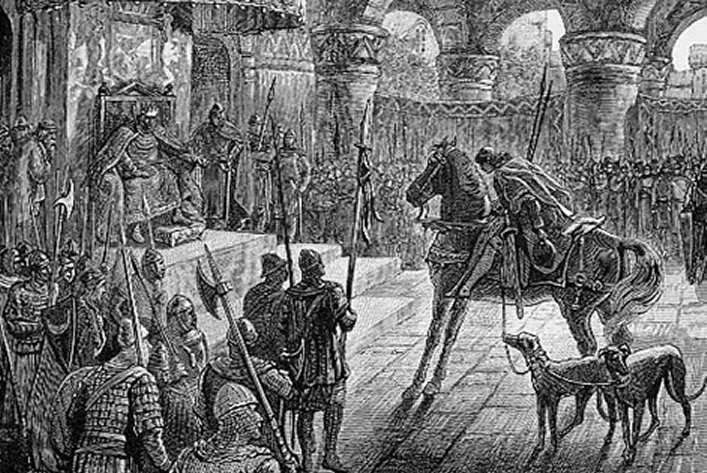
 In 1437,King James 1 of Scotland was approached by an Irish seer or fortune teller who was later identified as a banshee She foretold his murder at the instigation of the Earl of Atholl.
.....................................................................................


There are records of several prophets believed to be physical  incarnations of  banshees attending the great houses of Ireland and the courts of local Irish kings.


=========================================
-----Family said to be haunted by a Banshee----------------
=========================================

A banshee’s cry is often believed to predicts the death of a member of one of Ireland’s five major families: the O’Grady’s, the O’Neills, the O’Briens, the O’Connors or the Kavanaghs. Over time as families blended, it was said that most Irish families had their own banshee.

It is also said that the banshees followed their families as they emigrated from Ireland to other places across the globe, though some stayed behind to grieve at the original family estate.

...............

The Banshee that haunt's the O'Brians Family's was believed too be go by the name of Eevul, and was the apparently the leader of of at least  25 other banshees who would always be at her attendance. .

In later versions, the banshee might appear before the death and warn the family by wailing.

When several banshees appeared at once, it would  indicated the death of someone great or holy.


 .............................................................................................................................

In some versions a Banshee is a type of fairy,  in other story's she  was a ghost, often of a specific woman that had been murdered, or a mother who died during childbirth.

Banshees are usually described as dressed in white or grey, often having long, pale hair which they brush with a silver comb, a detail scholar Patricia Lysaght attributes to confusion with local mermaid myths. This comb detail is also related to the centuries-old traditional romantic Irish story that, if you ever see a comb lying on the ground in Ireland, you must never pick it up, or the banshees, having placed it there to lure unsuspecting humans, will spirit  you away.

Other stories describe the banshees as being dressed in green, red, or black and often with a grey or dark cloak.
-----------------------


In traditional Scottish Gaelic mythology, the banshee is known as the bean sìth or bean nighe and can be  seen washing the bloodstained clothes or armor of those who are about to die. Similar beings are also found in Norse, and Welsh mythology.
===================================

..Other Media ...

The America paranormal drama Teen Wolf

                                               Teen Wolf --  Lydia Martin the Banshee
----------------------------------------------------------------------------------------


Monster High resident banshee named Scarha Screams..

............................................................................................................


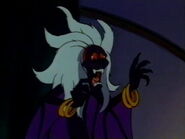
 and another well know charter the villain know as Silver Banshee from DC Comics


===================================================

Chip and Dale Rescue Rangers had a banshee in the Episode called "The Last Leprechaun"


  .....................................................


and

Tiny Toon Adventures had an ep featuring a banshee as well . "Pluck of the Irish"


Hope you all enjoy these post's, starting next week i will be doing mostly Cryptid/ monster post  until Halloween or a little after. Happy early Halloween lol

Friday, September 20, 2019

Fairy Myth : Leanansidhe - the vampier fairy


                                          ~~Irish Myths and Legends...The Leanansidhe~~


The Leanansidhe

Leanansidhe (Lhiannanshee) Leanan Sidhe: The Lhiannan Shee of the Isle of Man is said to be a vampir like  fairy who attached herself to one man, to whom she appeared irresistibly beautiful, but invisible to everyone else. If he yielded to her, he was ruined body and soul.

She is both a muse and a demon of sorts,  In Celtic lore the Leanan Sidhe is one of Ireland’s mythological vampires.

The fairy was a beautiful woman who was said to give inspiration to poets and musicians – but at the price of their lives.


She can often be found around wells or natural springs.

According to some legends she would make an artist her lover, sharing with them her intelligence, creativity and magic, but when she left, the men would be so depressed, they'd die. Leanan Sidhe would then take her dead lovers back to her lair.


Rather than directly suck the blood of her victims, Leanan Sidhe got creative, and collected their blood in a giant red cauldron, which was the source of her beauty, youth and artistic inspiration.

In other versions of this myth she takes is energy, like a type of energy vampier, ether way he die's..

As with Dearg-due, to prevent the undead Leanan Sidhe from rising, one must put a cairn of stones over her resting place.


The Irish Leanan Sidhe is known as the inspiration of poets and minstrels. She would roam the night, searching for romantic men to inspire with eloquence of word and beautiful music while in her embrace, and would draw from their life force until he would die.

Both names mean "fairy Sweetheart". In Scotland, the Leannan Sith was a term used to denote a fairy lover of either sex. In fact, the translators of the Bible into Scots Gaelic used this term, and the Scots took this as Biblical proof of the existence of fairies.

The Lhiannan Shee of Ballfletcher was the tutrelary fairy of the Fletchers, and gave them the fairy cup, which was drank from every Christmas in her honor.


Wednesday, September 18, 2019

Blessed Mabon..


Well the fall leaves are starting to show in some place more the others Autumn is upon us..


Blessed Mabon..

Maybon begins Seoptember 21st and ends September 29th this year.


For those of you unfamiliar Mabon is a wiccan holiday in celebration of the Autumn Equinox.


Mabon celebrates  the autumnal equinox,  think of it as a sort of  wiccan thanksgiving

Mabon also called Meán Fómhair or Alban Elfed  is a Neo Druid tradition, it hones the harvest and the bounty it bestows on us with the  fruits of the earth and a recognition of the need to share them to secure the blessings of the Goddess and the God during the coming winter months.


 The name Mabon was first coined by Aidan Kelly around 1970 as a reference to Mabon ap Modron, from Welsh mythology.

 Mabon ap Modron is a prominent figure from mythology and ties into the Legend of King Arthur  Mabon was said to by  the son of Modron  and a member of Arthur's  war band.


                                        Arthur's court at Celliwig, 1881

 
Both he and his mother were likely deities in origin.

 His name is also related to the Romano-British god Mapanos, whose name means "Great Son"


To modern Wiccan / Withes  who follow the cycle of the seasons it is a way of combining , both ancient and modern triditions.

Contemporary Pagan festivals that rely on the Wheel are based to varying degrees on Folk traditions  from many different pagan and Celtic custumes regardless of actual historical pagan practices.

Among modern witches, each festival is also referred to as a sabbat.

Among the sabbats Mabon, is the second of the three Pagan harvest festivals, preceded by Lammas or Lughnasadh and followed by Samhian or Halloween,..

The third and final harvest festival "Samhain" is a Gaelic festival marking the end of the harvest season and the beginning of winter or the "darker half" of the year. Traditionally, it is celebrated from 31 October to November 1st. it is also a time when the vail between the living world and the spirit world is thinnest, it is the time of the year to honer the spirits and your ancestors.

Monday, September 16, 2019

Fairy Myth: Brownies


                                                            ~~~~~~Brownie's~~~~~~~


A brownie is a type of house elf.


In Scottish folklore brownies  are small human like, benevolent fairies (pronounced broony).

They appear to humans as small dwarve like beings  with dark black eyes.

There clothes are usually colored with different  earth tone colors.

They have pointed ears, big eyes, and long fingers.

They often explore a village finding homes of good, honest, and humble people.

 Once they find a good person's house, they set about, cleaning it, organizing it, and even adding new things. They don't like cats, and won't clean houses that have them.

If one were to leave food (preferably milk, honey, ale, porridge, and cake), that person would have a greater chance of receiving a nighttime visit from the Brownies.

Brownies despise liars, murderers, crooks, or any other immoral person, and will actively prank them, steal things from, or just mess up the person's house. Sometimes, a brownie will like a particular house, and will decide to stay there. They will probably stay in the attic, cellar, or woodshed.

They will only work during the nighttime hours, because they don't like to be seen.

Brownies do not like to be referred to as fairies, and may cause physical harm if someone where call them fairies.

All Brownies sometimes have meetings to catch up and discuss things (kind of like family reunions), usually on a rocky cliff or someplace really desolate  out of human sight.

 Brownies have been seen in modern day movies and games as well.

The card game Magic: The Gathering has a couple cards that are brownies, the Flyndhorn Brownie, and the Shelkin Brownie

 In the book Dragon Rider, there were brownies throughout the story, the main one was named Sorrel

 and

Probably the most well know house elf, Dobby from Harry Potter was based off of Brownies..


There is another type of brownie called the ùruisg or urisk.

 It is usualy seen near streams and waterfalls, not houses. And while it's still kind and sociable, it won't help out with the chores.

During spring and summer, it's somewhat  reclusive, but around the end of the harvest season, it opens up and will actually talk to humans.

It likes dairy products, and was said too  pesters milkmaids into giving him more milk.

 It's always seen carrying a walking stick with it, they have  long yellow hair, and sometimes wears a blue bonnet.