Showing posts with label Christmas. Show all posts

Wednesday, December 24, 2025

The Jul Goat.


The origins of the  Yule Goat (Christmas goat) are lost to history at this point, but one of the main  theory is that the celebration of the goat is connected to worship of Thor the Norse god of thunder, who rode across the sky in a chariot pulled by two goats, Tanngrisnir and TanngnjΓ³str;


Another one is that  it goes back to common Northern European beliefs. The last sheaf of grain bundled in the harvest was credited with magical properties as the spirit of the harvest and saved for the Yule celebrations, called among other things Yule goat (Julbocken).


This connects to ancient proto-Slavic beliefs where the Koliada (Yule) festival honors the god of the fertile sun and the harvest. This god, Devac (also known as Dazbog or DaΕΎbog), was represented by a white goat, consequently the Koliada festivals always had a person dressed as a goat, often demanding offerings in the form of presents.

A man-sized goat figure is known from 11th-century remembrances of Childermas, where it was led by a man dressed as Saint Nicholas, symbolizing his control over the Devil.

In Sweden, people believed the Yule goat to be  an invisible spirit that would travel from home too home some time before Christmas to make sure that the Yule preparations were done properly.

Small goat figures made out of straw or wood could also be called the Yule goat, and in older times people would play  a popular Christmas prank by hiding one of these mini Yule goats in a neighbour's house without them noticing; the family successfully pranked had to get rid of it in the same way.

The function of the Yule goat has changed over time , In a Scandinavian custom similar to the English tradition of wassailing (singing Christmas carol's), held at either Christmas or Epiphany, young men in costumes would walk between houses singing songs, enacting plays and performing pranks. This tradition is known from the 17th century and still continues in certain areas. 

The group of Christmas characters would often include the Yule goat, a rowdy and sometimes scary creature demanding gifts...

...........


Ever wish you could trick or treat in December? If you live in Scandinavia you can,kind of..


Norway Julebukk -Julbok - Julebukking is basically a Christmas version of trick-or-treating the tradition dates back centuries.

During Julebukk people dress up as goats, trolls, or other mythical creatures to sing and perform for their audiences. And gain rewards ( candy or other sweets). The old notes version of this was a man dressed in goat skins caring a goat heat and crashing other people's party's...today's version is much nicer.

The origins of Julebukk can be traced back to pre-Christian times, when goats were associated with the Norse god Thor and were thought to have magical powers. The tradition was also a way to celebrate the winter solstice and a way to engage and wish good luck and happiness to the community.

Today, Julebukking tradition is still popular in Norway, and many families and communities participate in the practice during the Christmas season. The performances typically involve singing, dancing, and storytelling, and often include traditional Christmas songs and folktales. The Julebukk costumes can be elaborate and creative, with participants dressing up in goat masks, horns, and other goat-like attire... Sometimes the people visited are supposed to join in the singing as they visit the next house, though this is optional...


.....


Yule Goat and Santa...


During the  1800's the Yule goat's became more like a Scandinavia Santa, bringing presents on Christmas.


Usually one of the men in the family would  dressing up as the Yule goat. (Modern day celebration Still dose this but as Santa)

Another old Norse version of Santa was the all father(Odin) riding around on his multi legged horse leaving gifts for good kids, this also ties into the wild hunt.

The goat was  eventually replaced by the jultomte (Sweden)  or julenisse (Norway) during the second half of the 19th century and early 20th century, although he is still called the Joulupukki (Yule goat) in Finland, and the tradition of the man-sized goat is no longer used now .


........


Swedish Yule Goat celebration..


This modern version of the Yule goat figure is a decorative goat made out of straw and usually bound with red ribbons, a popular Christmas ornament often found under or on the Christmas tree or larger visions used as laws decor for the holidays


Large versions of this ornament are frequently erected in towns and cities around Christmas time; a tradition started with the GΓ€vle goat in 1966.


Though people often try to damage or burn it prevent this the ornament is often  guarded. This has resulted in more creative attempts to burn it down.


The town has tried lots of different ways to protect their goat. They’ve had guards stationed, security cameras put up and fences raised. And the goat itself has been sprayed with water and flameproof chemicals. Some years the goat even survives the whole holiday season! But most years … it doesn’t.

In 2005, a group dressed as Santa and gingerbread men fired flaming arrows into the goat. Hackers in 2009 disabled the security cameras and set the goat on fire. An American tourist was arrested for burning down the goat in 2001. He said he’d been told by his Swedish friends that burning the goat was OK. He ended up spending two weeks in jail.

And several other attempts, unfortunately trying to destroy it had become somewhat of a Tridition as well..


πŸŽ„Merry Christmas πŸŽ„


And Happy New Year

πŸŽ†πŸŽ‡πŸŽ†πŸŽ‡πŸŽ†πŸŽ‡πŸŽ†πŸŽ‡πŸŽ†


Saturday, December 20, 2025

Winter Folklore: Lutins..


Lutin....

❄️🧝‍♂️🧝‍♀️❄️


These small gnome like creatures can be found in  Scandinavia, Germany, England and a few other Locations including  America and Canada.

In Chicago there is a small demon, leprechaun or gnome like being called The Nain seeing him I'd said to be a bad omen followed be something bad happening to the the city.   ( Fire, sickness economic hardship ect ) He is most often described as childlike in hight with red or black fur boots and  "blazing red eyes and rotten teeth 


...........

 The word Lutin is usually translated to English as: brownieelffairygnomegoblinimpjetin ..... pretty much any small figure depending on the region he is spotted in.

 He  can take several different forms  dogs cats other small animals or even a horse with a saddle ready to ride,  in this shape he's called Le Cheval Bayard. Or he could just stay completely invisible.


In  Quebec Canada he's considered a type of  spirit that can take  the form of either pets (usually a dogs or rabbit) or other animals from the region. It's believed that an animal with all white fur could be a Lutin especially a  white cat, though any  animal that lives in or near a home could  be a Lutin in disguise.  


The are essentially House spirits, similar to a Nisse or a Kikimora , they can be either   good or bad, the good ones use their  powers in a verity of ways ranging from  controlling the weather, to shaving the beard of the master of the house before he wakes up  Sundays.


Bad of simply offended ones  may harass the home owner with  minor troubles, like dulling  a  scythe blade or filling someone's shoes with pebbles. 

Good or bad they all seem to absolutely hate salt and will go out of their way to avoid crossing it when spilled on the ground.

 They also occasionally seem to enjoy tangling human or horses' hair into elf-locks.


 ......

It Lapland mythology, they are helpers to PΓͺre NoΓͺl (SantaπŸŽ…) Basically elves.


One of the older Lutin references can be found in the French fairy tale "Le Prince Lutin", written in 1697 by Marie Catherine d'Aulnoyshe    gives a description of their powers........

 "air, water and terrestrial lutin": "You are invisible when you like it; you cross in one moment the vast space of the universe; you rise without having wings; you go through the ground without dying; you penetrate the abysses of the sea without drowning; you enter everywhere, though the windows and the doors are closed; and, when you decide to, you can let yourself be seen in your natural form.

 In this story a red hat with two feathers makes them  invisible to everyone.


Tuesday, December 24, 2024

Christmas Elves....


πŸŽ„ Christmas Elves ⛄


We all know of Santa and his workshop of elves, but we're did this story come from what are the  origins of the jolly fat man's helpers?


 The modern elf folklore come  from Norse/Scandinavian mythology, the Nisse or house gnome and the  Γ‘lfar, also called  huldufΓ³lk or  hildafolk 'hidden folk'.

Sweden's gift giver before Santa was the Tomten and the Yule Goat though by 1891, the Good old St Nick had merged with Tomten, who was originally an elf or gnome like farm guardian  (like the Nisse).  following the work of Jenny NystrΓΆm, this new combination of  old and new Christmas figures became  the Jultomten.


In Nordic countries, Nisse are the closest thing you could consider as Christmas Elves even though  nisse are not actually  elves and they will usually  only wear red instead of the green and red outfits that elves are known for in most western  countries.


 Several  Norse legend were likely combined with other Scandinavian and Celtic legends and myths about these small magic beings.

All kinds of stories about elves, fairies  nature spirits and even gnomes can be found from  multiple regions through Europe there are also similar supernatural beings that could be connected to elves, such as kobolds or duende  from Germany Mexico and South America or the Scottish house spirits called brownies. In Medieval Europe, elves were seen as tricksters and were often linked to demons especially after the christianization of Europe most things of a supernatural or otherworldly nature where considered evil.


The modern  Christmas elf + working in Santa's workshop) appeared in literature as early as 1850 when Louisa May Alcott (Little Women ) completed, but never published a book called Christmas Elves. 


Though a earlier reference to Christmas elf's can be found  In the 1823 poem A Visit from St. Nicholas (   'Twas the Night Before Christmas), by  Clement Clarke Moore, Santa Claus himself is described in line 45: "He was chubby and plump, a right jolly old elf".


The image of the elves in the workshop was also popularized by Godey's Lady's Book, with a front cover illustration for its 1873 Christmas issue showing Santa surrounded by toys and elves with the caption "Here we have an idea of the preparations that are made to supply the young folks with toys at Christmas time".


 During this time, Godey's was a very influential figure to the birth of some of our Christmas traditions, having shown the first widely circulated picture of a modern Christmas tree on the front cover of its 1850 Christmas issue. Additional recognition was also given in Austin Thompson's 1876 work "The House of Santa Claus, a Christmas Fairy Show (Christmas play) for Sunday Schools"

A few other versions of elf's or helpers are

Ded Moroz (father Frost / Grandfather Frost )  and his grand daughter Snegurochka (Frost Maiden) from Russia ⛄🎁


Knecht Ruprecht from Germany.πŸ»πŸŽ…

The  Hoesecker in  Luxembourg.🦌

Zwarte Piet (Black Peter) In the Netherlands and Belgium who accompany Saint Nicholas on his global gift giving.πŸŽ„

And lastly the modern Christmas tradition involving that ever watchful snitch The Elf on the Shelf  .🧝‍♂️πŸ‘€


Hopefully none of you are on the naughty list, this year πŸ™‚

Have a great Christmas and happy New Year.

πŸŽ„πŸŽπŸŽ…⛄πŸ¦ŒπŸŽ„


πŸ¦‡MπŸ¦‡

Last Post for the year, thanks for stopping by and have an awesome 2025πŸŽ†πŸŽ‡


Thursday, December 19, 2024

Kallikantzaroi, Christmas Goblin's πŸŽ„πŸ‡¬πŸ‡·


The Kallikantzaroi is a goblin like creature from Greek folklore.


 They live underground most of the year and spend their time sawing away at the world tree trying to bring it down and the world with it,  only coming out during the twelve days of Christmas, from December 25th to January 6th. 


They are small creatures  most often described as goblins or tiny demons with tails,  long, shaggy hair and hooves for feet.

 Despite their monstrous appearance, they are mostly prankster not good, but not entirely evil, however their mischievous behavior during the Christmas season can be troublesome similar to the pranks played by the Yule lad's.


 They're pranks usually involve stealing peoples belongings, and messing with  food. 

 There are several customs and rituals to keep them away,  including leaving a fire burning in the hearth throughout the night to prevent the Kallikantzaroi from entering through the chimney,  hanging holly and garlic, and placing a colander on the doorstep are some methods  believed to keep the Kallikantzaroi at bay.


They're pranks will continue until the Feast of the Epiphany, celebrated on January 6th. As the waters are blessed during the Epiphany service, the Christmas goblins return to they're underground home only to resurface the following year when the holiday season arrives once again.

,..............................


⛄Merry Christmas πŸŽ„

And 

Happy New Year

πŸŽ†πŸŽ‡πŸŽ†πŸŽ‡πŸŽ†πŸŽ‡πŸŽ†πŸŽ‡


Thursday, December 21, 2023

The Yule Lads, Iceland's 13 Santa's.

  ❄️❄️❄️❄️❄️❄️❄️πŸŽ„❄️❄️❄️❄️❄️❄️❄️   


Iceland does not have a Santa Clause instead they have Christmas troll's .


The 13 Yule Lads  take turns to visit kids on the 13 nights leading up to Christmas


Instead of a Christmas stocking hung by the fire place children in Iceland keep one of their shoes on the windowsill where the Yule Lad will either leave candy or old  potatoes  depending on whether the kids have been good or bad.


The Yule Lads were originally either some what violent or just normal  pranksters depending on the region or who was telling the story. 

Iceland outlawed frightening children's stories in the 1700s after that the Yule Lads took on a more Santa like roll and are now a type of Christmas Troll's.


 They all have special name, that describes their favorite kind of mischievous behavior. 


Their names are:


Stekkjastaur- Sheep-Cote Clod


Giljagaur - Gully Gawk


StΓΊfur - Stubby


Þvârusleikir - Spoon Licker


Pottaskefill - Pot Scraper


Askasleikir - Bowl Licker


HurΓ°askellir - Door Slammer (he loves waking people up by slamming doors)


SkyrgΓ‘mur - Skyr Gobbler


Bjúgnakrækir - Sausage Swiper


Gluggagægir - Window Peeper


GΓ‘ttaΓΎefur - Doorway Sniffer


KetkrΓ³kur - Meat Hook


KertasnΓ­kir - Candle Beggar


They are the children of  GrΓ½la and LeppalΓΊΓ°i


Two trolls you don't want to meet, especially GrΓ½la.  You should also try to avoid their family pet the Yule Cat as it has been known to eat people.. GrΓ½la is also well known for kidnapping and eating kids.


The Yule Lads live I northern Iceland in Myvatn at Dimmuborgir in an natural volcanic cave. They spend most of the summer sleeping there and seldom ever leave until winter.

The name of the cave translates to Dark Cities or Dark Fortress.


It seems at one point in the far past there were around 70 children of GrΓ½la but these 13 are all that's left, or at least the ones most remembered.


Hope you've been good this year, you Really don't want GrΓ½la showing up πŸ‘Ή


Have a great Christmas and New Year

πŸŽ„⛄


Monday, December 18, 2023

The Sodder Family Christmas Mystery.


Just after midnight on Christmas Eve in 1945, Jennie Sodder awoke to the smell of smoke. She quickly discovered that the Fayetteville, West Virginia, home she shared with her husband, George, and nine of their children, was ablaze. When the fire department arrived seven hours later, the two-story framed house had burned to the ground — and five Sodder children were missing. 

The ultimate fate of the five young children is still unknown, but their family never saw them again, and their remains were never found in the ashes of their ruined home.


The siblings’ older brothers, John, 23, and George Jr., 16, and their father had gone to bed early that Christmas Eve, tired from a long day working at George’s coal trucking business. The younger children, however, were allowed to stay up late to play with the toys their older sister, Mary Ann “Marion” Sodder, 17, had bought them for Christmas. Their mother took the youngest child, 3-year-old Sylvia, to bed with her at around 10:30 p.m., telling Maurice and Louis to attend to the cows and chickens.


Joe Sodder, 21, had been discharged from the Army the day before the fire and was the only one of the 10 Sodder children not home.

At about 1 a.m., Jennie bolted out of bed when she smelled smoke and saw flames in her husband’s office, blocking her from reaching the phone. She told Marion, who had fallen asleep on the couch to take Sylvia outside while she and George frantically tried to save the rest of the children. George Jr. and John, who said he woke his siblings — but later updated his account, saying that he had only shouted at them — ran downstairs. Fire engulfed the staircase to the attic where the children slept, preventing their father from going upstairs. The fact that no one heard them crying out was one of the reasons the Sodders later believed they might not have been in their bedroom at all. 

At the time, however, George desperately tried other ways to get to his children. He was unsuccessful  for two peculiar reason ls.  First, a ladder that normally stood by the house wasn’t there. He and his sons then tried to move his trucks against the house, hoping to reach the upper floor by standing on top of them, but they couldn’t get them started.


Although authorities determined that the children — Maurice, 14; Martha, 12; Louis, 10; Jennie Irene, 8; and Betty, 5 — had died in the fire, their family disputed the finding and never gave up searching for them. 


Even if Jennie had been able to reach the family’s telephone, she couldn’t have placed a call: The line had been cut. George Bragg, a local writer and researcher, told NPR in a 2005 interview that a man later admitted that he had cut them — and during the fire was in an outbuilding on the Sodders’ property stealing a block and tackle (used to remove car engines). While there is speculation that he set the fire as a diversion, it’s also possible he took advantage of the family’s distraction to take the equipment. Still, neither the thief nor anyone else was ever charged with arson in the catastrophic fire.


The phone was working just after midnight, Jennie later said. Its ringing was the first of three separate strange events, including the smoke, that had awakened her. The caller asked to speak to someone Jennie didn’t know. After she replied that they must have the wrong number, the caller responded with what Jennie described as a strange laugh.

Half an hour later, Jennie heard “something like a rubber ball” hit the roof. “It rolled and hit the ground with a thump,” she said.

At the time, it didn’t worry her, and she fell back asleep again. But a passing bus driver (or passenger ) described having seen “balls of fire” being thrown on the tar and wood roof, where it was determined the fire had started. Sylvia later found a rubber object in the yard, the family claimed, that George identified as a type of hand grenade. 

Death certificates for the children were issued on Dec. 30, five days after the fire. The cause of death for each was listed as “fire or suffocation.” Although George and Jennie Sodder later insisted otherwise, a journalist who covered the story for NPR said four people had reported seeing remains — including one of Jennie’s brothers. If so, they weren’t collected or included in official records.

George Sodder himself may have unintentionally destroyed evidence that his children had died. On Dec. 29, he brought in a bulldozer to fill the basement with dirt in order to create a memorial for them. At the time, the grieving family did not doubt the officials’ determination that the five children did not survive. Only later would John reportedly admit that he hadn’t actually seen or heard his five siblings respond when he warned them to escape as he and George Jr. fled.

In the “burial, cremation, or removal” section of the children’s death certificates, “burial” is selected with the date of Dec. 27. The Sodders’ address is listed as the “cemetery.”  though no actual body's could be found.


The Sodder children we're never seen again and now nearly a century after the tragedy that destroyed their family the mystery remains, what really happened to the Sodder Family?

Because of so many odd events surrounding the  fire and the Sodder children's disappearance's, the case immediately captured the public eye  and is still one of the greatest mysteries of the early 20th century.


After only 45 minutes the five bedroom home had burned to nothing but ash leaving only the foundation.

The true fate of the family will likely never be solved and decades from now people will still find this mystery as perplexing as we do now 


.......


Monday, December 11, 2023

Drakavac


           Drekavac 


It's name means the screamer" or "the screecher,  as it's name would suggest its known for its distinctive and often terrifying scream.


The Drekavac is most often encountered  at night, especially during the twelve days of Christmas (called unbaptized days ) and in early spring, when other demons appear most often. 


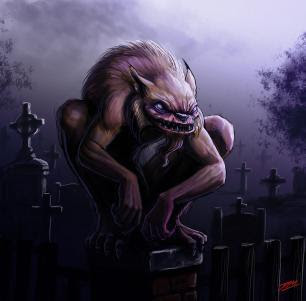
It takes the form of the child, though deformed with elongated limbs and sometimes fur.

In other story's (especially more modern tellings) it usually resembles a dog like creature. However it can also assume other forms as well like a dappled foal, dog, cat, or bird or even a  human like being with glowing eyes. Other visions of the cryptid are described as a dog like beast that walks on its back legs, a long legged long necked animal with a cats head or an undead vampire like man that wonders the cemetery similar to a ghoul.


Originally believed to have come from the soul of a corrupt or sinful man, or from children who died unbaptized 

When seen in it's human form it looks like a child, and  predicts someone's death while in its animal form, it predicts cattle disease.

The Drekavac ether dislikes or fears dogs and is believed to avoid dogs and bright light.

 There is also a common belief that if the shadow of drekavac falls on someone then that person will become sick and eventually die.


In some regions it could be considered a type of boogyman, used to  scare kid's into behaving, in a similar way a the Boogeyman is in other places. 


It's also used as a scare tactic to keep smaller children from wandering to far from home. 

......


Other cryptids or monsters similar to a drakavac..


  • Bukavac – recorded in Syrmia, a six-legged monster with gnarled horns, slimy skin and long tail, that lives in water (rivers, swamps and creeks) and comes out of it during the night. It is known that it makes loud noises, and it will try to strangle people and animals that it encounters;
  • πŸ‘ΉπŸ‘»πŸ§›‍♀️
  • Jaud (pronounced [jaud]) – a vampirised premature baby.
  • πŸ§›‍♀️
  • Myling – from Scandinavian folklore, a phantasmal incarnations of the souls of unbaptized children that had been forced to roam the earth.
  • πŸ‘»
  • Nav – the soul of dead child that died before its third age.
  • πŸ‘»
  • Plakavac – recorded in Herzegovina, is a newborn strangled by its mother, which will rise from its grave at night as small vampire-like creature, return to its house and scream around it, but otherwise can't do any harm.
  • πŸ§ŸπŸ‘»

  • Poroniec – a hostile and malicious demon from Slavic mythology. They were believed to come into existence from stillborn fetuses, but also from improperly buried remains of children who had died during infancy.

πŸ‘Ή