Showing posts with label Happy Valentines Day. Show all posts

Saturday, February 14, 2026

Japanese Folklore: Tamamo no Mae: The Nine tailed fox


 Tamamo no Mae, One of the strongest and most feared Yokai.


Tamamo  is one of the most famous kitsune (Fox Spirits) in Japanese mythology.

A nine-tailed magical fox, she is also one of the most powerful yokai that has ever lived.

Her magical abilities were matched only by her sharp mind  and lust for power.

Tamamo lived during the Heian period, and though she may not have succeeded in her plan to kill the emperor and take his place, her actions destabilized the country and lead it towards one of the most important civil wars in Japanese history.


 For that reason, she is considered one of the Nihon San Dai Aku Yokai—the Three Terrible Yokai of Japan.

She  is mentioned in various old texts and has been a popular subject throughout Japanese history. Her story is portrayed in literature, 

Noh, Kabuki, bunraku, and other forms of art including modern mang, anime and evenK Dramas. 

There have been  several variations on her story throughout history.


According to Legends: Tamamo no Mae was born around 3,500 years ago in what is now China. Her early life is a mystery, but she eventually became a powerful sorceress.


A few hundred years later she became a white faced, golden furred kyubi no kitsune—a nine-tailed fox with the highest level of  magic powers.

She was also a very skilled liar and master  manipulator. She used her charms and intelligence to advance her standing and influence politics of the time .

During the Shang Dynasty she was known as Daji. She disguised herself as a beautiful woman and became the favorite concubine of King Zhou of Shang.


Daji was a model of human depravity. She held orgies in the palace gardens. Her fondness for watching and inventing new forms of torture are legendary.

Daji eventually brought about the fall of the entire Shang Dynasty. She managed to escape execution, and fled to the Magadha kingdom in India in 1046 BCE.

In Magadha, she was known as Lady Kayo, and became a consort of King Kalmashapada, known in Japan as Hanzoku.

She used her beauty and charms to dominate the king, she devoured children, murder priests, and commit other unspeakable horrors.

Eventually—whether because she ran out of  children to eat or because Kalmashapada began to turn away from her and towards Buddhism—she fled back to China.
...


During the Zhou Dynasty she called herself Bao Si, and was known as one of the most desirable women in all of China.

In 779 BCE she became a concubine of King You. Not satisfied as just a mistress, she manipulated the king into deposing his wife Queen Shen and making Bao Si his new queen. 


Though she was beautiful, Bao Si rarely ever smiled. In order to please his beautiful new wife, King You committed acts of such
evil and atrocity that eventually all of his nobles abandoned and betrayed him. Eventually, King You was killed and Bao Si captured and the Western Zhou Dynasty was brought to an end in 771 BCE. Somehow Bao Si managed to escape again, she went into hiding for many years.

Little is known of her activities until the 700s, when she resurfaced disguised as a 16-year old girl named Wakamo. She tricked the leaders of the 10th Japanese envoy to the Tang Dynasty—Kibi no Makibi, Abe no Nakamaro, and Ganjin—as they were preparing to return home to Japan.

Wakamo joined their crew and took the ship to Japan, where she hid herself away for over 300 years.

In the 1090s, she resurfaced once again. This time she transformed herself into a human baby and hid by the side of the road.

A married couple found the baby and rescued it, taking her in as their daughter and naming her Mikuzume.

She proved to be an exceedingly intelligent and talented young girl, and was so beautiful that she attracted to attention of everyone around her.

When she was 7 years old, Mikuzume recited poetry before the emperor. His imperial majesty immediately took a liking to her and employed her as a servant
in his court.

Mikuzume excelled at court, absorbing knowledge like a sponge. There was no question she could not answer, whether it was about music, history, astronomy,
religion, or Chinese classics. Her clothes were always clean and unwrinkled. She always smelled pleasant. Mikuzume had the most beautiful face in all of Japan, and everyone who saw her loved her.

During the summer of her 18th year, a poetry and instrument recital was held in Mikuzume’s honor. During the recital, an unexpected storm fell upon the palace. 


All of the candles in the recital room were snuffed, leaving the participants in the dark. Suddenly, a bright light emanated from Mikuzume’s body, illuminating the room.

 Everybody at court was so impressed by her genius and declared that she must have had an exceedingly good and holy previous life. 

She was given the name Tamamo no Mae. Emperor Toba, already exceedingly fond of her, made her his consort.

Almost immediately after she became the emperor’s consort, the emperor fell deathly ill. None of the court physicians could determine the cause, and so the onmyoji (Exorcist) Abe no Yasunari was called in. ( Not be confused with Abe no Yasuna, who is the father of the famous onmyōji Abe no Seimei , Similar title, Different people.)


Abe no Yasunari read the emperor’s fortune and divined that he was marked by a bad omen. After that, the highest priests and monks were summoned to the palace to pray for the emperor’s health.

The best prayers of the highest priests had no effect, however. The emperor continued to grow worse. Abe no Yasunari was summoned again to read the emperor’s fortune. 

This time, to his horror the onmyoji discovered that the emperor’s beloved Tamamo no Mae was the cause of his illness. She was a
kitsune in disguise, and was shortening the emperor’s life span in order to take over as ruler of Japan. Emperor Toba was reluctant to believe the diviner’s words, but agreed to test Tamamo no Mae just to be sure.

To save the emperor’s life, Abe no Yasunari prepared the Taizan Fukun no Sai, the most secret and most powerful spell known to onmyodo.

Tamamo  was ordered to perform part of the ritual. They reasoned that an evil spirit would not be able to participate in such a holy ritual.

Though she was reluctant to participate, the emperor’s ministers persuaded her. They told her that it would increase her standing an admiration among the court. She had little choice but to accept.

When the ritual was performed, Tamamo was dressed even more beautifully than normal. She recited the holy worlds as expected and played her part extremely well. But just as she prepared to wave the ceremonial staff, she vanished. Abe no Yasunari’s divination was confirmed. The court flew into an uproar.

Soon after, word arrived that women and children were disappearing near Nasuno in Shimotsuke Province.

The court sorcerers determined that Tamamo  was the cause, and it was decided that she must be destroyed once and for all.

The emperor summoned the best warriors in all of the land and then charged the most superb of them, Kazusanosuke and Miuranosuke, to find Tamamo no Mae.

The warriors gladly accepted the honor. They purified themselves and set out with an army of 80,000 men to slay the nine-tailed kitsune.


Upon reaching Nasuno the army quickly found the kitsune. 

The warriors chased her for days and days, but the fox used her magical powers and outsmarted them time and time again, easily escaping. The army grew weary, and frustration set in. It seemed that nothing they did was working. However, Kazusanosuke and Miuranosuke would not accept the shame of defeat and vowed to press on. They practiced harder, honing their tactics, and eventually picked up the kitsune’s trail.

One night, Miuranosuke had a prophetic dream. A beautiful young girl appeared before him, crying. She begged: “Tomorrow I will lose my life to you. Please save me.” Miuranosuke adamantly refused, and upon waking the warriors set out again to find Tamamo no Mae. 


Sure enough, the next day they caught
her. Miuranosuke fired two arrows, one through the fox’s flank and one through its neck. Kazusanosuke swung his blade. It was over, just as the dream had said.


.....


However, her evil did not end with her death. One year after she died, Emperor Konoe died, heirless. The following year, her lover
and former Emperor Toba died as well. A succession crisis ignited between forces loyal to Emperor Go-Shirakawa and forces loyal to former Emperor Sutoku.

 This crisis started the Fujiwara-Minamoto rivalry that led to the Genpei War, the end of the Heian period, and the rise of the first shoguns.


......


As if that were not enough, Tamamo’s spirit haunted a massive boulder which killed every living thing that touched it.


''''''''''''''''''''''''''''''''
This boulder is know as the killing stone or  Sessho-seki.


 On march 5 2022, the boulder split in half. Presumably freeing the evil fox once more.


.....

....

...

..

.

Also, Happy Valentines Day.

💗🦊


Friday, February 13, 2026

American Cryptids, Deer Woman

 , 


The Deer Woman🦌


The Deer Women is a cryptid from North American Indian legends, she can be considered a type of spirit or Forest nymph, she is attractive and alluring but also quite deadly. Often seen as very attractive young woman  though she can appear in different forms, ranging from a young beautiful woman to a deer or even a combination with a  human female upper body and the lower body of a white-tailed deer.


While sometimes associated with love and fertility, she is usually feared as a dangerous figure who punishes men, especially those who are promiscuous or harmful to women, she hates cheaters and abusive parents.

 She is most often encountered on trail's where she will be in the brush or behind the trees calling out to travelers, leading them into the forest .

She also loves to dance, and will sometimes sneak into  a communal dance unnoticed, only leaving when the drum beating stop.


Her appearance is that of a very attractive young woman, the only noticable difference is that she has hooves instead of human feet and eyes similar to a deer. 


Men that fall for her charms may escape if they notice her deer hooves and run before she can stomp them to death, though most notice to late and fail to escape.

In some version of this legend, sighting her is infact a sign of personal transformation or possibly a warning of things to come, not necessarily a bad thing but not quite good either. .


According to Ojibwe tradition, she can be banished through the use of tobacco and chanting. 


You can also break her spell by looking at her feet, and realizing that they are hooves. Once they are recognized for what they are, the Deer Women will run away.

Some believe the Deer Women to be an allegory about getting to know and understand someone you're attempting to get sexually intimate with and valuing them for who they are not who you want them to be. .


Aside from Folklore and legends, she has appeared in several movies, tv show and literary work.


Sunday, February 8, 2026

German Folklore, Lorelei The Siren..


Lorelei.


In German Folklore Lorelei is described as a beautiful golden haired siren that site's on top of a large rock on the banks of the Rhine River and sings her beautiful and bewitching melodies to lure sailors to their death.


As the legend goes, she was once a beautiful young woman, who  in a moment of despair over a cheating lover claimed the rock and threw herself into the river.

She was then   transformed into a siren who lured fishermen and sailor's to their doom 


 The large rock also called Lorelei, stands on the edge of the Rhine River near Sankt Goarshausen, Germany, and is also known for producing an echo. 


The essentials of the legend itself was created by German writer Clemons Brentano in his ballad “Zu Bacharach am Rheine” (“To Bacharach on the Rhine”), which first appeared in his novel Godwi (1800–02). 

Lorelei became the subject of a number of literary works and songs; the poem “Die Loreley” (1824) by Heinrich Heine was set to music by more than 25 composers.


Part of the song.

The comb she holds is golden,

She sings a song as well

Whose melody binds an enthralling

And overpowering spell.

In his little boat, the boatman

Is seized with a savage woe,

He’d rather look up at the mountain

Than down at the rocks below.

From The Lorelei English translation of the poem by Heinrich Heine, 1824. Translated by A.Z. Foreman


The waves of the river and a nearby waterfall combined with the natural echo of the location create a murdering sound that many attribute to the sirens song.

The legend and song have lead to this rock becoming a tourist destination. And a statue of Lorelei has been placed at the top.


Friday, February 14, 2025

skogsrå, the Foxy forest nymph


The northern forest's of Scandinavia are cold and dark, they are also home to many mysterious creatures Gnomes, Trolls, Giants, elves ect.


But there's another creatures that haunts these wood, as deadly as she is beautiful...

The skogsrå.

The skogsrå is a swedish version of the huldra.


,............

She most often  appears as a beautiful young woman with  a friendly attitude. 


From the front she looks like a normal woman but  from behind she usually has ether a fox or cow tail sicking out of her skirt/dress and a hollow back (but not always).


More often than not, the men that follow her into the forest are never seen again.

 In some folktales any man  that had sex with her and returned would be like a hollow shell of his former self as his soul remained with her.

 However if the  man is a hunter or someone that was kind to her, he may be rewarded with good luck in the hunt or fishing trip but should he ever be unfaithful to her, he will be struck with extreme bad luck and  accidents. In some cases the bad luck may end if the hunter fires a shot into the woods.

 Nyland, Finland Folklore says firing  silver bullets  can kill a skogsrå


In Norway, the word huldrefolk or huldre (plural)  comes from Old Norse huldr meaning ‘hidden’ it's used for all kinds of supernatural creatures. Hulder, or Huldra in the singular, signifies a female forest spirit, though she may also appear in mountains.


 These forest spirits act alone, instead of in.large group's or families like other supernatural beings, like the vittra. In northern Sweden, the name vittra refers to a group of supernatural beings that lives underground that have many traits in common with fairies from folklore of the British Isles, as well as with the ellefolk in Danish tradition or the huldrefolk /Hilda folk in Norwegian tradition.     


 Finland also has a version of the Huldra/ skogsrå, Some names in the Finnish language, mainly from the west coast, also show a link to the Swedish traditions, metsänpiika ‘forest girl’ or metsänneito ‘forest maid’ are the most often used names for the female forest spirit. However, there are also other localised names such as haapaneitsyt ‘aspen-maid’ or sinipiika ‘blue maid’.          


Her other Swedish names are  skogsrå, skogsrådan, skogsråa ‘forest ruler’, råan, rådande ‘the ruler,/the ruling spirit’, skogsjungfru ‘forest maiden’, skogsfru, skogssnuva ‘forest woman’, skogskäringen ‘the forest hag’, or with a nickname such as Grankotte–Maja ‘Spruce cone-Maja’, Talle-Maja ‘Pine tree-Maja’. She is also known by many different local variants like.. Gonna, Besta, Rånda, Skogela, Lanna-frökna ‘The lady of Lanna’ or Ysäters-Kajsa ‘Kajsa of Ysäter’. On the island of Gotland, there are records of a female troll called Torspjäska that plays the same role and has the same function as forest spirit on the mainland.      Germany has a legend of a long-haired beautiful fores spirits too,.  Called  Holzfräulein ‘the tree lady’, who was dressed in leaves, or as Moosweiblein ‘the moss woman’. 


If you're heading into the woods soon, be weary of any beautiful strangers that may approach you ...... 


 🖤💕Also Happy Valentines Day.💕🖤


Tuesday, February 13, 2024

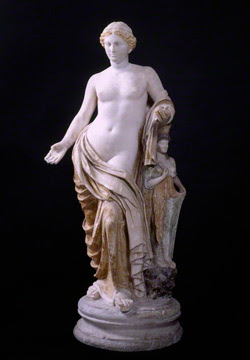
Venus The Goddess of Love.


🌹🖤 Happy Valentine's Day🖤🌹

(More posts pre-scheduled for the next month or so)


Venus is the Roman goddess of love.


Aphrodite is the Greek goddess of love and beauty, and Venus is the Roman goddess of love and beauty. Venus is the Roman counterpart to the Greek Aphrodite, as the Romans borrowed heavily from Greek mythology. However, Venus has attributes that Aphrodite does not, including also being a goddess of victory and battle.


In the later classical art , literature and poetry Venus became one of the most widely referenced deities of Greco-Roman mythology as the embodiment of love and sexuality. She is usually depicted nude in paintings.


As the goddess of Love and sexuality Venus had several  lovers and suitors, including the gods Mercury, Bacchus, and Ares. She had children with each of these suitors. Venus was also married to the god Vulcan, albeit unhappily and without children.


Venus represents  love, beauty, desire, sex, fertility, prosperity, and victory. In Roman mythology, she was the ancestor of the Roman people through her son, Aeneas, who survived the fall of Troy and fled to Italy. Julius Caesar claimed her as his ancestor. Venus was central to many religious festivals, and was revered in Roman religion under numerous cult titles

The importance of the worship of Venus  was increased by the political ambitions of the gens Iulia, the clan of Julius Caesar and, by adoption, of Augustus.

They claimed to be direct descendants  of  Iulus, the son of Aeneas; Aeneas was the alleged founder of the temple of Eryx and, in some legends, of the city of Rome.

From the time of Homer onward, he was made the son of Aphrodite, so that gave his son Iulii and his decendents  a divine origin. Others later sought to connect themselves with a deity grown so popular and important, one of the more notably individuals was Gnaeus Pompeius, the triumvir. He dedicated a temple to Venus as Victrix (“Bringer of Victory”) in 55 bce. Julius Caesar’s own temple (46 bce), however, was dedicated to Venus Genetrix, and as Genetrix (“Begetting Mother”) she was best known until the death of Nero in 68 ce. Despite the extinction of the Julio-Claudian line, she remained popular, even with the emperors; Hadrian completed a temple of Venus at Rome in 135 ce.


Being a counterpart, Venus had no original myths of her own. The Romans inspiration from Aphrodite  as well as several other goddesses. Along with  her association with   the planet Venus. The planet was at first the star of the Babylonian goddess Ishtar and later  of Aphrodite. Because of her association with love and with feminine beauty, the goddess Venus has been a favorite subject in art since ancient times; notable representations include the statue known as the Venus de Milo (c. 150 bce) and Sandro Botticelli’s painting The Birth of Venus (c. 1485).

                                                               Venus de Milo 


Some of the celebrations in her honor.

Veneralia

Vinalia Rustica

Vinalia Urbana


Roman theology presents Venus as the yielding, watery female principle, essential to the generation and balance of life. Her male counterparts in the Roman pantheon, Vulcan and Mars, are active and fiery. 

Venus absorbs and tempers the male essence, uniting the opposites of male and female in mutual affection. She is essentially assimilation and benign, and embraces several otherwise quite disparate functions. She can give military victory, sexual success, good fortune and prosperity. In one context, she is a goddess of prostitutes; in another, she turns the hearts of men and women from sexual vice to virtue. Varro's theology identifies Venus with water as an aspect of the female principle. To generate life, the watery matrix of the womb requires the virile warmth of fire. To sustain life, water and fire must be balanced; excess of either one, or their mutual antagonism, is unproductive or destructive


In some Latin mythology, Cupid was the son of Venus and Mars, the god of war. At other times, or in parallel myths and theologies, Venus was   the consort of Vulcan or as mother of the "second cupid", fathered by Mercury.


...


Monday, February 5, 2024

Romance by Edgar Allan Poe.


                  Happy Early Valentines Day


                                               More Paranormal posts coming soon :)


  🖤Romance 🖤

By Edgar Allan Poe.


Romance, who loves to nod and sing,
With drowsy head and folded wing,
Among the green leaves as they shake
Far down within some shadowy lake,
To me a painted paroquet
Hath been—a most familiar bird—
Taught me my alphabet to say—
To lisp my very earliest word
While in the wild wood I did lie,
A child—with a most knowing eye.
Of late, eternal Condor years
So shake the very Heaven on high
With tumult as they thunder by,
I have no time for idle cares
Through gazing on the unquiet sky.
And when an hour with calmer wings
Its down upon my spirit flings—
That little time with lyre and rhyme
To while away—forbidden things!
My heart would feel to be a crime
Unless it trembled with the strings


Saturday, February 13, 2021

Mythology: Aphrodite the Goddess of love.


 Febuary is the month of love and who better embody s that notion then the
goddess of love herself, i'm referring of course to Aphrodite.

Aphrodite is a greek goddess of love know for her stunning beauty.

though she also played a large part in the trojan war and was notorious for
her many sorted affairs.


===========


She is a goddess of love, beauty, pleasure, passion and procreation. Her symbols are roses, myrtles, doves, sparrows, and swans.......


----------------------

She has an odd origin story ..

Aphrodite was born from  the  god Uranus severed genitalia that had been
thrown into the sea near Cyprus.


=========

When Cronos castrated his father Uranus (Ouranos) with a sickle and threw
the genitalia into the sea, soon after Aphrodite appeared amidst the resulting sea foam.


In another versions, shes the daughter of Zeus and Dione, the Titaness.

Hesiod recounts the first version and Homer the second,  though the ancient Greeks had differing opinions on the two versions of her origin, some preferring the first and others the second.

With her birth near Cyprus, Aphrodite was especially worshiped in Paphos on the island -

Greece and the Near East had extensive cultural exchange prior to the 8th-century BCE Archaic Period,
during  the 5th-century  BCE Greek historian Herodotus states that the most ancient cult site to Aphrodite was at Ascalon in Syria.

This hints at her eastern origins as a fertility goddess and possible evolution from the Phoenician goddess  Astarte or the Near Eastern Inanna (Ishtar). It is also possible that the goddess derived from an entirely local  Cypriot deity.

The strong association with the island is evidenced in her common name,
Cypris, meaning ‘of Cyprus’.


==========================


The cult of Aphrodite was believed to be largely derived from  or at least heavenly influenced by  the Phoenician goddess Astarte, or  goddess Ishtar, whose cult was based on the Sumerian cult of Inanna.
 

                                               ......Rin as Ishtar from the Fate Series...
                                                            ---------Ishtar Statue----------

==========================================


Aphrodite's main cult centers were Cythera, Cyprus, Corinth, and Athens.

Her main festival was the Aphrodisia, which was celebrated annually during the midsummer.
===========

In Laconia, Aphrodite was worshiped as a warrior goddess.

The goddess of love was also the patron goddess of prostitutes, this  association led early scholars to propose the concept of  "sacred prostitution" in Greco-Roman culture, an idea which is now generally seen as erroneous.


Aphrodite's main festival, the Aphrodisia, was celebrated all across Greece, but especially in Athens and Corinth. 


In Athens, the Aphrodisia was celebrated on the fourth day of the month of Hekatombaion in honor of Aphrodite's role in the unification of Attica.


 During this festival, the priests of Aphrodite would purify the temple of Aphrodite Pandemos on the southwestern slope of the Acropolis  with the blood of a sacrificed dove. Next, the altars would be anointed and the cult statues of Aphrodite Pandemos and Peitho would be escorted in a majestic procession to a place where they would be ritually bathed. Aphrodite was also honored in Athens as part of the Arrhephoria festival.


The fourth day of every month was sacred to Aphrodite.

Pausanias records state that  in Sparta, Aphrodite was worshiped as Aphrodite Areia, which means "warlike".


This name is derived from her connection to Ares the god of war.


Pausanias also records that, in Sparta  and on Cythera, a number of extremely ancient cult statues of Aphrodite portrayed her bearing arms. well Other cult statues showed her bound in chains. 


Aphrodite was the patron goddess of prostitutes of all kinds,  ranging from pornai (cheap street prostitutes typically owned as slaves by wealthy pimps)  to hetairai (expensive, well-educated hired companions, who were usually self-employed and sometimes provided sex to their customers).


The city of Corinth was renowned throughout the ancient world for its many hetairai, who had a widespread reputation for being among the most skilled, as well as the most expensive  prostitutes in the Greek world.  Corinth also had a major temple to Aphrodite located on the Acrocorinth and was one of the main centers of her cult.

Records of numerous dedications to Aphrodite made by successful courtesans have survived in poems and  pottery inscriptions to this day.
---------

=======================================


In Greek mythology, Aphrodite was married to Hephaestus, the god of fire, blacksmiths and metalworking.


Being the goddess of love, she had many partners as such she was a somewhat unfaithful wife, prone to several affairs with other gods and even mortals.


A few of her Olympian trysts include, Ares, Hermes, and Dionysos.

In the Iliad, Aphrodite is the unmarried consort of Ares, the god of war,  and the wife of Hephaestus is a different goddess named Charis.

in Hesiod's Theogony, Aphrodite is unmarried and the wife of Hephaestus is Aglaea, the youngest of the three Charites.

but

In Book Eight of the Odyssey, the blind singer Demodocus describes Aphrodite as the wife of Hephaestus and tells how she committed adultery with  Ares during the Trojan War.


Hephaistos, was a crafty god and a master engineer, he built a special golden bed to catch his wife in the act.

One day when Aphrodite and Ares were in the middle of their most resent hook up, the bed sprang forth a golden net which locked the naked god's in  their illicit embrace. Afterwards Helios the sun god shone down his bright light  on the couple so that all of  Olympus could get a good look  at their disgrace and embarrassment. they where eventually freed, Ares later fled to Thrace and Aphrodite back to Cyprus.  

Other stories came about in later years to explain Aphrodite's marriage to Hephaestus.
In the most famous story, Zeus hastily married Aphrodite to Hephaestus in order to prevent the other gods from fighting over her.


In another version of the tale, Hephaestus gave his mother Hera a golden throne, but when she sat on it, she became trapped and he refused  to let her go until she agreed to give him Aphrodite's hand in marriage.


The Trojan War...

In Homer’s description of the Trojan War in the Iliad, Aphrodite is described as ‘golden’ and ‘smiling’ and supports the Trojans in the war.


-----------------------------------------Helen of Troy------------------------------------

==========================The Trojan Horse==================

During a few  notable events during the Trojan war Aphrodite protects her son Aeneas from Diomedes and saves the hapless Paris from the wrath of Menelaos.


Aphrodite is cited as partly responsible for the Trojan War. At the wedding of Peleus and Thetis, Eris (goddess of strife) offered a golden apple for the most beautiful goddess.

================================================================


                                                    -----------The Judgment of Paris-----------
The myth of the Judgement of Paris was only briefly mentioned in the Iliad, but is described in length in an epitome of the Cypria, a lost poem of the  Epic Cycle,  which records that all the gods and goddesses as well as various mortals were invited to the marriage of Peleus and Thetis (the eventual
parents of Achilles).  

All except Eris, the goddess of discord, she was not invited. maybe her invitation was just lost in the mail lol.... 


Eris was angered by this insult, so she crashed the wedding bringing with her a golden apple inscribed with the word(kallistei, "for the fairest"),  which she threw among the goddesses.


Aphrodite, Hera, and Athena all claimed to be the fairest, and thus the rightful owner of the apple.

The goddesses chose to place the matter before Zeus, who, not wanting to favor one of the goddesses over the other, put the choice into  the hands of Paris, a Trojan prince. After bathing in the spring of Mount Ida where Troy was situated, the goddesses appeared before  Paris for his decision.

In some versions of the Judgement of Paris, Aphrodite is depicted fully nude, in others she is not, and Athena and Hera are always fully clothed.

However since the Renaissance, Western paintings have typically portrayed all three goddesses as completely naked.


All three goddesses were the personification of beauty and Paris could not decide between them, so they resorted to bribes.

Hera tried to bribe Paris with power over all Asia and Europe,  and Athena offered wisdom, fame and glory in battle, but Aphrodite promised Paris that,  if he were to choose her as the fairest, she would let him marry the most beautiful mortal woman on earth.  

This woman was Helen, who unfortunately for Paris was already married to King Menelaus of Sparta.

Paris selected Aphrodite and awarded her the golden apple.

The other two goddesses were enraged and, as a direct result, sided with the Greeks in the Trojan War.


Aphrodite plays an important and active role throughout the entirety of Homer's Iliad. In Book III, she rescues Paris from Menelaus after he foolishly challenges him to a one-on-one duel. She then appears to Helen in the form of an old woman and attempts to persuade her to have sex with Paris, reminding her of his physical beauty and athletic prowess.

Helen immediately recognizes Aphrodite by her beautiful neck, perfect breasts, and flashing eyes
and chides the goddess, addressing her as her equal.  Aphrodite sharply rebukes Helen, reminding her that, if helen angers her, she will punish her just as much as she has favored her already.

Helen demurely obeys Aphrodite's command.

In Book V, Aphrodite charges into battle to rescue her son Aeneas from the Greek hero Diomedes.
Diomedes recognizes Aphrodite as a "weakling" goddess  and, thrusting his spear, nicks her wrist through her "ambrosial robe".Aphrodite borrows Ares's chariot to ride back to Mount Olympus.
Zeus chides her for putting herself in danger, reminding her that "her specialty is love, not war."

According to Walter Burkert, this scene directly parallels a scene from Tablet VI of the Epic of Gilgamesh in which Ishtar, Aphrodite's Akkadian precursor, cries to her mother Antu after the hero Gilgamesh rejects her sexual advances, but is mildly rebuked by her father Anu.


In Book XIV of the Iliad, during the Dios Apate episode, Aphrodite lends her kestos himas to Hera for the purpose of seducing Zeus and distracting him from the combat while Poseidon aids the Greek forces on the beach.

In the Theomachia in Book XXI, Aphrodite again enters the battlefield to carry Ares away after he is wounded.

==================
============

                                                 Image result for aphrodite dove pottery
In addition to her associations with doves, Aphrodite was also closely linked with sparrows  and she is described riding in a chariot pulled by sparrows in Sappho's "Ode to Aphrodite".
 
In ancient Greek pottery Aphrodite was frequently seen appearing with doves and the temple of Aphrodite Pandemos on the southwest slope of the Athenian Acropolis was also decorated with relief sculptures of doves with knotted fillets in their beaks. Votive offerings of small, white,  marble doves were also discovered in the temple of Aphrodite at Daphni.


                                                    Image result for aphrodite dove pottery
and

Because of her connections to the sea, Aphrodite was often associated with different types of water fowl, including swans, geese, and ducks.

Aphrodite's other symbols included the sea, conch shells, and roses.

The rose and myrtle flowers were both sacred to Aphrodite.

Her most important fruit emblem was the apple,  but she was also associated with pomegranates, possibly because the red seeds suggested sexuality or because Greek women sometimes used pomegranates as a method of birth control.

In Greek art, Aphrodite is often also accompanied by dolphins and Nereids.


=============
==============================
==Sappho's "Ode to Aphrodite===
===========================

Rich-throned immortal Aphrodite,
scheming daughter of Zeus, I pray you,
with pain and sickness, Queen, crush not my heart,
but come, if ever in the past you heard my voice from afar and hearkened,
and left your father's halls and came, with gold
chariot yoked; and pretty sparrows
brought you swiftly across the dark earth
fluttering wings from heaven through the air.

======================


Ok thats all for now, hope you all have a fun Valentines Day!

Next post will be up in a week or so.