Showing posts with label irish. Show all posts

Thursday, March 7, 2024

Irish Folklore: The Merrow 🧜‍♀️🌊


                                                   🧜‍♀️ The Merrow🍀

Mermaids are a global phenomena, every culture (Or at least the ones nearest the sea) have legends dating back century's from sailors encounters the beach side sighting.s.


Today we talk about the Irish Mermaid: The Merrow.


 Just like the alluring Sirens of Greek Mythology, The beautiful songs of the Merrow (The females ) was used to entice humans to come  closer.

As far as mermaid tales go these mermaids were mostly kind to humans, however they would sometimes ,  attack sailors or anyone else who startled or threatens them.

The Irish were weary of  them  because of their sometimes violent nature, they could be violent or friendly on a whim…and if angered they  could be Very  dangerous. Tales of violence (such as pulling the arms and legs off of their victims) were not uncommon…

Like most mermaid stories, human men  especially sailors  would see the beautiful female Merrow on the shores or in the sea, and they would fall in love with them, despite the risks…some would try to steal their cohuleen driuth (magic caps, similar to a Selkies pelt), so that they could not go back underwater.

 Many marriages (some less than ideal, given the method of “wooing”) were  arranged between Merrow and human men…

The Merrow who lived with men on the land (by choice or force), would often tire of their new lifestyle.

Over time, they would become tired of life on land and long to return to the sea they once called home,  the lucky ones, who still had their magic caps, would eventually find a way home…

Other female Merrow would sometimes lure men with their enchanting voices and good looks, and then take them under the waves to live amongst them. They would dwell together in a bewitched state, sometimes for years or even decades …


The male Merrow would often abducted sailors and keep  them enslaved beneath the sea!

The females had light green hair, or long, golden hair…they always wore enchanted caps which allowed them to swim far beneath the sea’s surface and to live safely underwater.

Next time your on the Irish shore keep a look out that beautiful bonny lass may be more then she appears 


Saturday, March 14, 2020

Fairy Lore The Leprechaun ..


                                                          Image result for leprechaun
    

-----------Happy (Early) St Patrick's Day -------


From  advertising schemes to cartoons and movies the Leprechaun has been a pop-culture image for many many years now in fact the image of the leprechauns is now one of  the most recognizable images from  Irish folklore.

Among  the Fairy courts the Leprechaun is perhaps the most well know  fay second only too the Fairy's..(Tinkerbell etc )


 A leprechaun is a type of fairy and a member of the Aos SĂ­ in Irish mythology. 

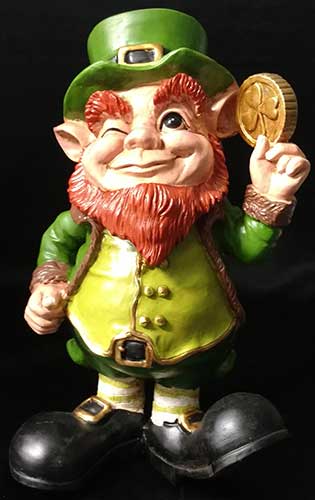
They are most often depicted as small bearded men, wearing a coat and hat, and are said to be found of pranks and mischief. 

They are usually  solitary creatures who spend their time making and mending shoes and have a hidden pot of gold at the end of the rainbow.

                                                     Image result for leprechaun


 ===================


Leprechaun myth's and folklore------

 
The earliest known reference to the leprechaun appears in the medieval tale known as the Echtra  Fergus mac Leti (Adventure of Fergus son of LĂ©ti).

 The text contains an episode in which Fergus mac Leti the  King of Ulster, falls asleep on the beach and wakes to find himself being dragged into the sea by three lĂșchorpĂĄin. He captures his abductors, who grant him three wishes in exchange for release.

The leprechaun is said to be a solitary creature, whose principal occupation is making and mending shoes, and who enjoys practical jokes. According to William Butler Yeats  the great wealth of these fairies comes from the "treasure - crocks, buried of old in war-time", which they have uncovered and appropriated.

 According to David Russell McAnally the leprechaun is the son of an "evil spirit" and a "degenerate fairy" and is "not wholly good nor wholly evil".

 ----------------------------

Some researchers say that the word leprechaun may have be derived from the Irish leath bhrogan, which means shoemaker.  they are cobblers, or shoemakers. Shoemaking.


                                                             Image by JB Monge
            

------------
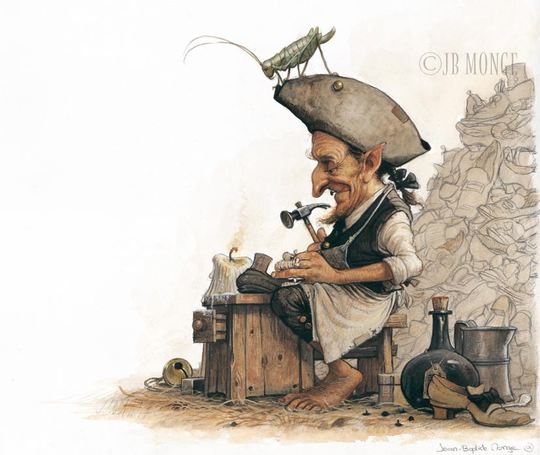
Image result for leprechaun shoe next to htumble
According to Irish legends, people lucky enough to find a leprechaun and capture him (or, in some stories, steal his magical ring, coin or amulet) can barter his freedom for his treasure. Leprechauns are usually said to be able to grant the person three wishes. But dealing with leprechauns can be a tricky proposition.

 ----------------------
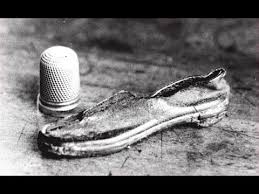
                                   Image result for leprechaun shoe ireland

Very small shoe made of mouse leather found by a sheep farmer on an ancient trail within the Beara Peninsula in Ireland.1824... (Post about this coming soon)
---------------------


 Leprechauns.....

The name leprechaun is derived from the Irish word leipreachĂĄn, defined by Patrick Dinneen  as "a pigmy, a sprite, or leprechaun". The further derivation is less certain; according to most sources, the word is thought to be a corruption of Middle Irish  luchrupĂĄn, from the Old Irish   luchorpĂĄn, a compound of the roots lĂș ("small") and corp ("body").

 The root corp, which was borrowed from the Latin   corpus, attests to the early influence of   Ecclesiastical  Latin on the Irish language.

 However, further research published in 2019 suggests that the word derives from the Luperci and the associated Roman festival of Lupercalia.

The alternative spelling leithbrĂĄgan deriving the word from leith (half) and brĂłg (brogue), because of the frequent portrayal of the leprechaun as working on a single shoe.

Alternative spellings in English have included lubrican, leprehaun, and lepreehawn. Some modern Irish books use the spelling lioprachĂĄn. The first recorded instance of the word in the English language was in Dekker's comedy The Honest Whore, Part 2 (1604): "As for your Irish lubrican, that spirit / Whom by preposterous charms thy lust hath rais'd / In a wrong circle.

 Some believe  that leprechauns are descended from the Tuatha de Danann. When the Milesians came to Ireland (according to the Book of Invasions) they conquered the Tuatha de Danann and forced them to live under ground (this connects them to the aes-sidhe).


---------
 The cluricaun is often confused with the leprechaun. The leprechaun is related to the clurichaun and the far darrig in that he is a solitary creature. Some writers even go as far as to substitute these second two less well-known spirits for the leprechaun in stories or tales to reach a wider audience. The cluricaun is considered by some to be merely a leprechaun on a spree.
 ------------------


Leprchuans love music, dancing, fox hunting, and drinking Irish whiskey these are said to be the his ' favorite pastimes.

Once a leprachaun begins dancing to a human's song, it is said that he cannot stop until the tune ceases.

 His exhausted state may cause him to make outlandish offers, including his crock (pot)of gold, if you will please only allow him to stop dancing. Other means of finding his gold include looking at the end of a rainbow, which may lead him to offer 3 wishes in exchange for his treasure. However his promises of gold or wealth  are nothing more the  hollow words, as the Leprechaun employs clever trickery when granting his  wishes, usually resulting in the embarrassment or even  injury to the one making the wishes.

According to some legends, If caught by a human, he will promise great wealth if set  free.

He carries two leather pouches. In one there is a silver shilling, a magical coin that returns to the purse each time it is paid out. In the other he carries a gold coin which he uses to try and bribe his way out of difficult situations. This coin usually turns into leaves or ashes once the leprechaun has parted with it. However, you must never take your eye off him, for he can vanish in an instant.
According to legend, if anyone keeps an eye fixed upon one, he cannot escape, but the moment the eye is withdrawn he will vanish.


==========
--Other Media---


As with many old legends and traditions, the image and nature of the leprechaun has changed over time and has been updated for a modern audience. Lucky the Leprechaun, mascot of the General Mills breakfast cereal Lucky Charms, is probably the best-known fairy of his type.

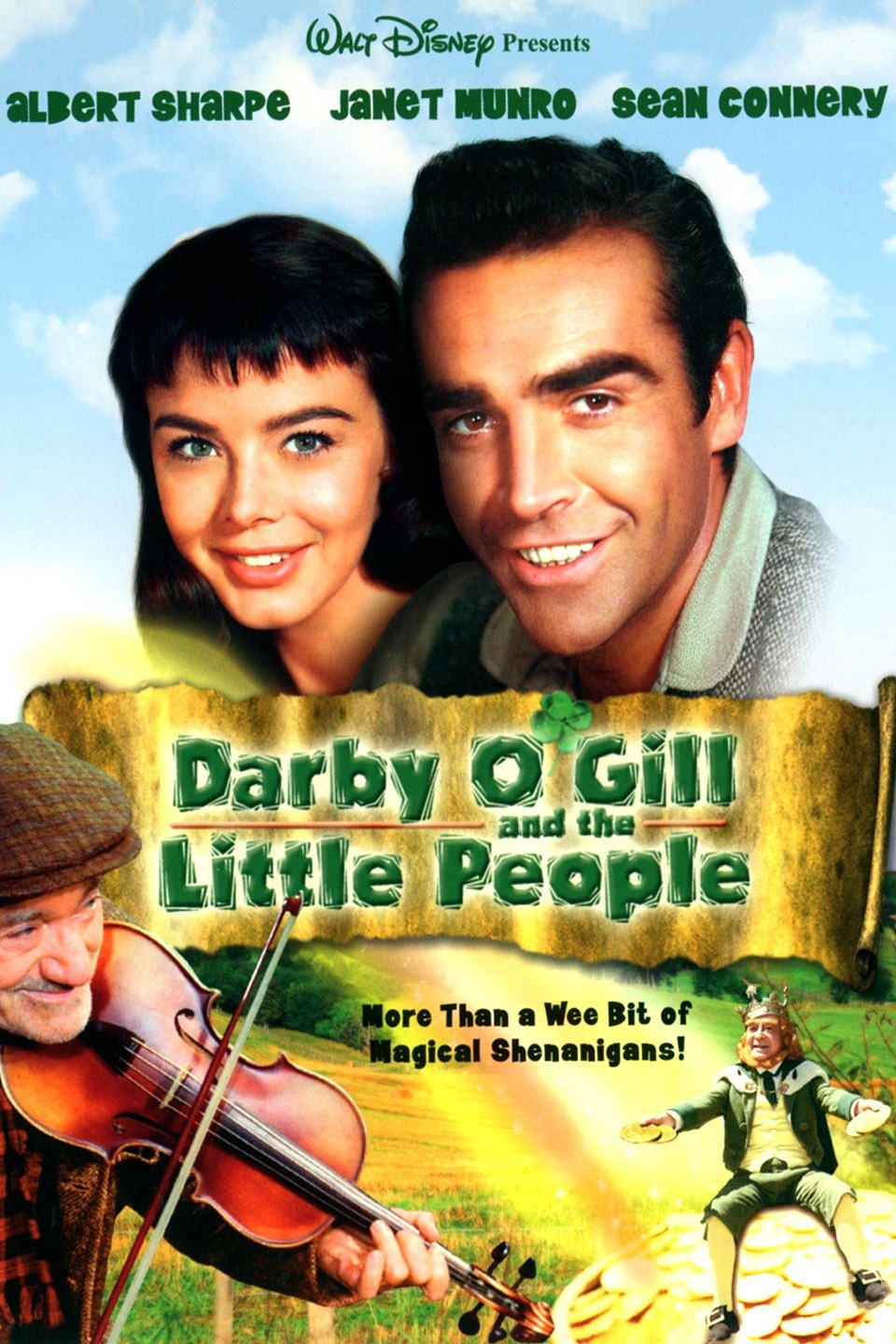
The 1959 Disney movie Darby O'Gill and the little people also played  an prominent role  how people see the wee folk today.
                                             .
---------------Image result for darby ogill


Then there's  homicidal leprechaun Lubdan in the "Leprechaun" horror/comedy film series played by "Willow" actor Warwick Davis.
 -----------------
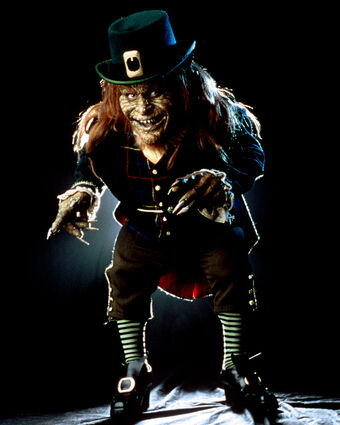
                                 Image result for leprechaun

 ===========================


One of the most well know Leprechauns in the world is Lucky the General Mills cereal mascot for Lucky Charms.

                                             =================
                                     -----Lucky the Leprechaun -----
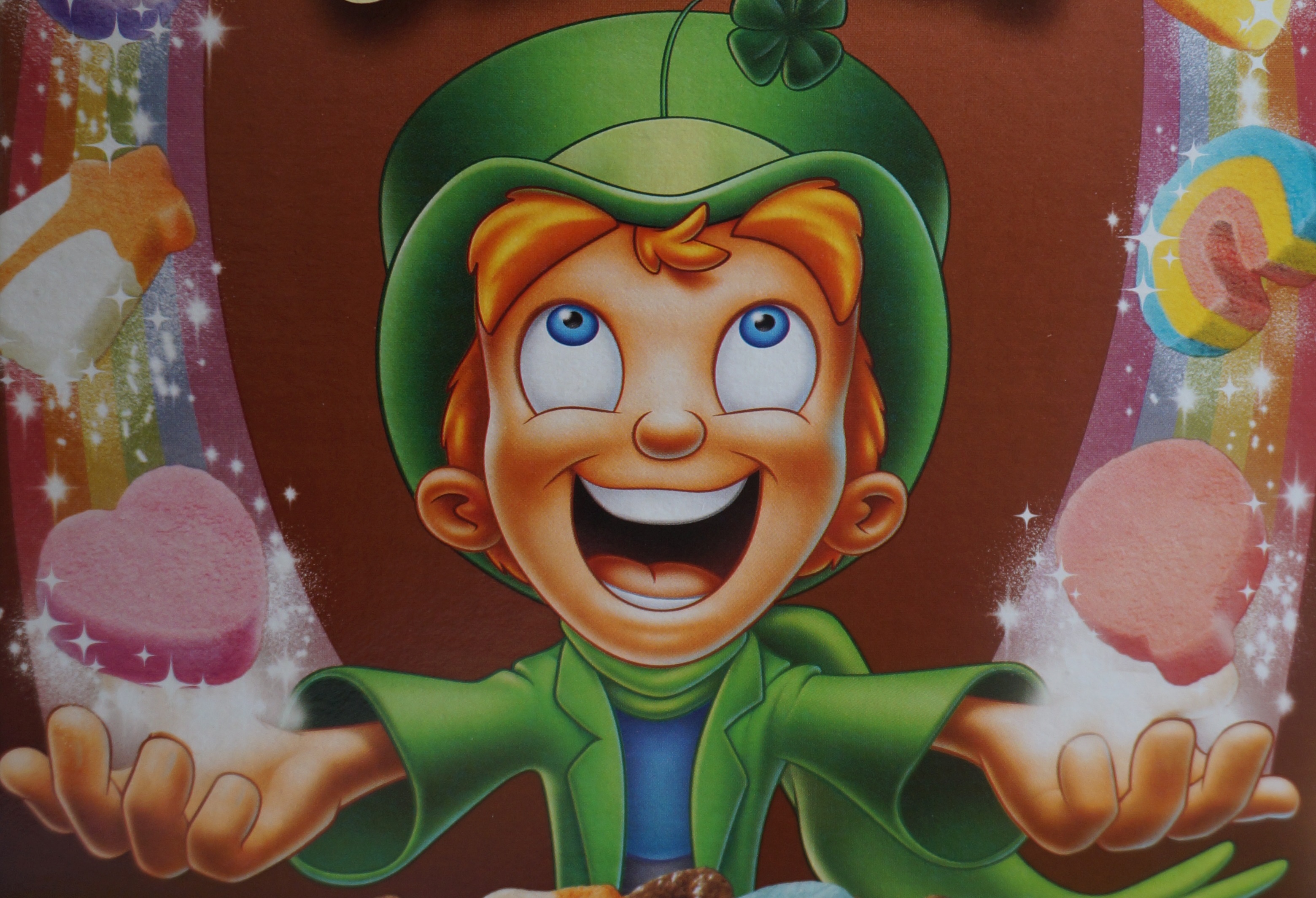


         Image result for lucky charms

=====================


                                                  =============
                                                        Hornswaggle
                                                       ==========
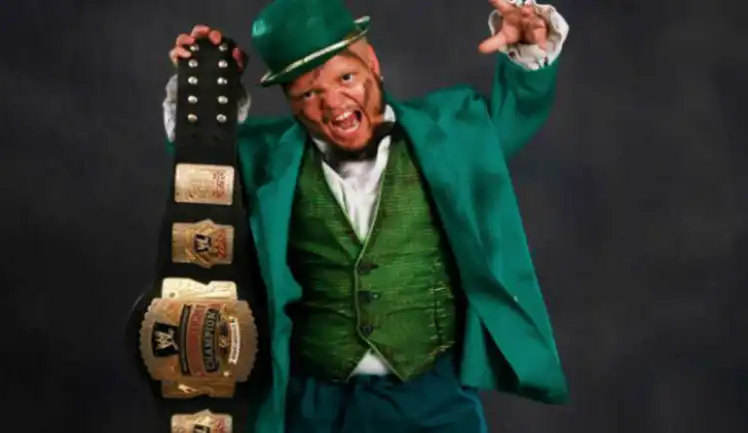
Image result for hornswoggle wwe


Professional wrestler Dylan Mark Postl competed and appeared as Hornswoggle the little leprechaun that lived under the ring, for most of his WWE career 


========


The University Notre Dame- Fighting  Irish Leprechaun mascot 
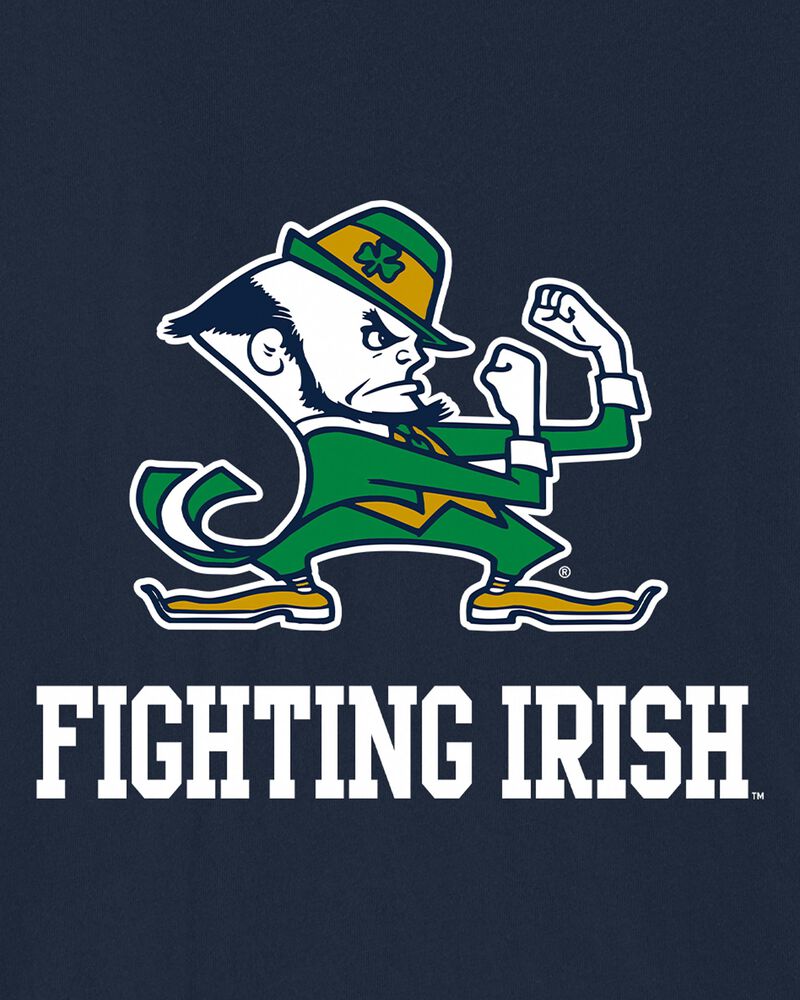


Image result for fighting irish


============================


The Boston Celtics logo has a leprechaun mascot of the team named  Lucky the Leprechaun...no relation to General Mills or Lucky Charms...
Image result for celtics
--------------------------

                                          Cute female Leprechaun ...

                           Leprechaun Fairy Goth Girl with Shamrocks

                             Image result for leprechaun girl


Leprechaun in anime
                                           Image result for leprechaun aniume


  Image result for leprechaun animeShuumatsu Nani Shitemasu ka? Isogashii Desu ka? Sukutte Moratte Ii Desu ka? WorldEnd: What do you do at the end of the world? Are you busy? Will you save us?
 Chtholly Nota Seniorious  from Shuumatsu Nani Shitemasu ka? Isogashii Desu ka? Sukutte Moratte Ii Desu ka?
  
 WorldEnd: What do you do at the end of the world? Are you busy? Will you save us?


================
Leprechaun and Politics....
---------------------------------------

Paul Krugman  a Nobel Prize-winning economist, first coined the term "Leprechaun economics" to describe distorted or unsound economic data, which he first used in a tweet on 12 July 2016 in response to the publication by the Irish Central Statistics Office or CSO..that Irish GDP had grown by 26.3%, and Irish GNP had grown by 18.7%, in the 2015 Irish national accounts. The growth was subsequently shown to be due to Apple restructuring its double Irish  tax scheme which the EU Commission had fined €13bn in 2004–2014 Irish unpaid taxes, the largest corporate tax fine in history. The term has been used many times since.


 In the Irish politics the  leprechauns has been used to refer to the twee (a childish pronunciation of sweet).  aspects of the tourist industry in Ireland This can be seen from this example of  John A Costello addressing the Oireachtas   in 1963: "For many years, we were afflicted with the miserable trivialities of our tourist advertising. Sometimes it descended to the lowest depths, to the caubeen and the shillelagh  not to speak of the leprechaun
         

               Image result for leprechaun girl


Monday, September 23, 2019

Fairy Myths: The Dullahan


============================================================
This will by my last Fay/ Fairy post for now, my next post will be Paranormal..Cryptid's and Monsters at least until  Halloween. anyway Enjoy :)
===========================================================


                                            monster musume - lala by angellmoonlight on Deviantart


                                                  The Dullahan: Ireland's Headless Rider.


The Dullahan  is a type of fay from Irish Mythology it's  often seen as a harbinger of death.

This creature is depicted as a headless rider usually on a black horse or is some versions riding in a black horse drawn coach. The Dullahan is also refered to as Gan Ceann which means "Without a Head".


The headless rider is known too carries their own head under one arm. typically the Dullahan  is described as male, but there are some female versions.


The Dullahan has limited  speech capability's.

Its disembodied head is permitted to speak just once on each journey it undertakes, after that it only the ability to call the name of the person whose death it heralds.

A dullahan will stop its snorting horse at  the door of a house and shout the name of the person about to die, drawing forth the soul at the call.

 He may also stop at the very spot where a person will die.

On nights of Irish feast days, it is advisable to stay at home with the curtains drawn; particularly around the end of August or early September when the festival of Crom Dubh reputedly took place. If you have to be abroad at this time, be sure to keep some gold object close to hand.


The origins of the dullahan are unkown, but he is thought to be the embodiment of an ancient Celtic god, Crom Dubh, or Black Crom.

Black Crom was worshiped by the prehistoric king, Tighermas, who ruled in Ireland about fifteen hundred years ago and practiced human sacrifice.

Unlike the banshee, the dullahan does not follow specific families and its call is a summoning of the soul of the dying,  rather than a death warning.

 There is no real defense against the dullahan because he is death's herald. However, an charm or trinket made of gold may frighten him away.

 The  Dullahan's mouth is usually seen  in a sinister or hideous  grin that stretches from ear to ear. Its eyes are constantly moving about and can see across the countryside even during the darkest nights.

The flesh of the head is said to have the color and consistency of moldy cheese.

In some tales the Dullahan is believed to use the spine of a human corpse for a whip, and it's ghostly wagon is adorned with funeral objects: it has candles in skulls to light the way, the spokes of the wheels are made from thigh bones  and the wagon's covering is made from a worm-chewed pall or dried human skin.


The ancient Irish believed that where the Dullahan stops riding, a person is going  to die.


 The Dullahan calls out the person's name, drawing away the soul of his victim, at which point the person immediately drops dead.

Some legend's say that golden objects can force the Dullahan to disappear.These tales are coming from ancient times, where gold was very valuable and most commoner's / villagers did not have it.


It was thought that by .leaving  behind the gold as a sort of sacrifice  the soul could be spared.


 ====================================================================


Dullahans have also been main charterers in modern anime and manga's...


Durarara, Interviews with Monster Girls and Monster Musume to name a few.


Wednesday, September 11, 2019

Fairy Myth: The Clurichaun


                                                        ~~~~~The Clurichaun~~~~~~


The Clurichaun closely related to the Leprechaun  they along with the other wee folk have inhabited Ireland even  before the Celts arrived – around 500 BC.

Other sources suggest that the word Leprechaun may have derived from the Irish versions of “leath mhrogan [shoemaker], still others would say its origins lie in the Irish word luacharma’n [pygmy or pixy].

There are many derivative names for the  Leprechaun  [Irish word leipreachĂĄn] – and a definition of this by Patrick Dinneen, for example, is that the Leprechaun is a “pygmy, a pixi, or sprite” and would suggest that the word Leprechaun is a corruption of middle Irish, and attests to the early influences of ecclesiastical Latin. Other sources would suggest that the earliest recorded instance of the word ‘Leaprachaun’ in the English language was in 1604, in  the comedy play ‘The Honest Whore‘ [Part 2] had a scene in it which reads: As for your Irish lubrican that spirit/ whom by preposterous charm thy lust hath rais'd/ in a wrong circle."

Lubrican and Logherymans  are other derivatives of Leprechaun. David Russell McAnally would suggest that the leprechaun is the son of an (evil spirit )and a  (degenerate fairy)  and is not  entirely  good nor completely evil.


The Clurichaun: (Klooreekahn) is said to be a wine loving House Faery.

He looks very similar to the leprechaun and is usually  solitary like him.

 He wears a red hat often made of a plants. He is a cheerful fellow, but short tempered and often
 very drunk.

He usually chooses a home with a wine cellar or a large basement with a reasonable amount of booze in it. He loves wine and will guard it from thieves. He keeps the wine from spoiling and can help it achieve a better taste.


But  if he feels offended by someone or something the Clurichaun will cause your wine to spoil and he will make a mess of your wine cellar or basement. If he feels disrespected enough  he will leave your home  never return and no other will be lured to your home afterwards .


Clurichaun are said to be always drunk, and are very surly. Many tales suggest that they go out at night wreaking havoc on the farmer and on the whole countryside, by tormenting the sheep and the dogs, riding them bareback and causing mayhem.

If clurichaun are mistreated in any way — they will wreak havoc on your home and wine-cellar. Born hypocrites, they are said to steal everything in sight, but if they see a dishonest servant or a human drunkard, they will torment them for there wicked ways.

=================================================================


 Scholars of folklore, however, disagree as to whether or not the Clurichaun is a distinct species, or a faerie, or if it is in fact  just a VERY drunk Leprechaun .

In the county of Cork, for example, the Clurichaun would appear to have haunted the cellar of a Quaker man  named Mr. Harris. Apparently, the cook would leave a meal for the Clurichaun, and, for this service, the Clurichaun would manage the cellar.

On one particular night , after an exhausting day, the cook only left a small amount of meat and some potatoes. So enraged was the Clurichaun that he marched upstairs and took the bewildered cook out of her bed, dragging her downstairs and beat her. Mr. Harris was so enraged about this that he was determined that he would rid the household of the Clurichaun once and for all.

Having been told that if he moved beyond a running stream, the household would be rid of the Clurichaun, Mr. Harris attempted to do just that by moving all the household furniture and cellar barrels and wines. However, the wily Clurichaun, knowing what was happening, wedged himself into one of the beer barrels and, as Mr. Harris began to move with his wagon-load of goods, he heard a noise. The wily Clurichaun called out, “Here we go, Master! Here we go all together!  “What,” shouted Mr. Harris; “dost thou go also?” – “Yes to be sure, master. Here we go, alt together.” “In that case,” replied Mr. Harris, “let the carts be unloaded, we are just as well where we are.” Mr. Harris died soon afterwards. It is said, however, that the Clurichand still haunts the Harris family.
=================================================================


In 1963 – John A. Costello, taoiseach from 1948 to 1951 and from 1954 to 1957, addressed Oireachtas [Ireland’s national Parliament] by delivering a scathing attack on all of the myths regarding Ireland’s tourist industry. “For many years, we have been afflicted with the miserable trivialities of our tourist advertising. Sometimes, it  has descended to the lowest depths, to the caubeen and the shillelagh, not to speak of the leprechaun and the clurichaun. … No more.”


---------------------------------------------------------------------------------------------------------------

The 19th century folklorist Nicholas O’Kearney,  in 1855 describes the Clurichaun as “… another being of the same class: He is jolly, red-faced, a drunken little fellow, and was ever found in the cellars of the debauchee, Bacchus-like [Bacchus is a comics character created by Eddie Campbell and based upon the Roman god of wine] astride of the wine butt, with a brimful tankard of wine in his hand, drinking and singing away merrily. Any wine-cellar known to be haunted by this sprite was doomed to bring its owner to speedy ruin.”


Monday, September 2, 2019

Fairy Lore:The Daoine Sidhe or Aos Si


September is going to be mostly Fairy myths and legends, After that

 i will be doing Crypid posts until Halloween or shortly after,.....


Fairy, Fay, Wee folk or whatever you call them the little people are all around us.

Here is a little info on some of them.

 The Daoine Sidhe..or Aos Si ...People of the mounds

Daoine Sidhe: Legend recounts that when the Milesians defeated the Tuatha dé Danann, they followed one of their leaders, Dagda, down under these earth mounds and became the Daoine Sidhe. They are the Trooping fairies and have their own regional kings and queens and owe allegiance to Finvarra and Onagh.

The aos sĂ­ (Irish pronunciation: [iːs 'ʃiː], "ees shee", older form aes sĂ­dhe is the Irish Gaelic term for a supernatural race in Irish mythology and Scottish mythology, (usually spelled SĂŹth, however pronounced the same) comparable to the fairies or elves.

 They are said to live underground in fairy mounds, across the western sea, or in an invisible world that coexists with the world of humans. This world is described in the Book of Invasions (recorded in the Book of Leinster) as a parallel universe in which the aos sĂ­ walk amongst the living.

In the Irish language, aos sĂ­ means "people of the mounds" (the mounds are known in Irish as "the sĂ­dhe").


 In Irish literature the people of the mounds are also called daoine sĂ­dhe; in Scottish mythology they are daoine sĂŹth. They are variously said to be the ancestors, the spirits of nature, or Goddesses and Gods.

Some secondary and tertiary sources including well-known and influential authors such as W.B. Yeats refer to aos sĂ­ simply as "the sĂ­dhe" (lit.: mounds).

Sidhe  are the hills that dot the Irish landscape.

In modern Irish the word is Si; in Scottish Gaelic sith in Old Irish side  and the singular is sid.

In some English text the word sidhe   is incorrectly used both for the mounds and the people of the mounds. However sidh in older texts refers specifically to "the palaces, courts, halls or residences" of the otherworldly beings that are said too inhabit them.

The fact that many of these sidhe  have been found to be ancient burial mounds has contributed to the theory that the aos si  were the pre-Celtic occupants of Ireland.


Aos si are said to be fierce protectors of the home's or territory  whether a fairy hill, a Fairy Ring a special tree ( most times a Hawthorn or a particular loch  or forest.


It is believed that entering these spaces will cause the aos si  to retaliate in an effort to remove the people or objects that invaded their homes.

Many of these story's  are often linked to changelings myth were the aos si are said  to kidnapping trespassers or replacing their children with changelings as a punishment for their disrespect.

The aos si  are often connected to certain times of year and hours; as the Gaelic Fairy world or spirit world  is believed to come closer to the human  world at the times of dusk and dawn, and  the aos si  aos s are   easier to encounter. Some festivals such as Samhain (Halloween ) and  Baltane,.. May 1st the beginning of summer ( May Day)  are also associated with the aos si.