Showing posts with label ghost stories. Show all posts

Sunday, June 1, 2025

Ghostly Folklore: Dames Blanches 🇫🇷👻


Dames Blanches.

🇫🇷🌉👻

In French folklore there is a ghost like woman often seen near bridge's or alleys.

Her name is Dame Blanche .

 The most common version of the legend says she would stop someone and ask them to join her in dance or assist her in a certain way in order to pass. If the passerby offered her assistance, she would make him courtesies and disappear,  if he refused to play along with her request, he would meet an unfortunate end.

The name Dames Blanche translates to  “White Ladie / Ladies” 


She is a supernatural entity most often thought to be a spirit though some believe she may infact be a type of fay .

She can be seen near near caverns, ravines, bridges and other narrow places where she can attract the attention of people passing by.

In France, the Dames Blanches are most  popular in  Lorraine and Normandy and were said to appear in Occitan, the Pyrenees mountains with various other sightings throughout the country.

The Dames Blanches have similar counterparts in name and characterization in Germany she's called  Weiße Frauen and in  Dutch she's  the Witte Wieven.


She may also have ancient connections to a pre Christian guardian goddesses known as the Matres,  specifically the Dominæ, who watched over the home, perhaps became the Dames of folklore.


.........

Thomas Keightley (1870) describes the Dames Blanches as a type of Fae known in Normandy "who are of a less benevolent character." They lurk in narrow places such as ravines, forest, and on bridges and try to attract passerby attention. They may require one to join in her dance or assist her in order to pass. 

If assisted she "makes him many courtesies, and then vanishes." One such Dame was known as La Dame d'Apringy who appeared in a ravine at the Rue Quentin at Bayeux in Normandy, where one must dance with her a few rounds to pass. 

Those who refused were thrown into the thistles and briar, while those who danced were not harmed. Another Dame was known on a narrow bridge in the district of Falaise, named the Pont d'Angot. She only allowed people to pass if they went on their knees to her. Anyone who refused was tormented by the lutins(a type of hobgoblin), cats, owls, and other creatures who helped her.


Tuesday, October 1, 2024

Fairy Lore, the will o the wisp.


Happy October 1st 🎃


The Will o the wisp .ignes fatui or ignis fatuus.


For centuries people have seen odd lights from the swamps or marsh. Though the name may very the most well known term is will o the wisp. Other names, for this phenomena including jack-o'-lantern, friar's lantern, and hinkypunk it is one of the more well know legends throughout Europe. Other names include the Paulding Light in Upper Peninsula of Michigan, and the Hessdalen light in Norway or the Spooklight in Southwestern Missouri and Northeastern Oklahoma, the Naga fireballs on the Mekong in Thailand, and St. Louis Light in Saskatchewa.


The  Bridgewater Triangle, a swampy area of Massachusetts has local folklore of ghostly orbs of light, and there have been modern observations of these ghost-lights in this area as well.


The fifollet (or feu-follet) of Louisiana derives from the French settler's according to legends the fifollet is a soul sent back from the dead to do God's penance, but instead attacks people for vengeance. While it mostly takes part in harmless mischievous acts, the fifollet sometimes sucked the blood of children. Some legends say that it was the soul of a child who died before baptism.


In Mexico they are believed to be witches that transformed into  lights. Another explanation refers to the lights as indicators to places where gold or hidden treasures are buried which can be found only with the help of children. This version is called luces del dinero (money lights) or luces del tesoro (treasure lights).

....


The light of a will o the wisp is said to mislead travellers by resembling a flickering lamp or lantern.

In literature, will-o'-the-wisp metaphorically refers to a hope or goal that leads one on, but is impossible to reach, or something one finds strange or sinister.

For the most part the Wills-o'-the-wisp is a strange erie light usually seen around a forest, swamp, marsh or even  grave yards often witnessed by travelers.


The most common belief is that these lights are a type  of fairies, ghosts or elemental spirits. Modern explorations for  the light is that it's a natural phenomena most likely some kind of  bioluminescent swamp gas or possibly ball lightning.


Monday, October 30, 2023

Aoandon, blue flame spirit

 🦇🎃Happy 👻Halloween🎃🦇


                     Happy Halloween 🎃

              time for  ghost story,👻👻👻


Halloween is the best time of year for a good ghost story, Enjoy.👻

Aoandon (青行燈, Aoandon) is a creature illustrated by Toriyama Sekien in his Konjaku Hyakki Shūi. It was meant to represent the spirit that appeared during Hyakumonogatari Kaidankai meetings, after the last story was told...

Long ago during the Edo period, a popular summertime activity among the aristocratic classes was to gather and tell ghost stories, (ghost stories in the summer are still a popular pass time in Japan today)    hoping the chill of fear would stave off the intense midsummer heat. These ghost story telling parties were called hyakumonogatari kaidankai – a gathering of one hundred ghost stories. 

During these gatherings, one hundred candles would be lit and placed inside of blue paper lanterns, called andon, in order to create an eerie atmosphere suitable for storytelling.

 Throughout the night, guests would take turns telling progressively scarier stories about yokai, demons, ghosts, and other strange things. After each story, one candle would be snuffed out, until finally only the hundredth candle remained, its dim blue light casting long, creepy shadows, struggling to fill the dark room.

According to superstition, as the final candle was snuffed, a real ghost would appear out of the darkness to attack the participants, created out of the heightened emotional state and fears of guests. This ghost was called the ao andon.

The ao andon is the incarnation of mass human terror, formed out of the built-up fears of large groups of people. This fear takes the appearance of a demonic woman with long black hair, blue skin, blackened teeth, sharp claws, and horns. It wears a white or blue kimono, and glows with an eerie blue light.

The ao andon appears at the end of the gathering, when all of the lanterns have been snuffed out. It emerges from the smoke of the final candle and attacks the guests. What exactly it does is a mystery; whether it slaughters all of the participants in a brutal finale inspired by the preceding tales, or simply jumps out to give one last shock before the guests return home has never been recorded. 


The reason for this is that by the time the ninety-ninth ghost story had been told, the guests were usually too frightened to tell the final story, and the parties usually concluded at that point, before the ao andon could appear.

As the old proverb says (in both English and Japanese): speak of the devil, and the devil shall appear. It was feared that merely talking about ghosts and spirits for long enough would cause them to materialize for real.


Hopefully you all enjoyed this month of monster's as much as I did, have a great 

🦇🎃🦇Halloween 🎃🦇🎃

 and the rest of 2023.


🦉M.

Japaneses myths: The Vampire Cat


                         The Vampire Cat             

            The Cat of Nebeshima..  

The Prince of Hizen a distinguished member of the Nabéshima family, lingered in the garden with O Toyo, the favorite among his ladies. When the sun set they retired to the palace, but failed to notice that they were being followed by a large cat.

O Toyo went to her room and fell asleep. At midnight she awoke and gazed about her, as if suddenly aware of some dreadful presence in the apartment. At length she saw, crouching close beside her, a gigantic cat, and before she could cry out for assistance the animal sprang upon her and strangled her. The animal then made a hole under the verandah, buried the corpse, and assumed the form of the beautiful O Toyo.

The prince, who knew nothing of what had happened, continued to love the false O Toyo, unaware that in reality he was caressing a foul beast. He noticed, little by little, that his strength failed, and it was not long before he became dangerously ill. Physicians were summoned, but they could do nothing to restore the royal patient. It was observed that he suffered most during the night, and was troubled by horrible dreams. This being so, his councilors arranged that a hundred retainers should sit with their lord and keep watch while he slept.

The watch went into the sickroom, but just before ten o'clock it was overcome by a mysterious drowsiness. When all the men were asleep the false O Toyo crept into the apartment and disturbed the prince until sunrise. Night after night the retainers came to guard their master, but always they fell asleep at the same hour, and even three loyal councilors had a similar experience.

During this time the prince grew worse, and at length a priest named Ruiten was appointed to pray on his behalf. One night, while he was engaged in his supplications, he heard a strange noise proceeding from the garden. On looking out of the window he saw a young soldier washing himself. When he had finished his ablutions he stood before an image of Buddha, and prayed most ardently for the recovery of the prince.

Ruiten, delighted to find such zeal and loyalty, invited the young man to enter his house, and when he had done so inquired his name.

"I am Ito Soda," said the young man, "and serve in the infantry of Nabéshima. I have heard of my lord's sickness and long to have the honor of nursing him; but being of low rank it is not meet that I should come into his presence. I have, nevertheless, prayed to the Buddha that my lord's life may be spared. I believe that the Prince of Hizen is bewitched, and if I might remain with him I would do my utmost to find and crush the evil power that is the cause of his illness."

Ruiten was so favorably impressed with these words that he went the next day to consult with one of the councilors, and after much discussion it was arranged that Ito Soda should keep watch with the hundred retainers.

When Ito Soda entered the royal apartment he saw that his master slept in the middle of the room, and he also observed the hundred retainers sitting in the chamber quietly chatting together in the hope that they would be able to keep off approaching drowsiness. By ten o'clock all the retainers, in spite of their efforts, had fallen asleep.

Ito Soda tried to keep his eyes open, but a heaviness was gradually overcoming him, and he realized that if he wished to keep awake he must resort to extreme measures. When he had carefully spread oil-paper over the mats he stuck his dirk into his thigh. The sharp pain he experienced warded off sleep for a time, but eventually he felt his eyes closing once more. Resolved to outwit the spell which had proved too much for the retainers, he twisted the knife in his thigh, and thus increased the pain and kept his loyal watch, while blood continually dripped upon the oil-paper.

While Ito Soda watched he saw the sliding doors drawn open and a beautiful woman creep softly into the apartment. With a smile she noticed the sleeping retainers, and was about to approach the prince when she observed Ito Soda. After she had spoken curtly to him she approached the prince and inquired how he fared, but the prince was too ill to make a reply. Ito Soda watched every movement, and believed she tried to bewitch the prince, but she was always frustrated in her evil purpose by the dauntless eyes of Ito Soda, and at last she was compelled to retire.

In the morning the retainers awoke, and were filled with shame when they learnt how Ito Soda had kept his vigil. The councilors loudly praised the young soldier for his loyalty and enterprise, and he was commanded to keep watch again that night. He did so, and once more the false O Toyo entered the sickroom, and, as on the previous night, she was compelled to retreat without being able to cast her spell over the prince.

It was discovered that immediately the faithful Soda had kept guard, the prince was able to obtain peaceful slumber, and, moreover, that he began to get better, for the false O Toyo, having been frustrated on two occasions, now kept away altogether, and the guard was not troubled with mysterious drowsiness. Soda, impressed by these strange circumstances, went to one of the councilors and informed him that the so-called O Toyo was a goblin of some kind.

That night Soda planned to go to the creature's room and try to kill her, arranging that in case she should escape there should be eight retainers outside waiting to capture her and dispatch her immediately.

At the appointed hour Soda went to the creature's apartment, pretending that he bore a message from the prince.

"What is the message?" inquired the woman.

"Kindly read this letter," replied Soda, and with these words he drew his dirk and tried to kill her.

The false O Toyo seized a halberd and endeavored to strike her adversary. Blow followed blow, but at last perceiving that flight would serve her better than battle, she threw away her weapon, and in a moment the lovely maiden turned into a cat and sprang onto the roof. The eight men waiting outside in case of emergency shot at the animal, but the creature succeeded in eluding them.

The cat made all speed for the mountains, and caused trouble among the people who lived in the vicinity, but was finally killed during a hunt ordered by the Prince of Hizen.

The prince became well again, and Ito Soda received the honor and reward he so richly deserved.

Monday, October 16, 2023

The Headless Horseman.


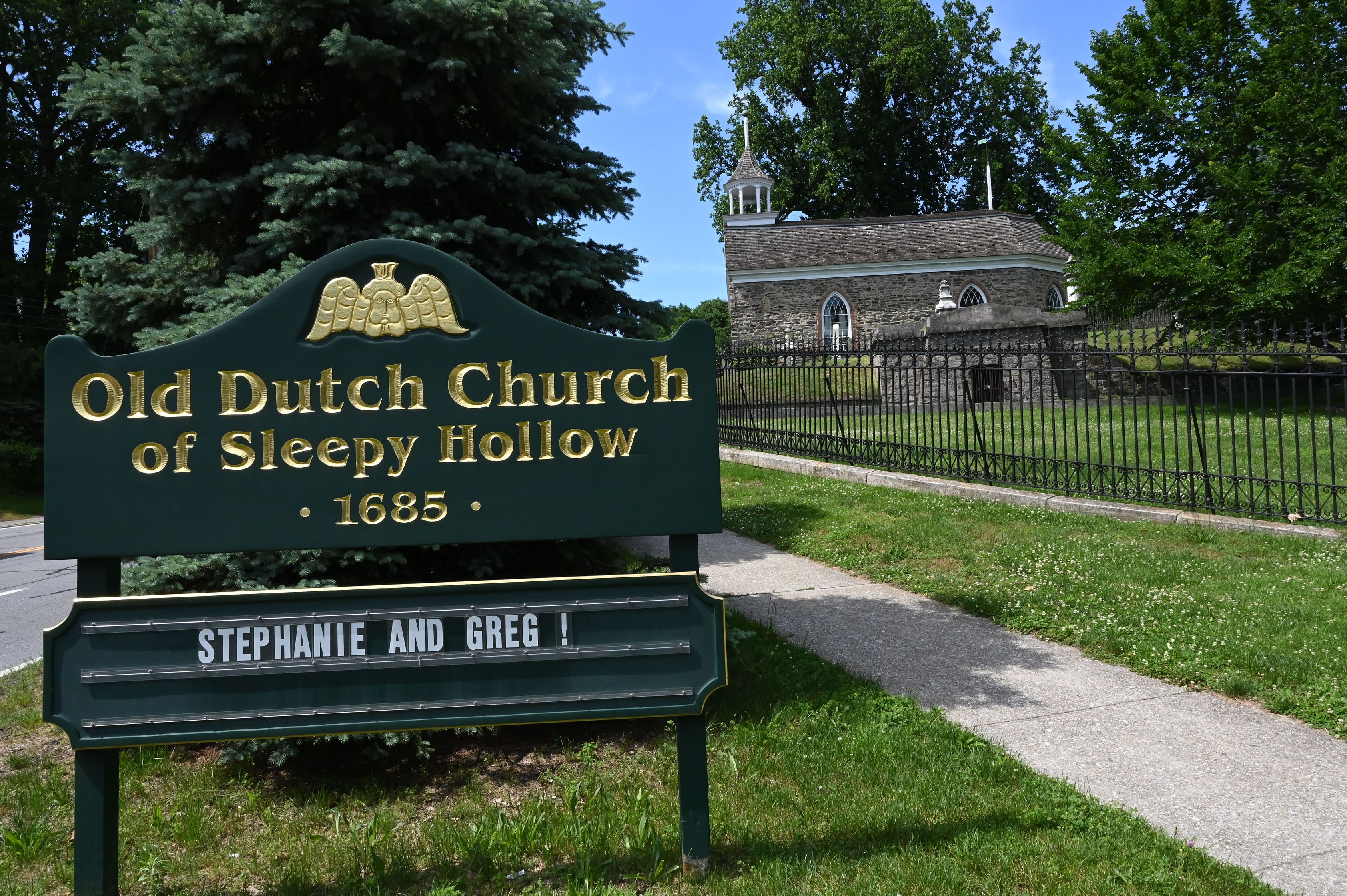
 The Headless Horseman of Sleepy Hollow..


( From the listless repose of the place, and the peculiar character of its inhabitants, who are descendants from the original Dutch settlers, this sequestered glen has long been known by name of Sleepy Hollow ... A drowsy, dreamy influence seems to hang over the land, and to pervade the very atmosphere....Washington Irving....


There are many versions of this apparition, In some he is a coachmen of the dead other's a dark Fay/Fairy.


But probably the most well known version is the one from  Washington Irving's story The Legend of Sleepy Hollow" printed in 1820  featuring  a character known as the Headless Horseman believed to be a Hessian soldier who was decapitated by a cannonball in battle. Hessians were German soldiers who served as auxiliaries to the British Army during the American Revolutionary War.  The term is an American synecdoche for all Germans who fought on the British side, since 65% came from the German states of Hesse-Kassel and Hesse-Hanau.


 Sleepy Hollow legend ..

The story is set in 1790 in the countryside around the Dutch settlement of Tarry Town (historical Tarrytown, New York), in a secluded glen known as Sleepy Hollow. Sleepy Hollow is renowned for its ghosts and the haunting atmosphere that pervades the imaginations of its inhabitants and visitors. Some residents say this town was bewitched during the early days of the Dutch settlement, while others claim that the mysterious atmosphere was caused by an old Native American chief, the "wizard of his tribe ... before the country was discovered by Master Hendrik Hudson." Residents of the town are seemingly subjected to various supernatural and mysterious occurrences. They are subjected to trance-like visions and frequented by strange sights, music, and voices "in the air." The inhabitants of Sleepy Hollow are fascinated by the "local tales, haunted spots, and twilight superstitions" on account of the mysterious occurrences and haunting atmosphere. The most infamous specter in the Hollow is the Headless Horseman, the "commander-in-chief of all the powers of the air," (an attribute also of the Devil, according to Ephesians 2:2). He is supposedly the restless ghost of a Hessian trooper whose head had been shot off by a stray cannonball during "some nameless battle" of the Revolution, and who "rides forth to the scene of battle in nightly quest of his head".

The "Legend" relates the tale of Ichabod Crane, a lean, lanky and extremely superstitious schoolmaster from Connecticut. Throughout his stay at Sleepy Hollow, Crane is able to make himself both "useful and agreeable" to the families that he lodges with. He occasionally assists with light farm work, helping to make hay, mending fences, caring for numerous farm animals, and cutting firewood. Besides his more dominant role as the schoolmaster, Ichabod Crane also assists the various mothers of the town by helping to take care of their young children, taking on a more "gentle and ingratiating" role. Crane is also quite popular among the women of the town for his education and his talent for "carrying the whole budget of local gossip," which makes him a welcomed sight within female circles. As a firm believer in witchcraft and the like, Crane has an unequaled "appetite for the marvelous," which is only increased by his stay in "the spell-bound region" of Sleepy Hollow. A source of "fearful pleasure" for Crane is to visit the Old Dutch wives and listen to their "marvelous tales of ghosts and goblins," haunted locations, and the tales of the Headless Horseman, or the "Galloping Hessian of the Hollow, as they sometimes called him."

Throughout the story, Ichabod Crane competes with Abraham "Brom Bones" Van Brunt, the town rowdy and local hero, for the hand of 18-year-old Katrina Van Tassel, the daughter and sole child of wealthy farmer Baltus Van Tassel. Ichabod Crane, an outsider, sees marriage to Katrina as a means of procuring Van Tassel's extravagant wealth. Brom, unable to force Ichabod into a physical showdown to settle things, plays a series of pranks on the superstitious schoolmaster. The tension among the three continues for some time, and is soon brought to a head. On a placid autumn night, the ambitious Crane attends a harvest party at the Van Tassels' homestead. He dances, partakes in the feast, and listens to ghostly legends told by Brom and the locals, but his true aim is to propose to Katrina after the guests leave. His intentions, however, are ill-fated, as he fails to secure Katrina's hand.

Following his rejected suit, Ichabod rides home on his temperamental plough horse named Gunpowder, "heavy-hearted and crestfallen" through the woods between Van Tassel's farmstead and the farmhouse in Sleepy Hollow where he is quartered at the time. As he passes several purportedly haunted spots, his active imagination is engorged by the ghost stories told at Baltus' harvest party. After nervously passing a lightning-stricken tulip tree purportedly haunted by the ghost of British spy Major André, Ichabod encounters a cloaked rider at an intersection in a menacing swamp. Unsettled by his fellow traveler's eerie size and silence, the teacher is horrified to discover that his companion's head is not on his shoulders, but on his saddle. In a frenzied race to the bridge adjacent to the Old Dutch Burying Ground, where the Hessian is said to "vanish, according to rule, in a flash of fire and brimstone" before crossing it, Ichabod rides for his life, desperately goading Gunpowder down the Hollow. However, while Crane and Gunpowder are able to cross the bridge ahead of the ghoul, Ichabod turns back in horror to see the monster rear his horse and hurl his severed head directly at him with a fierce motion. The schoolmaster attempts to dodge, but is too late; the missile strikes his head and sends him tumbling headlong into the dust from his horse. 


The next morning, Gunpowder is found eating the grass at his master's gate, but Ichabod has mysteriously disappeared from the area, leaving Katrina to later marry Brom Bones, who was said "to look exceedingly knowing whenever the story of Ichabod was related". Indeed, the only relics of the schoolmaster's flight are his discarded hat, Gunpowder's trampled saddle, and a mysterious shattered pumpkin. Although the true nature of both the Headless Horseman and Ichabod's disappearance that night are left open to interpretation, the story implies that the Horseman was really Brom (an extremely agile rider) in disguise, using a Jack-o'-lantern as a false head, and suggests that Crane survived the fall from Gunpowder and immediately fled Sleepy Hollow in horror of both the legends and having to deal with his landlord, never to return but to prosper elsewhere, or was killed by Brom (which may be unlikely, since Brom was said to have "more mischief than ill-will in his composition"). Irving's narrator concludes the story, however, by stating that the old Dutch wives continue to promote the belief that Ichabod was "spirited away by supernatural means", and a legend develops around his disappearance and sightings of his melancholy spirit.


.................................

Germany

...............................

 In Germany, headless-horseman stories come mostly from the Rhineland. Rather than using decapitation, the headless horsemen killed their victims simply by touching them. They were revenants who had to wander the earth until they had atoned for their sins, sometimes by doing a good deed for a stranger, but instead of showing their gratitude by shaking hands, the stranger and the horseman held a tree branch between them and the branch would wither and die rather than the stranger.

 Irving traveled in Germany in 1821 and had become familiar with Dutch and German folklore.

In particular the last of the "Legenden von Rübezahl" ('Legends of Rübezahl') from Johann Karl August Musäus's literary retellings of German folktales (Volksmärchen der Deutschen, 1783) is said to have inspired The Legend of Sleepy Hollow


......................

Ireland 

.......................

The dullahan or dulachán  is a headless, dark fay, usually riding a horse and carrying his head under his arm.

He wields a whip made from a human's spine. When the dullahan stops riding, a death occurs. The dullahan calls out a name, at which point the named person immediately dies. All doors open for the dullahan, no lock will stop him.

 In another version, he is the headless driver of a black carriage, the Cóiste Bodhar.

 A similar figure, the gan ceann ("without a head"), can be frightened away by wearing a gold object or putting one in his path.

Dullahan post 

http://theparanormal411.blogspot.com/2019/09/fairy-myths-dullahan.html?m=1

............................

Scotland

..........................

The most prominent Scots tale of the headless horseman concerns a man named Ewen decapitated in a clan battle at Glen Cainnir on the Isle of Mull. The battle denied him any chance to be a chieftain, and both he and his horse are headless in accounts of his haunting of the area.

 Among the Highland Scottish diaspora in Cape Breton, Nova Scotia, seeing the image or hearing the sound of a horse or headless rider is traditionally regarded as an omen of an imminent death within the family.


Tuesday, March 14, 2023

Highway Ghost in Arizona 👻


Arizona trucker see's ghost on highway

                🛣️    🚚👻


William Church, a truck driver who reportedly drove down Arizona State Route 87 on Saturday, March 11, noticed a bright glare in his dashcam, and he thinks the flashing figure may  be a ghost


The figure was spotted at around 2:30 a.m. while Church passed the highway’s 200-mile marker, which is located between Phoenix and Payson, Arizona.


the translucent figure looks like a person "just standing in the roadway


This 277 mile stretch of highway was build in 1927 and is considered one of Arizona's most dangerous roads, especially at night and tragically there have been several fatal car accidents through out the nealy one hundred years this old highway has been around, which many locals now believe could be haunted 


A recent fatal car crash happened on Arizona State 87 near milepost 201 in early February, according to FOX 10 Phoenix News.

 Could this figure be the wondering spirit of one of the many unfortunate people that have lost their lives on this stretch if desert road ?

Sunday, October 2, 2022

The Headless Cabbie.


                                             Hey Arnold ...the headless cabbie
                                                (One of my Favorite episodes )


One night, a mysterious woman stopped the Cabbie asking to help find her lost dog.

She offered the Cabbie a scarf to help keep him warm.

They entered the park, the horses hooves echoing on the old cobble stone path.

As they were going down the road, their surroundings started  getting darker and foggier.
Then the woman heard her dog barking, and told the cabbie to go faster.

The dog ran through a tunnel, There he is, Follow Him! the woman told the cabbie.

They followed the lost dog through the tunnel, and soon after exiting the other side they encountered a crazed man with  a golden hook for an arm,  the large hook lunged out nearly missing the cabbie and his passenger.

However the  man's attack  caused  the Cabbie to var  off the path.

The carrage started moving faster and faster as the horse began to panic.

The woman was becoming frantic even  demonic in her appearance and demeanor .

Her voice getting louder and louder, she ordered the Cabbie to go even faster "We have  to find my doggie" Faster Faster she ordered.

As the carriage speed increased the Cabbie's scarf got caught on a low hanging branch,he had noticed to late.
 
The scarf twisted and snagged around the branch and tightened around  the Cabbie's neck until he was decapitated, thus transforming him into the Headless Cabbie.

This grim scene was followed by the crazed demonic laughter of the woman.

The legend says that on a dark, foggy night in the fall, the Headless Cabbie still haunts the park.


First,
 
The sound of the demon dog barking is heard; then comes a beating sound on the cobblestones; finally, the evil laugh of the ghostly woman is heard, and she is
seen being driven by the Headless Cabbie in his carriage.


Wednesday, June 1, 2022

Ghost stories.. La Llorona, the weeping woman.

La Llorona, The Weeping Woman or The Cryer, is a popular Latin American legend about the ghost of a woman who steals children to drown them. 


There are several versions of this tale In the Southwestern United States, the tale of La Llorona is told to scare children into good behavior, sometimes specifically to deter children from playing near dangerous water. 


They are also told her cries are heard as she walks around the street or near bodies of water to scare children from wandering around, resembling the stories of El Cucuy. (more on hime in a later post) 


 In Chumash mythology indigenous to Southern California, La Llorona is linked to the nunašɨš, a mythological creature with a cry similar to that of a newborn baby. 

The legend of La Llorona is also deeply rooted in Mexican popular culture, her story told to children throghout the countery to encourage them not to wander off after dark, "La Cihuacoatle, Leyenda de la Llorona" is a yearly waterfront theatrical performance of the legend of La Llorona set in the Xochimilco borough of Mexico City, established in 1993 to coincide with the Day of the Dead.


0000000000000000000000000000000000000000000000000000000000

                             Standard version of the legend..

ooooooooooooooooooooooooooooooooooooooooooooooooooooooooo


After giving birth to, and raising two sons, an aging wife felt that her husband fell out of love with her and only loved their sons. After catching her husband cheating on her with a younger woman she was consumed by grief and anger, so she drowned her sons in a river to punish her husband, then drowned herself as well. She was refused entry to Heaven and sent to Hell where she was tricked by Ramiel that told her her son's souls were lost, but she would be granted entry to Heaven if she found their lost souls and brought them to Heaven where they belonged. 

Ramiel knew that her son's souls were in Heaven, so the woman would be stuck in the land of the living trying to find her sons forever, crying constantly for the sins she committed. After having spent a long time without finding her sons, her grief, and her desperation to just be able to die and be at peace caused her to start taking other children's souls by drowning them.

Another variation, 


In a rural village in Mexico, there lived a beautiful young woman named María. She came from a poor family but was known around her village for her beauty and grace. One day, an extremely wealthy nobleman was riding through her village and stopped in his tracks. He had traveled all over the world and has never seen anyone as beautiful as María. He was mesmerized by her. He knew that he had to win her heart. María was easily charmed by him and he was charmed by her beauty, so when he proposed to her, she immediately accepted. Eventually, the two married, and María gave birth to two sons. Her husband was always traveling and he stopped spending time with his family. 

When he came home, he only paid attention to the children and as time passed María could tell that her husband was falling out of love with her because she was getting old. 


Then one day he returned to the village with a younger woman, and bid his children farewell, ignoring María.

María, angry and hurt, took her children to a river and drowned them in a blind rage. She realized what she had done and searched for them, but the river had already carried them away. Days later, her husband came back and asked about the children, but María started weeping and said that she had drowned them. Her husband was furious and said that she could not be with him unless she found their children.

Now she spends eternity looking for her lost children. She is always heard weeping for her children, earning her the name "La Llorona", which means "The Weeping Woman".


000000000000000000000000000000000000000000000000 

OLDER VERIATIONS.

00000000000000000000000000000000000000000

The earliest documentation of La Llorona is traced back to 1550 in Mexico City, though there are theories that her story can be connected to specific mythologies of the Aztecs, including some creation stories. The Aztec creation myth of “The Hungry Woman” includes a wailing woman constantly crying for food, which has been compared to La Llorona’s signature nocturnal wailing for her children.


 The motherly nature of La Llorona’s tragedy has also been compared to Chihuacoatl, an Aztec goddess who was considered a deity of motherhood. 

Her search for children to keep for herself is also significantly compared to that of Coatlicue, known as “Our Lady Mother” or Tonantsi 

One of the first texts that mention a woman with the characteristics of La Llorona a be found in the Florentine Codex, also known as Historia general de las cosas de Nueva España. The Florentine Codex is composed of twelve books and was put together in 1577 according to the Laurentian Library of Florence where it is currently located. Some of the text in its books, however, can be dated earlier. Book twelve was originally written in Náhuatl language in 1555 according to Fray Bernardino de Sahagún. 

Mexican historian Miguel León-Portilla calls this section of the Florentine Codex, Testimonios de los informantes de Sahagún. Native students from Tlatelolco collected first-hand testimonies from native elders with the supervision of Sahagún. In book twelve of the Florentine Codex, native elders stated that ten years prior to the arrival of the Spaniards, the Mexica (Aztecs) and in particular Motecuhzoma (Moctezuma II), began to witness a series of omens. 

These prophecies signaled the arrival of men who waged war and the downfall of Tenochtitlan. Omen number six states that a woman was heard crying and screaming at night many times, "My children, we now have to leave far away!" Other times she would say, "My children, where shall l take you?" The passage is accompanied by an illustration of the native woman, crying, barefooted, and clutching her hands.

The first and eighth books of the Florentine Codex state that the woman crying at night, worried for her children, is none other than the goddess Cihuacóatl, whose name means "serpent woman". 

 In chapter six of the first book, Sahagún narrates some apparitions by Cihuacóatl. He describes her attire as "white, with her hair as if she had horns crossed above her forehead." The original version of this passage, written in Náhuatl, states that Cihuacóatl was covered in “chalk” and would “appear at night dressed in white, walking and crying”. 

Book eight of the Florentine Codex says that a terrible famine occurred for three years during Motecuhzoma's reign prior to the arrival of the Spaniards, and "the devil who is named Cihuacóatl would appear and go around crying through the streets of Mexico.” The Náhuatl version of this passage mentions that everyone would hear her crying and saying, "My beloved children, I'm going to leave you now." 

The eighth book also states that during the sixth omen, a voice was heard crying and saying, "Oh, my children, we are about to be lost." The voice would also cry, "My children, where shall I take you?" At the beginning of the text describing the sixth omen, an illustration shows Cihuacóatl. She has the head of a woman, her hair combed like horns and the body of a snake. Chapter two makes a terrifying assertion that took place after the conquest; Cihuacóatl ate a child that was in his crib in the town of "Azcaputzalco.


 There are two other texts, also from the 16th century, which mention a woman with the characteristics of La Llorona and refer to a set of pre-colonial omens, The Durán Codex and La Historia de Tlaxcala. The Durán Codex, also known as Historia de las Indias de Nueva España e Islas de Tierra Firme, is dated 1579 according to the Biblioteca Nacional de España where it is currently located.


 The text states that Motecuhzoma summoned all of the leaders of the "barrios" and asked them to tell all of the elders that from now on they are to report to him what they see in their dreams. Motecuhzoma also asked the leaders to tell those who have a habit of wondering at night, that if they were to run into "that woman whom people say wonders at night crying and moaning, to ask her why she cries and moans.


 La Historia de Tlaxcala, dated 1592 according to Dr. Francisco Ramírez Santacruz and Dr. Héctor Costilla Martínez, was written by a mestizo descendant of Tlaxcaltecan nobility named Diego Muñoz Camargo. The text states that during a sixth omen, many times and for many nights, you could hear the voice of a woman crying and sobbing loudly, "Oh my children! We will now lose everything..." and other times she would say, "Oh my children, where can I take you and hide you


 In short, be very careful after dark...stay away from rivers and don't talk to ghostly crying lady's


Thursday, September 30, 2021

Ghost Stories; La Planchada, the ironed lady.


                                                   Ghost Stories; La Planchada


La Planchada also known as the  Ironed Lady, is a popular legend in Mexico.

The story dates at least as far back as the 1930’s

A nurse  named Eulalia was working  at the Juarez hospital in Mexico.

Her nures's uniform was always keept very clean and perfectly ironed.

She was said to be very good at her job and her patients felt enjoyed being under her care.

Then one day a new young and  handsome doctor joined the hospital’s staff, Eulalia and the doctor started seeing each other socially, and eventually  she fell in love with him and the two were engaged.

Not long  after their engagement, the doctor left to attend a medical seminar. To her shock and surprise, the doctor did not return the following week.  then another week passed and still he had not  returned. Eulalia became increasingly worried and felt something bad must have happened to him.
 
But several weeks later, the hospital received word from the doctor. He had met a new woman during the seminar and the two had recently married.

Upon hearing the news Eulalia was heart-broken and fell into depression. Her work began to suffer and she started to neglect the patients that were  under her care. As a result, one of her patients died. 

Realizing her terrible error, Eulalia became ill. She did not have the fight in her to survive  and died shortly after in the very hospital she worked in.


After her death strange things started to happen around the hospital. Patients, nurses, and even doctors started seeing a nurse in the emergency
room area.

Some versions of the story  claim that she appears to glow and floats instead of walking through the hospital corridors.

Others state she appears to walk normally, but no footsteps can be  heard. Eventually the hospital staff decided to call the apparition ‘La Planchada’ because she always appears wearing a clean, white, pressed uniform.

Several patients have reported seeing her and state that this ghostly nurse will appear at night on the ward she died in, too looks after the patients that appear to be neglected. 


In the morning these patients are well enough to be moved to less intensive care rooms.
When asked how they are feeling, they reply, “a nurse came in and healed me.”

Some people believe Eulalia returns as a spirit because of a sense of guilt.

Now it  seems she is forever doomed to pay for her mistakes in life.

There are a few other versions of this story.

One version claims she  was a cruel woman who treated her patients badly, so when she died, her punishment was to take care of patients for eternity.

In another version, Eulalia was never engaged to the doctor, this version states he rejects her advances and marries the other woman that he was already engaged to. She then takes her disappointment and anger out on the patients, resulting in several of them dying.

In any case it's an interesting story.


........................................
More ghost and monster posts coming soon.


Monday, September 27, 2021

🦇🎃New October Post's🎃🦇


Just a quick update. 

I plan on adding a new post every Friday all October long.

Monsters, witches, ghosts and more hope you all enjoy, and a big thank you to all of you that share my posts on Facebook Twitter ect your awesome 😀


Ok that's all for now.

🎃👻🦇💀🍂😈🍂💀🦇👻🎃

Happy early Halloween

🎃👻🦇💀🍂😈🍂💀🦇👻🎃